
IS KENYA BECOMING A GOON STATE? A NATION AT A DEMOCRATIC CROSSROADS
As political tensions, violence, and public mistrust grow, many Kenyans are asking whether the country is drifting away from its democratic ideals. Is the "goon state" label merely political rhetoric, or a warning that should not be ignored?
Watch Getembe TV Live
Broadcast Getembe TV Live Stream
Listen Getembe FM Live
Tune in to Getembe FM Live Broadcast
Not too long ago, the phrase "goon state" sounded like something reserved for countries where democracy had completely collapsed places where gangs ruled the streets, critics lived in fear, and violence became a political language. Today, however, that phrase has found its way into Kenya's political vocabulary, leaving many citizens asking an uncomfortable question: Is Kenya slowly heading down that path?
It is a question that sparks heated debate in homes, matatus, workplaces, universities, and across social media. While some dismiss it as political propaganda, others believe the warning signs are becoming impossible to ignore.
A nation should never normalize fear. Citizens should not have to wonder whether attending a peaceful protest, expressing an opinion online, or criticizing leaders could expose them to intimidation or violence. Democracy thrives when people can disagree freely without looking over their shoulders.
Kenya has long prided itself on being one of Africa's strongest democracies. The country has survived political transitions, constitutional reforms, and moments of national crisis. The 2010 Constitution gave Kenyans hope by strengthening institutions and guaranteeing freedoms that many had fought for. But constitutions are only as strong as the willingness to respect them.
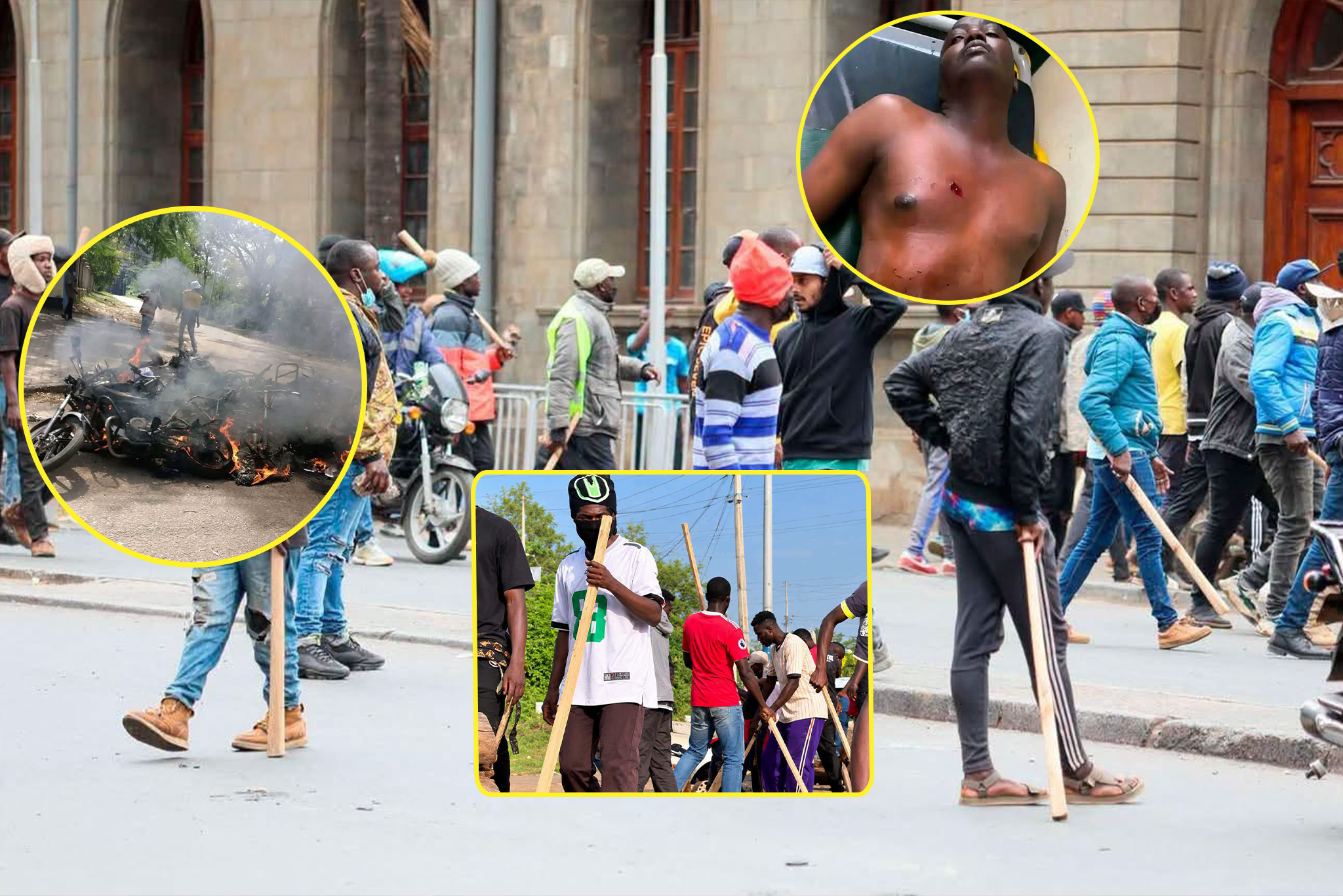
What worries many Kenyans today is not simply the existence of violence. Every country experiences crime and unrest. The bigger concern is the growing perception that violence is becoming a convenient political tool. Whenever unidentified groups emerge during protests, whenever journalists report intimidation, whenever businesses are vandalized under suspicious circumstances, the public begins asking difficult questions. Who are these people? Who benefits from the chaos? Why do they often appear at politically charged moments?
Perhaps even more worrying is how quickly society adapts. Yesterday's shocking incident becomes today's normal headline. Citizens scroll past disturbing videos, shake their heads, and continue with their day. Outrage lasts only until the next incident dominates the news cycle. That normalization is dangerous because democracy rarely collapses overnight it weakens gradually, one ignored incident at a time.
Another growing concern is the widening gap between leaders and ordinary citizens. While politicians exchange accusations on television and campaign platforms, it is the ordinary Kenyan who pays the highest price. Businesses close during protests. Workers lose daily wages. Students miss classes. Investors hesitate. Tourism suffers. Families worry every time a loved one leaves home during politically tense periods.
The youth, ironically, find themselves caught in the middle. They are often described as the nation's greatest asset, yet they are also the most vulnerable to unemployment, political manipulation, and exploitation. Some are recruited to defend political interests they may not fully understand. Others become victims of violence despite simply exercising their constitutional rights. A generation with enormous potential risks being remembered for battles that were never truly theirs.
Social media has added another layer to the debate. Information now spreads within seconds, but so does misinformation. Every video, every photograph, and every political statement is instantly dissected by millions. The truth often competes with rumours, making it harder for citizens to distinguish facts from political narratives. In such an environment, public trust becomes one of the first casualties.
Leadership carries enormous responsibility during moments like these. Strong leaders calm tensions instead of escalating them. They unite rather than divide. They reassure citizens that justice applies equally to everyone, regardless of political affiliation or social status. Silence in the face of public concern often creates more questions than answers.
At the same time, opposition leaders also bear responsibility. Democracy depends on peaceful competition, not endless confrontation. Political disagreements should be settled through institutions, dialogue, and lawful processes not through violence or incitement. Every leader, regardless of political side, must remember that stability is a national interest, not a partisan one.
Perhaps the biggest danger is not whether Kenya is already a goon state. The real danger is becoming comfortable with conditions that could eventually lead there. Democracies rarely disappear in dramatic fashion. They slowly erode when accountability weakens, when institutions lose public confidence, and when fear begins replacing freedom.
Still, Kenya has reasons to remain hopeful. The country possesses resilient institutions, courageous journalists, active civil society organizations, an independent judiciary, and millions of citizens who continue demanding accountability. These are strengths many nations envy. They demonstrate that Kenya still has the capacity to correct its course whenever necessary.
The future will depend on choices made today. Will leaders place the nation above politics? Will institutions enforce the law fairly and without favour? Will citizens reject violence regardless of who sponsors it? Will young people refuse to be used as tools for political battles?
The answers to these questions will determine whether the phrase "goon state" remains nothing more than political rhetoric or becomes a painful description of reality.
Kenya stands at an important crossroads. One path leads toward stronger institutions, greater accountability, and renewed public trust. The other leads toward fear, impunity, and deepening political division.
The choice belongs not only to those in power but also to every Kenyan who believes that democracy is worth protecting. History will judge this generation not by the slogans it shouted, but by the country it chose to build.
It is a question that sparks heated debate in homes, matatus, workplaces, universities, and across social media. While some dismiss it as political propaganda, others believe the warning signs are becoming impossible to ignore.
A nation should never normalize fear. Citizens should not have to wonder whether attending a peaceful protest, expressing an opinion online, or criticizing leaders could expose them to intimidation or violence. Democracy thrives when people can disagree freely without looking over their shoulders.
Kenya has long prided itself on being one of Africa's strongest democracies. The country has survived political transitions, constitutional reforms, and moments of national crisis. The 2010 Constitution gave Kenyans hope by strengthening institutions and guaranteeing freedoms that many had fought for. But constitutions are only as strong as the willingness to respect them.
What worries many Kenyans today is not simply the existence of violence. Every country experiences crime and unrest. The bigger concern is the growing perception that violence is becoming a convenient political tool. Whenever unidentified groups emerge during protests, whenever journalists report intimidation, whenever businesses are vandalized under suspicious circumstances, the public begins asking difficult questions. Who are these people? Who benefits from the chaos? Why do they often appear at politically charged moments?
Perhaps even more worrying is how quickly society adapts. Yesterday's shocking incident becomes today's normal headline. Citizens scroll past disturbing videos, shake their heads, and continue with their day. Outrage lasts only until the next incident dominates the news cycle. That normalization is dangerous because democracy rarely collapses overnight it weakens gradually, one ignored incident at a time.
Another growing concern is the widening gap between leaders and ordinary citizens. While politicians exchange accusations on television and campaign platforms, it is the ordinary Kenyan who pays the highest price. Businesses close during protests. Workers lose daily wages. Students miss classes. Investors hesitate. Tourism suffers. Families worry every time a loved one leaves home during politically tense periods.
The youth, ironically, find themselves caught in the middle. They are often described as the nation's greatest asset, yet they are also the most vulnerable to unemployment, political manipulation, and exploitation. Some are recruited to defend political interests they may not fully understand. Others become victims of violence despite simply exercising their constitutional rights. A generation with enormous potential risks being remembered for battles that were never truly theirs.
Social media has added another layer to the debate. Information now spreads within seconds, but so does misinformation. Every video, every photograph, and every political statement is instantly dissected by millions. The truth often competes with rumours, making it harder for citizens to distinguish facts from political narratives. In such an environment, public trust becomes one of the first casualties.
Leadership carries enormous responsibility during moments like these. Strong leaders calm tensions instead of escalating them. They unite rather than divide. They reassure citizens that justice applies equally to everyone, regardless of political affiliation or social status. Silence in the face of public concern often creates more questions than answers.
At the same time, opposition leaders also bear responsibility. Democracy depends on peaceful competition, not endless confrontation. Political disagreements should be settled through institutions, dialogue, and lawful processes not through violence or incitement. Every leader, regardless of political side, must remember that stability is a national interest, not a partisan one.
Perhaps the biggest danger is not whether Kenya is already a goon state. The real danger is becoming comfortable with conditions that could eventually lead there. Democracies rarely disappear in dramatic fashion. They slowly erode when accountability weakens, when institutions lose public confidence, and when fear begins replacing freedom.
Still, Kenya has reasons to remain hopeful. The country possesses resilient institutions, courageous journalists, active civil society organizations, an independent judiciary, and millions of citizens who continue demanding accountability. These are strengths many nations envy. They demonstrate that Kenya still has the capacity to correct its course whenever necessary.
The future will depend on choices made today. Will leaders place the nation above politics? Will institutions enforce the law fairly and without favour? Will citizens reject violence regardless of who sponsors it? Will young people refuse to be used as tools for political battles?
The answers to these questions will determine whether the phrase "goon state" remains nothing more than political rhetoric or becomes a painful description of reality.
Kenya stands at an important crossroads. One path leads toward stronger institutions, greater accountability, and renewed public trust. The other leads toward fear, impunity, and deepening political division.
The choice belongs not only to those in power but also to every Kenyan who believes that democracy is worth protecting. History will judge this generation not by the slogans it shouted, but by the country it chose to build.
ADVERTISEMENT
Watch Getembe TV Live
Broadcast Getembe TV Live Stream
Listen Getembe FM Live
Tune in to Getembe FM Live Broadcast
How do you feel about this article?
Let us know by choosing a reaction below.
F
Written by florida chemutai
Reporter and staff writer at Getembe News.
Comments 0
Please log in to participate in the comments section.
No comments yet. Be the first to share your thoughts!
ADVERTISEMENT
Related Stories

Have a news tip?
Do you have an investigation, local story or news event you think we should cover? Contact our newsroom directly.
Submit Tip
Mobile App
Download Getembe Digital App Today
Download Getembe Digital App today for live news updates, breaking notifications, and seamless live streaming.