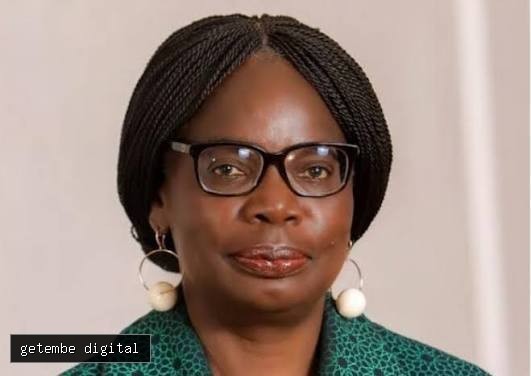
PROFILE: HOW PHOEBE OKOWA ROSE FROM KERICHO TO THE INTERNATIONAL COURT OF JUSTICE
From the University of Nairobi to the International Court of Justice, discover Professor Phoebe Okowa's academic journey, legal achievements and rise to global prominence.

Watch Getembe TV Live
Broadcast Getembe TV Live Stream
Listen Getembe FM Live
Tune in to Getembe FM Live Broadcast
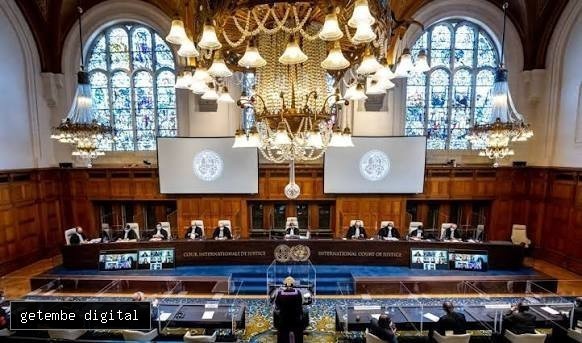
Professor Phoebe Okowa has become one of Kenya's most accomplished legal scholars, building an international career that has taken her from the University of Nairobi to the International Court of Justice (ICJ) in The Hague, Netherlands.
Her re-election to the ICJ for a full nine-year term is another milestone in a career spanning more than three decades in international law, legal scholarship, diplomacy and international dispute resolution.
Born on January 1, 1965, in Kericho, Kenya, Okowa developed her academic foundation at the University of Nairobi, where she graduated with a Bachelor of Laws degree with First Class Honours in 1987.
She subsequently proceeded to the University of Oxford in the United Kingdom on a Foreign and Commonwealth Office scholarship.
At Oxford, she obtained a Bachelor of Civil Law degree in 1990 before completing her doctorate in Public International Law in 1994.
Her academic career began at the University of Bristol, where she worked as a lecturer between 1994 and 2001.
She later joined Queen Mary University of London, where she rose through the academic ranks and became Professor of Public International Law in 2014.
Over the years, Okowa established herself as an authority in international law, with particular expertise in state responsibility, environmental protection, international accountability and the legal obligations of states.
Beyond teaching and research, she has advised governments and international organisations on complex legal questions and represented countries in proceedings before international tribunals.
Her professional experience includes service on the Permanent Court of Arbitration at The Hague, an institution that facilitates the resolution of international disputes.
One of her most significant achievements came in 2021 when she was elected to the United Nations International Law Commission, becoming the first African woman to serve on the commission since its establishment in 1947.
The commission plays an important role in developing and codifying international law, making her appointment a significant milestone for African representation in international legal institutions.
Okowa has also held visiting academic appointments at prestigious institutions, including Princeton University and New York University.
Her contributions to legal scholarship and international justice have earned her several recognitions. In 2022, she received Kenya's Elder of the Order of the Burning Spear (EBS), while Stockholm University awarded her an honorary Doctor of Laws degree in 2024.
How She Joined the International Court of Justice
Okowa's journey to the ICJ followed years of involvement in international legal practice and scholarship.
In November 2025, she joined the court to fill a vacancy created by the resignation of Somali judge Abdulqawi Ahmed Yusuf.
Her initial appointment placed her among the judges responsible for resolving disputes between countries and providing authoritative legal opinions on international matters.
She subsequently secured re-election for a full nine-year term running from February 6, 2027, to February 5, 2036.
The appointment places her among the 15 judges who serve on the ICJ, which is the principal judicial organ of the United Nations.
What Makes Her Position Important?
The ICJ occupies a central position in the international legal system, handling disputes involving territorial boundaries, diplomatic relations, treaty obligations and other matters governed by international law.
Its decisions can have far-reaching implications for countries, particularly when disputes involve sovereignty, natural resources, environmental obligations and international agreements.
For Kenya, Okowa's continued presence on the court represents an important achievement in international legal representation.
Her career also illustrates the growing contribution of African legal scholars to institutions responsible for shaping international law.
As she prepares to serve a full nine-year mandate, attention will turn to her contribution to the court and the role she will play in addressing some of the most consequential legal questions facing the international community.
ADVERTISEMENT
Watch Getembe TV Live
Broadcast Getembe TV Live Stream
Listen Getembe FM Live
Tune in to Getembe FM Live Broadcast
How do you feel about this article?
Let us know by choosing a reaction below.

Written by FRANKLINE NYANDORO
Reporter and staff writer at Getembe News.
Comments 0
Please log in to participate in the comments section.
No comments yet. Be the first to share your thoughts!
ADVERTISEMENT
Related Stories


Have a news tip?
Do you have an investigation, local story or news event you think we should cover? Contact our newsroom directly.
Submit Tip
Mobile App
Download Getembe Digital App Today
Download Getembe Digital App today for live news updates, breaking notifications, and seamless live streaming.