
10,000 SEATS, SPORTS AND ENTERTAINMENT: NAIROBI’S KSH38B MEGA ARENA PLAN
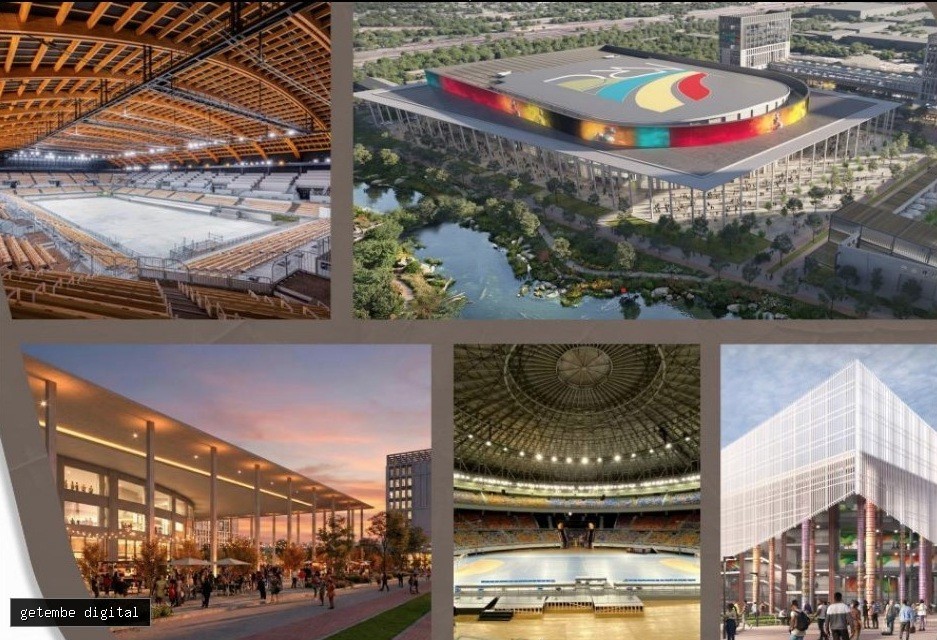
Nairobi is planning a KSh38 billion mixed-use Railway City development featuring a 10,000-seat indoor arena, hotel, serviced apartments, retail spaces and entertainment facilities.
Watch Getembe TV Live
Broadcast Getembe TV Live Stream
Listen Getembe FM Live
Tune in to Getembe FM Live Broadcast
Nairobi is set for another major sports and entertainment facility, with a proposed 10,000-seat multi-purpose indoor arena forming the centrepiece of a wider KSh38 billion Railway City development.
The project, being developed by Zaria Group through its local subsidiary, Metroarena Development Company, is planned within the Nairobi Railway City precinct, near the Nairobi Central Railway Station. The development follows a long-term lease agreement between Zaria Group and Kenya Railways Corporation witnessed by President William Ruto in April 2026.
The wider project is valued at approximately US$294.49 million, equivalent to about KSh38.14 billion. The amount covers more than the arena itself and includes a hotel, serviced apartments, retail and entertainment facilities and supporting infrastructure.
According to project disclosures, the planned arena will be a five-storey indoor facility with capacity for up to 10,000 people, depending on the configuration of an event.
While basketball is among the sports expected to be hosted at the venue, the facility is designed for broader use, including concerts, conferences, exhibitions, banquets and other large-scale events.
The arena is expected to have an estimated built-up area of approximately 11,680 square metres, with dedicated areas for seating, arena functions and back-of-house operations.
The surrounding development will include retail outlets, restaurants, food and beverage facilities, leisure spaces and a public plaza. Plans also provide for an amphitheatre and outdoor performance areas.
The arena will be part of a mixed-use entertainment district rather than a stand-alone sporting facility.
Project plans include a 140-room hotel and 70 serviced apartments, alongside parking facilities and a public pedestrian boulevard connecting different sections of the development.
The combination of sports, accommodation, retail and entertainment is intended to create a destination capable of hosting visitors attending major sporting competitions, concerts, exhibitions and business events.
The project is expected to draw from Zaria Group's experience in Rwanda, where its wider portfolio includes sports and entertainment facilities such as BK Arena and Amahoro Stadium.
The Nairobi facility is planned to be operated by QA Venue Solutions, a Zaria Group affiliate involved in venue management in Rwanda. The intention is to use the arena not only as a sports venue but also as a commercial platform capable of attracting international events.
The arena forms part of the broader Nairobi Railway City redevelopment, which aims to transform the railway station area into a modern, transit-oriented urban district incorporating transport, commercial, residential and public spaces.
The government says the upgraded Railway City is designed to integrate rail, bus rapid transit and non-motorised transport, with capacity to handle more than 400,000 commuters daily by 2030.
The arena will also complement other major sporting and convention investments in Nairobi, including the Talanta Sports City and the Bomas International Convention Complex.
Unlike the 60,000-seat Raila Odinga International Stadium at Talanta Sports City, which is an outdoor stadium being developed for major football events, the Railway City project is primarily an indoor, multi-purpose arena and entertainment district.
The two projects therefore target different types of events and are expected to form part of Nairobi's expanding sports, entertainment and meetings industry.
Although the lease agreement has been signed and the project has been formally unveiled, the KSh38 billion development should not be confused with a completed or fully operational facility.
Current project disclosures describe a proposed development within Railway City, with regulatory and planning processes forming part of the path toward implementation. The KSh38.14 billion figure also represents the broader mixed-use development rather than the cost of constructing the arena alone.
If delivered as planned, the project would give Nairobi another large-scale indoor venue for sports, entertainment, conferences and cultural events, while adding a major commercial component to the ongoing transformation of the Railway City precinct.
ADVERTISEMENT
Watch Getembe TV Live
Broadcast Getembe TV Live Stream
Listen Getembe FM Live
Tune in to Getembe FM Live Broadcast
How do you feel about this article?
Let us know by choosing a reaction below.

Written by Anne Moses
Reporter and staff writer at Getembe News.
Comments 0
Please log in to participate in the comments section.
No comments yet. Be the first to share your thoughts!
ADVERTISEMENT
Related Stories

Have a news tip?
Do you have an investigation, local story or news event you think we should cover? Contact our newsroom directly.
Submit Tip
Mobile App
Download Getembe Digital App Today
Download Getembe Digital App today for live news updates, breaking notifications, and seamless live streaming.