CAN ONGWAE’S USAP BECOME THE DCP OF GUSII?
Ongwae’s new USAP wants to be Gusii’s answer to DCP. But with Matiang’i, Arati and Maraga in the mix, can it become more than a ticket for aspirants?
Watch Getembe TV Live
Broadcast Getembe TV Live Stream
Listen Getembe FM Live
Tune in to Getembe FM Live Broadcast
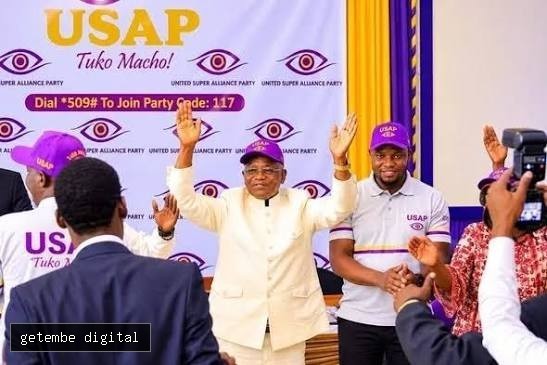
The launch of the United Super Alliance Party (USAP) by former Kisii Governor James Ongwae has introduced another interesting player into the increasingly competitive politics of the Gusii region. With its open-eye symbol and the rallying cry "Tuko Macho", the new political outfit appears to have a bigger ambition than simply providing another party ticket to aspiring politicians. It wants to become a political home for the Abagusii, potentially giving Kisii and Nyamira a stronger bargaining position ahead of the August 2027 General Election.
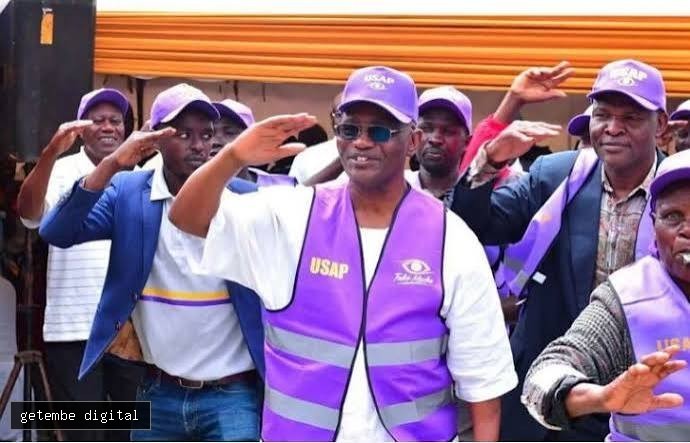
But as Ongwae begins selling this political proposition, one question deserves serious consideration: Can USAP achieve in Gusii what Rigathi Gachagua's Democracy for the Citizens Party (DCP) is attempting to accomplish in Mt Kenya?
The comparison is tempting. DCP has capitalised on growing political discontent in Mt Kenya, positioning itself as a vehicle through which the region can reorganise its political interests following Gachagua's fallout with President William Ruto. Its growing appeal demonstrates how quickly politicians can gravitate towards a party when they believe it represents the direction their electorate is taking.
Ongwae appears to be pursuing a similar strategy. Having served as Kisii's first governor between 2013 and 2022, he understands the region's political networks and has considerable name recognition. His experience in county leadership gives him an advantage in selling USAP as more than an ordinary political startup.
The promise to field candidates across elective positions, apart from the presidency, is particularly significant. It suggests that USAP wants to become a platform through which local politicians can compete without necessarily depending on established national parties for nominations or political direction.
For an aspirant struggling to secure a ticket from ODM, UDA, Jubilee or another established formation, a new regional party could present an attractive alternative. It could also give Gusii politicians a common platform from which to negotiate with presidential candidates and larger political coalitions.
After all, regional political influence is not determined by population alone. It also depends on how effectively a community organises its political interests and translates electoral numbers into national bargaining power.
However, Ongwae is walking into a considerably more complicated political environment than the one DCP found in Mt Kenya.
Unlike Mt Kenya, where Gachagua has managed to position himself at the centre of a growing political rebellion against the ruling establishment, Gusii politics already has several influential figures with competing ambitions.
Former Interior Cabinet Secretary Fred Matiang'i is attempting to build a national presidential campaign under Jubilee. His appeal rests partly on the possibility of giving the Gusii region a presidential candidate around whom political interests can consolidate.
Then there is Kisii Governor Simba Arati, whose influence within ODM and the county's political machinery makes him an important player. Former Chief Justice David Maraga has also entered the national political conversation through the United Green Movement, presenting another political option for voters seeking an alternative leadership direction.
These are not insignificant competitors. Each brings a different political proposition, established networks and a constituency of supporters.
Consequently, USAP is not merely competing against national parties. It is competing against personalities who already command political attention within the region.
This presents Ongwae with his biggest challenge. Convincing aspirants to join USAP may be easier than convincing voters to abandon established political loyalties. A party can attract dozens of politicians seeking nomination tickets, but that does not automatically translate into an equally enthusiastic electorate.
The other difficulty is the question of political identity. What exactly does USAP represent beyond providing a homegrown political vehicle for the Gusii community?
DCP has built much of its appeal around Gachagua's fallout with Ruto, his opposition posture and the argument that Mt Kenya deserves a stronger voice in national politics. Whether that momentum can be sustained is another matter, but its political identity is relatively clear.
For USAP, the picture is less straightforward. Ongwae must convince voters that the party is genuinely interested in strengthening Gusii representation rather than simply becoming another vehicle through which influential politicians negotiate their personal political survival.
His relationship with the current administration also presents a political question that cannot simply be ignored. At a time when Matiang'i is attempting to position himself as a potential alternative to Ruto, voters will want to understand where Ongwae and his new party stand in the emerging government-opposition contest.
If USAP seeks to work with the government, it must explain how that arrangement advances the region's interests. If it intends to operate independently or join the opposition, it must communicate that position convincingly.
Remaining politically ambiguous could make the party attractive to politicians who want flexibility, but it could also leave ordinary voters uncertain about what they are being asked to support.
There is also the question of Ongwae's own political capital. His decade as governor gives him experience and recognition, but it does not guarantee that the electorate will automatically embrace his latest political project. In the 2022 gubernatorial election, his preferred successor, Ezekiel Machogu, lost to Simba Arati. That outcome demonstrated that Ongwae's influence, although considerable, does not necessarily translate into control over the electorate.
He must therefore do more than launch a party, unveil its symbol and assemble aspirants. He needs to demonstrate that USAP can build grassroots structures, attract credible candidates and command support beyond the political circles surrounding its founder.
Perhaps the most important test will be whether the party can coexist with Matiang'i's presidential ambitions. If both political camps attempt to consolidate the same electorate without a clear understanding of their respective roles, the result could be unnecessary competition within a region that has long sought stronger national political influence.
Matiang'i needs regional support to strengthen his presidential ambitions, while Ongwae needs a sufficiently large political following to make USAP relevant in national coalition negotiations. Their interests could complement each other, but they could equally become competitors for the same political space.
And that is where the 2027 arithmetic becomes particularly interesting. A regional party does not necessarily need to win the presidency to become politically valuable. It can win parliamentary and county seats, establish a strong negotiating position and use its electoral influence to bargain for a place in a larger coalition.
That is potentially USAP's strongest selling point. Rather than immediately attempting to displace every established political formation, it could first establish itself as a serious regional political force.
But the Gusii electorate must also be careful not to mistake regional political consolidation for effective leadership. Having a party bearing a familiar regional identity does not automatically guarantee development, accountability or better representation. The region needs leaders with credible records and clear agendas, not simply politicians united by the convenience of sharing a political platform.
Ultimately, USAP's success will depend on whether Ongwae can transform the excitement surrounding its launch into genuine grassroots support. DCP's growing influence in Mt Kenya provides an interesting political reference point, but Gusii politics has its own personalities, rivalries and electoral calculations.
Ongwae may have found an opening in the region's search for a stronger political voice. Whether he can turn that opening into a political movement capable of commanding loyalty is an entirely different challenge.
For now, USAP has entered the political conversation. But becoming the DCP of Gusii will require more than an open eye, a catchy slogan and a collection of aspirants looking for tickets. It will require a movement that voters believe in, politicians are willing to commit to and competing regional leaders cannot easily ignore.
The real test for Ongwae is not whether he can launch another party, but whether he can convince the Gusii electorate that this time, the political vehicle is bigger than the driver.
ADVERTISEMENT
Watch Getembe TV Live
Broadcast Getembe TV Live Stream
Listen Getembe FM Live
Tune in to Getembe FM Live Broadcast
How do you feel about this article?
Let us know by choosing a reaction below.

Written by FRANKLINE NYANDORO
Reporter and staff writer at Getembe News.
Comments 0
Please log in to participate in the comments section.
No comments yet. Be the first to share your thoughts!
ADVERTISEMENT
Related Stories

Have a news tip?
Do you have an investigation, local story or news event you think we should cover? Contact our newsroom directly.
Submit Tip
Mobile App
Download Getembe Digital App Today
Download Getembe Digital App today for live news updates, breaking notifications, and seamless live streaming.