
EASTLEIGH COLLAPSE: WHO APPROVED AN 18-STOREY BUILDING NEAR MOI AIR BASE?
The collapse of an 18-storey building in Eastleigh has exposed disputed approvals, enforcement questions and confusion over height limits near Moi Air Base. As investigations begin, will the scrutiny extend beyond one site?
Watch Getembe TV Live
Broadcast Getembe TV Live Stream
Listen Getembe FM Live
Tune in to Getembe FM Live Broadcast
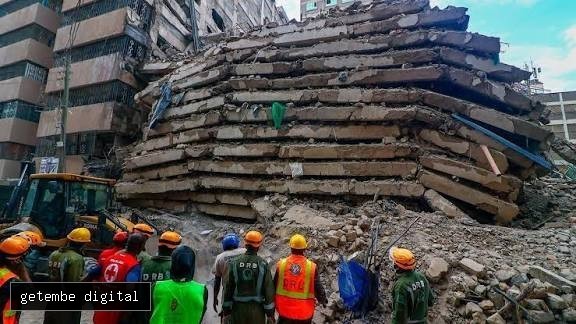
The collapse of an 18-storey building in Nairobi’s Eastleigh has exposed a web of disputed approvals, questions over enforcement and renewed scrutiny of the government’s policy on high-rise construction near Moi Air Base. At the centre of the controversy are a deceased property owner, conflicting claims over development approvals and President William Ruto’s earlier remarks allowing buildings of up to 25 or 30 storeys in Eastleigh.
As rescue teams searched the rubble, the disaster raised a question extending far beyond one construction site: who is responsible when a building rises beyond the approved plans, and what happens to other developments that may have exceeded their authorised heights?
Nairobi Governor Johnson Sakaja identified the property's registered owner as the estate of the late Wilson Mutia Musyoki, saying the family had entered into a joint venture with other developers to commercialise the land.

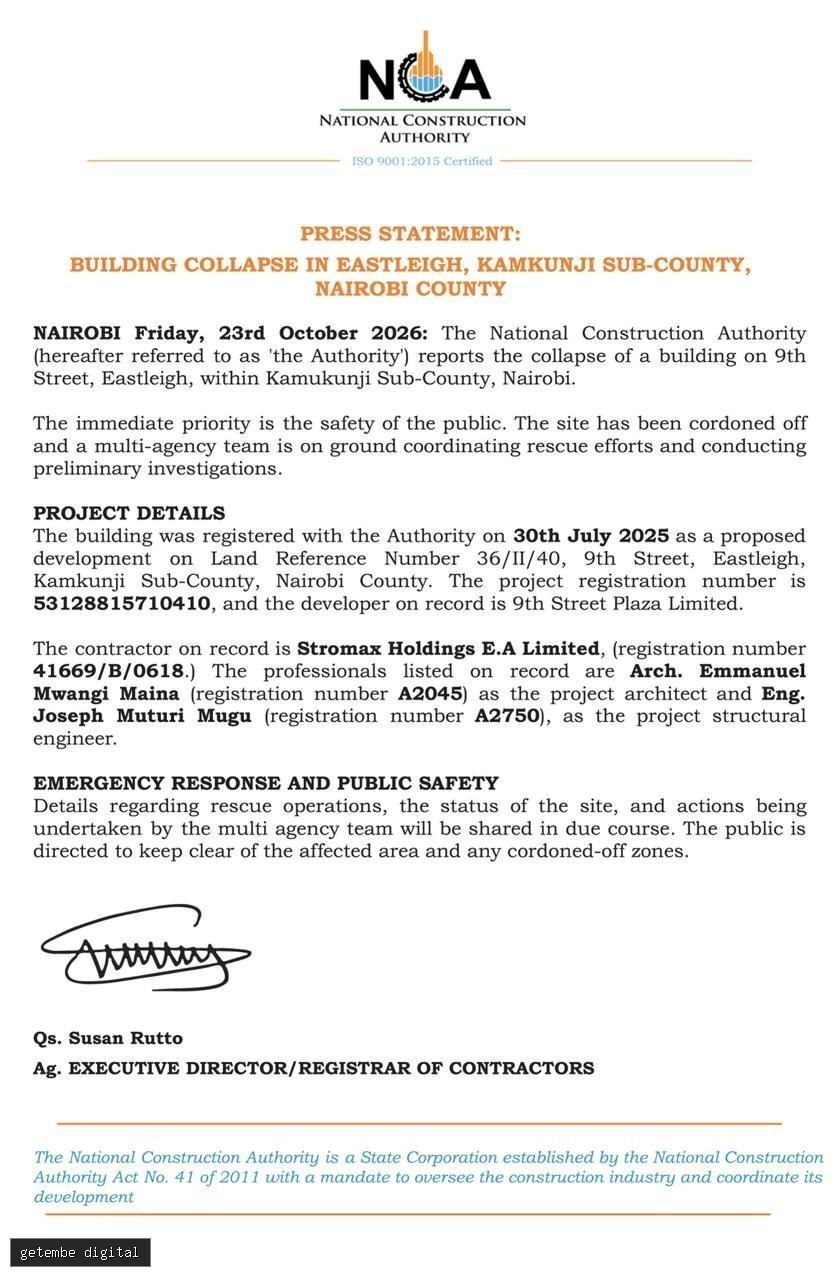
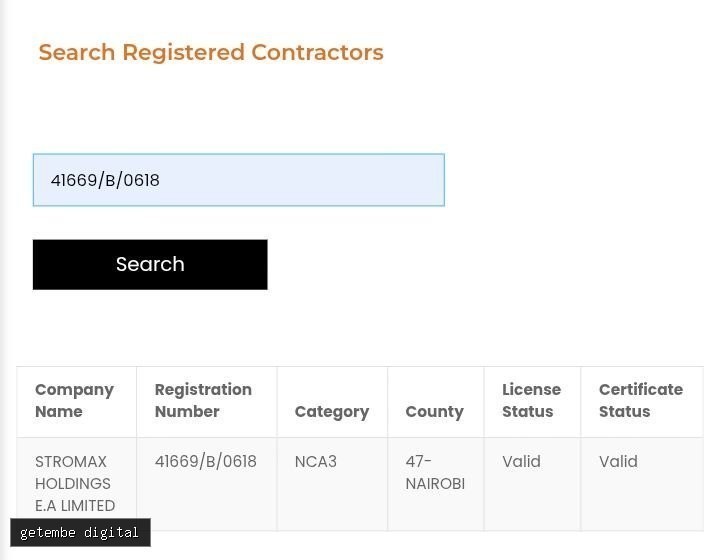
The National Construction Authority (NCA) identified 9th Street Plaza Limited as the developer, Stromax Holdings E.A. Limited as the contractor, Emmanuel Mwangi Maina as the architect and Joseph Muturi Mugu as the structural engineer listed for the project. The authority said the development was registered on July 30, 2025. Registration, however, does not by itself establish that every construction approval or safety requirement was satisfied.
The most contentious issue is whether the building had the necessary county authorisation.
Sakaja maintains that City Hall approved a change of use from residential to residential and commercial in October 2024, but did not approve the subsequent architectural and structural plans submitted in November that year.
The governor has also disputed a document circulated online purporting to show that the building had received development approval in early 2024. He argued that the change-of-use authorisation and permission to construct the building were separate processes.
The controversy has deepened because reports indicated that shops on the ground floor were already operating before the collapse, even though Sakaja said the building lacked an occupation certificate.
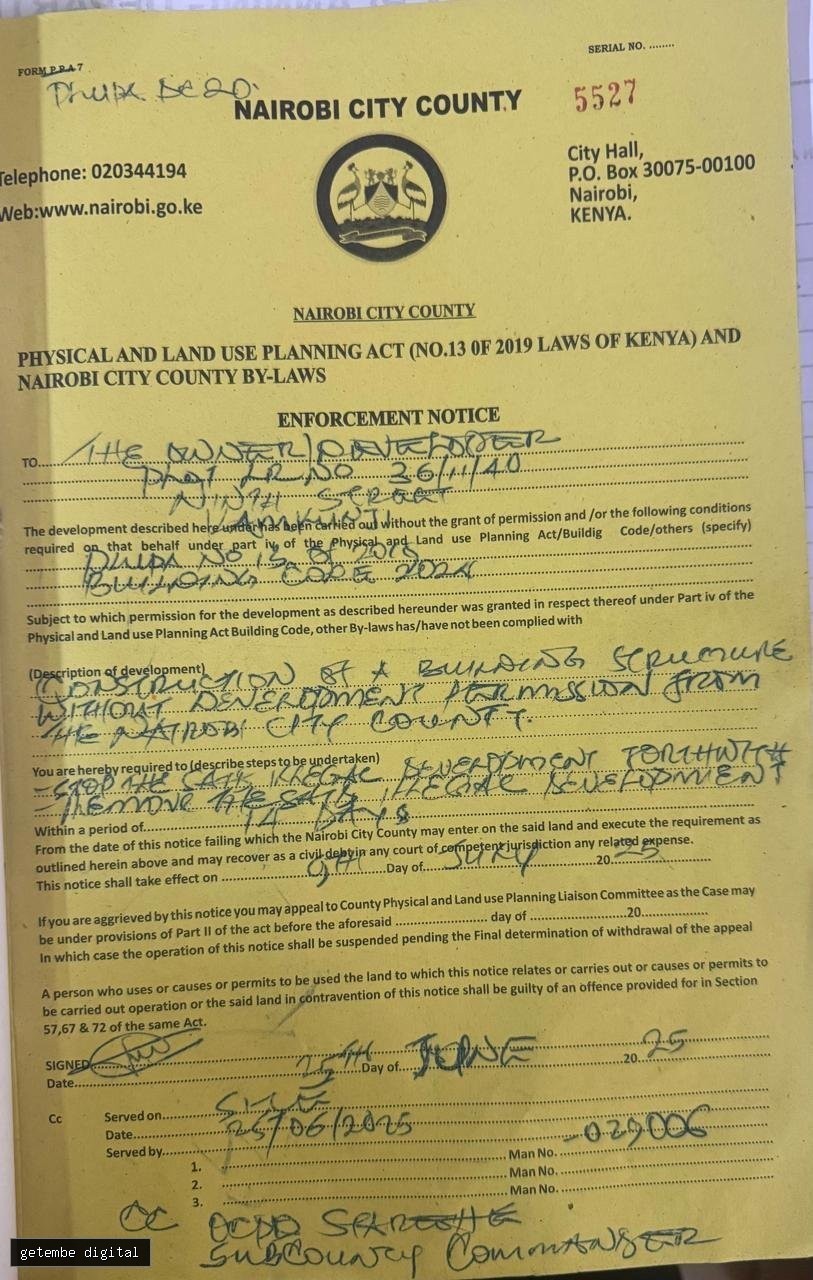
That leaves several questions for investigators: how did construction progress to 18 storeys, what inspections were conducted, why did enforcement efforts fail to stop the development, and how were commercial activities taking place in the building?
The ownership question also remains important. The death of the registered owner does not automatically absolve the estate's representatives, developers, contractors or other professionals of responsibility for their own actions. Any criminal liability, however, must be established through evidence and due process.
The controversy has extended into a public dispute over documents said to demonstrate that the building had been approved.
Sakaja dismissed the document circulating online as misleading and maintained that the county had not authorised the construction plans. Questions have also been raised about the identity and professional credentials of individuals named in connection with the approval process.
Separately, allegations of bribery involving county leadership have circulated in the public debate. Such allegations remain allegations and should not be treated as established facts without independently verified evidence.
The central issue is not simply whether a document existed, but whether it was authentic, which authority issued it, what it authorised and whether the construction complied with the conditions attached to any legitimate approval.
If the building proceeded without the required authorisation, investigators must establish how it escaped effective enforcement. If any public officials or professionals facilitated unlawful construction, their individual roles must be examined.
The dispute also raises questions about the relationship between City Hall, the NCA and the professionals responsible for designing, supervising and constructing multi-storey buildings.
The Eastleigh collapse has revived an earlier controversy involving President William Ruto, Nairobi Governor Johnson Sakaja and building-height restrictions around Moi Air Base.
In May 2024, Ruto announced that the previous 12-storey limit in Eastleigh could be raised, saying buildings of up to 25 or 30 storeys could help accommodate the area's growing population and commercial activity.
The announcement appeared to offer a new direction for a neighbourhood where demand for residential and commercial space had increased considerably.
However, the statement raised concerns about the military air base, its flight paths and the safety of aircraft taking off and landing.
On June 8, 2024, while presiding over the Kenya Air Force's 60th anniversary celebrations at Moi Air Base, Ruto said the government would work with Nairobi City County to ensure developers complied with legally prescribed heights and standards agreed upon with the Kenya Air Force and Kenya Defence Forces.
The two statements generated confusion over whether the height restrictions had actually been changed.
Sakaja subsequently clarified that the restrictions had not been formally lifted and that any changes would require the appropriate process, including public participation. He also acknowledged that the air base's operations and flight paths had to be protected.
The contradiction is significant because a presidential announcement about a proposed policy change is not, on its own, proof that every developer has permission to build taller structures.
The applicable height for an individual plot must be established through the relevant planning rules, approved designs and applicable aviation and military safety requirements.
The collapse has therefore revived a question that predates the disaster: if the government intended to permit taller buildings in Eastleigh, what formal framework was adopted, and how were developers informed of the limits applying to their specific sites?
The future of other high-rise developments around Eastleigh and Moi Air Base is now a major public concern.
Buildings that rise above 12 storeys should not automatically be classified as illegal simply because they exceed the former limit. The applicable restrictions depend on the location, the approved development plans and any valid changes to the governing rules.
Equally, the presidential announcement allowing taller buildings did not automatically legalise structures that breached existing restrictions or were constructed beyond their approved designs.
Authorities must establish which developments have valid approvals, which have exceeded authorised heights, and which may interfere with protected flight paths or other safety requirements.
That assessment should involve Nairobi City County, the National Construction Authority, the Kenya Civil Aviation Authority where aviation requirements apply, and the Kenya Defence Forces in matters affecting Moi Air Base.
For developments suspected of violating the rules, the next steps could include:
- Immediate inspections: Verify approved plans, actual building heights, structural compliance and the status of construction permits.
- Suspension of unsafe works: Halt construction where there is a credible safety risk or evidence of unlawful development, subject to the applicable legal procedures.
- Independent structural assessments: Determine whether buildings can safely support their existing floors and whether unauthorised additions have compromised their integrity.
- Aviation and military safety reviews: Establish whether particular buildings fall within restricted areas or interfere with approved flight paths.
- Enforcement and legal action: Require corrective measures, impose lawful penalties or pursue demolition where legally justified and supported by technical findings.
A building that exceeds its approved height may require removal of unauthorised floors, but that decision should follow a professional assessment and lawful enforcement process. The number of floors alone cannot determine whether a building is structurally unsafe or violates an aviation restriction.
The public also needs clarity on whether there is a comprehensive register of high-rise buildings around the air base and whether county inspectors regularly verify that completed floors match approved drawings.
Without that information, the inspection of other developments risks becoming a reactive exercise rather than a systematic safety review.
The collapse has intensified scrutiny of Nairobi's planning and enforcement systems.
Sakaja has argued that enforcement notices and relatively low penalties have failed to deter developers who disregard building regulations. He has called for counties to regain prosecutorial powers, saying stronger enforcement would improve accountability.
However, the governor's explanation has not removed questions about the county's own oversight responsibilities.
An enforcement notice is only effective if authorities establish whether it was obeyed, conduct follow-up inspections and take lawful action when construction continues in violation of the rules.
The Office of the Director of Public Prosecutions announced on October 26, 2026, that it had directed the Directorate of Criminal Investigations to investigate the collapse, including possible acts or omissions by county officials, developers and construction professionals.
The ODPP said it had not received an inquiry file from Nairobi City County concerning possible wrongdoing linked to the project as of the date of its statement. It indicated that prosecution would follow where sufficient evidence establishes criminal culpability, regardless of the persons involved or their positions.
The Engineers Board of Kenya has also launched an investigation into the role of engineers and possible breaches of professional standards.
Meanwhile, the NCA's stated regulatory responsibilities and the county's planning and enforcement duties are likely to face renewed scrutiny as investigators establish what each agency knew and what action it took.
These inquiries must determine not only what caused the building to collapse, but also whether warning signs were ignored and whether any failures in oversight allowed the project to continue.
The disaster has put the spotlight on a wider challenge facing Nairobi as demand for housing and commercial space drives construction upwards.
A response limited to investigating one collapsed building would leave unresolved questions about other developments that may have exceeded approved plans, bypassed inspections or failed to comply with aviation and structural safety requirements.
A credible response would require a transparent audit of high-rise developments, publication of verified findings, independent technical assessments and consistent enforcement against anyone found to have violated the law.
It would also require the national government and Nairobi City County to clarify the policy governing construction around Moi Air Base, including the legal status of height restrictions and the process for authorising any changes.
For families waiting for answers after the Eastleigh collapse, the immediate priority remains the rescue operation and accountability for any wrongdoing established by investigators.
For the wider public, the question is what happens next.
Will the collapse trigger a comprehensive review of Eastleigh's high-rise developments and the rules protecting Moi Air Base, or will the scrutiny end when the rubble is cleared?
ADVERTISEMENT
Watch Getembe TV Live
Broadcast Getembe TV Live Stream
Listen Getembe FM Live
Tune in to Getembe FM Live Broadcast
How do you feel about this article?
Let us know by choosing a reaction below.

Written by FRANKLINE NYANDORO
Reporter and staff writer at Getembe News.
Comments 0
Please log in to participate in the comments section.
No comments yet. Be the first to share your thoughts!
ADVERTISEMENT
Related Stories


Have a news tip?
Do you have an investigation, local story or news event you think we should cover? Contact our newsroom directly.
Submit Tip
Mobile App
Download Getembe Digital App Today
Download Getembe Digital App today for live news updates, breaking notifications, and seamless live streaming.