
FROM BARRACKS TO MUSICAL LEGENDS: THE UNTOLD GENESIS OF KENYA’S MAROON COMMANDOS
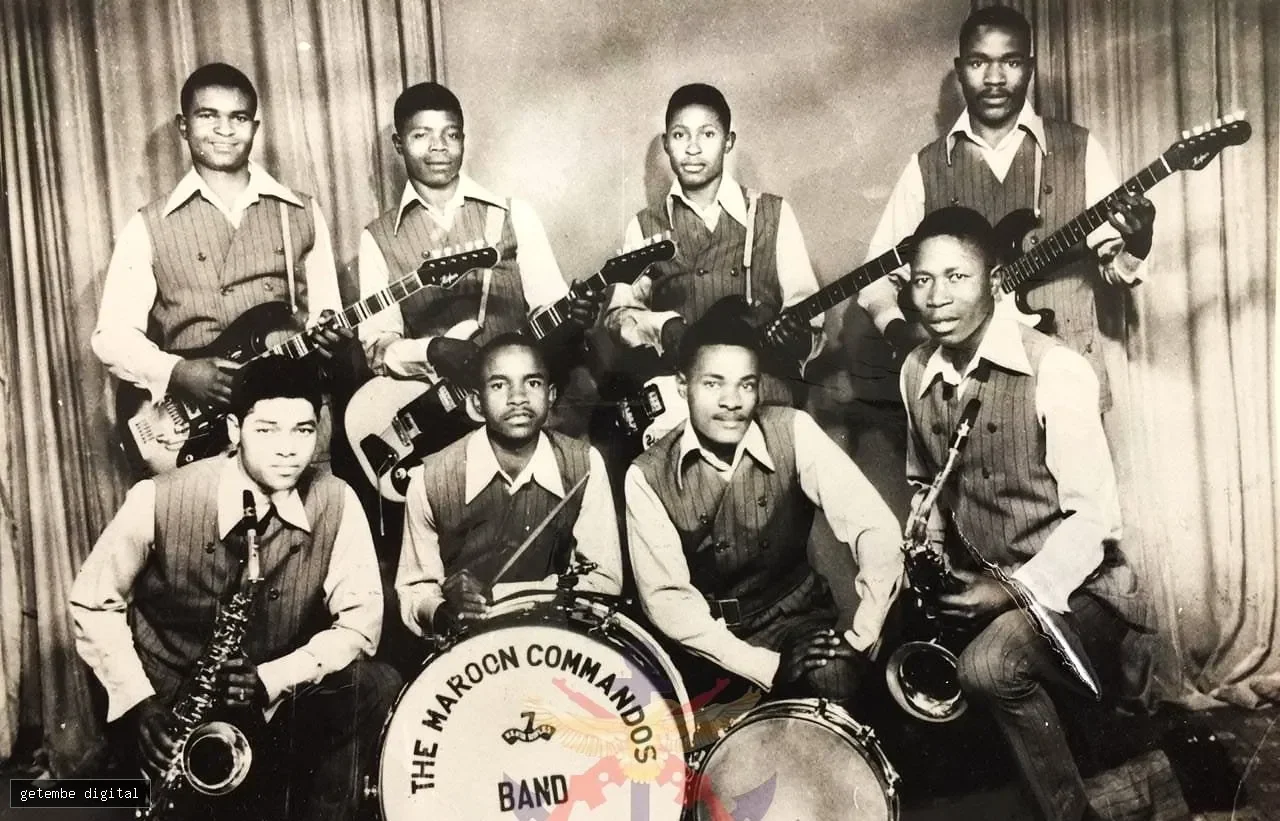
Born from a military officer’s vision and a group of young Nairobi musicians, Maroon Commandos rose from the barracks to become one of Kenya’s most celebrated bands, leaving behind timeless classics that still resonate across generations.
Watch Getembe TV Live
Broadcast Getembe TV Live Stream
Listen Getembe FM Live
Tune in to Getembe FM Live Broadcast
Before Charonyi Ni Wasi became a familiar tune across East Africa, before Emily introduced audiences to their distinctive sound, and long before their name became synonymous with Kenya’s golden era of live music, Maroon Commandos began with an idea inside a military barracks.
Their story is one of an unusual meeting between military discipline and musical ambition a journey that transformed a group of young Nairobi performers into one of the country’s most enduring musical institutions.
An Idea Born in the Barracks
The genesis of Maroon Commandos dates back to 1969, when Lieutenant Colonel J.M.M. Wambua, the commanding officer of the 7th Battalion, Kenya Rifles, based in Gilgil, conceived the idea of establishing a band within his unit.
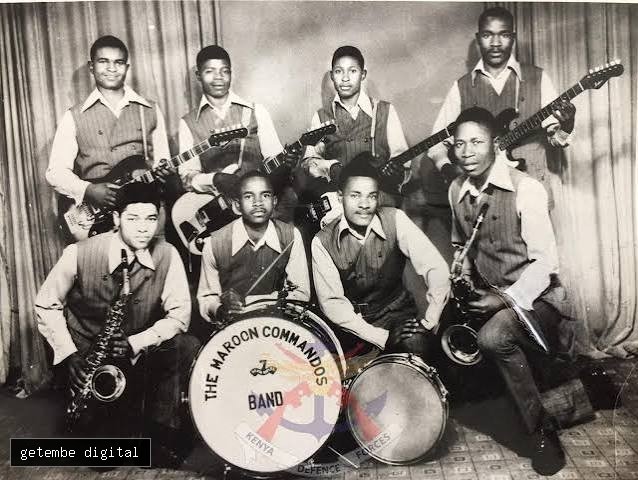
His ambition was twofold: to improve the musical performance of the battalion’s drum platoon and to establish a dance band capable of performing for audiences.
To bring the idea to life, Wambua tasked Captain Muchemi, then an adjutant in the unit, with identifying young men who possessed musical talent and could be recruited into the military.
Muchemi’s search took him to Bamboo Executive Night Club along River Road in Nairobi, where he encountered a group of young musicians associated with the Strollers Band.
The musicians included Habel Kifoto, David Kibe, Juma Kizito, Ibrahim Ringo, Shem Shisia and Tony Sobayeni. They had developed their musical skills through performances in Nairobi’s entertainment scene, including appearances at Small World Night Club.
Their backgrounds were also closely connected. Several came from railway-worker families and grew up around the Makongeni, Kaloleni and Shauri Moyo estates, where friendships and shared experiences helped shape their musical journey.
What began as an opportunity to advance their musical careers would soon take them into an entirely different world.
From Young Musicians to Soldiers
The six musicians accepted the opportunity to join the military, exchanging the familiar surroundings of Nairobi’s entertainment venues for military training in Gilgil.
After nine months of training, they completed their military preparation and were posted to the 7th Battalion, Kenya Rifles.
Their recruitment was unusual in its outcome: rather than abandoning music for military service, they were entering an institution that would provide a platform for developing their talent.
On October 1, 1970, the band formally adopted the name Maroon Commandos. The name was associated with the regiment’s maroon identity and the military unit to which the musicians belonged.
The band initially performed covers of popular music, drawing from soul, blues, rumba, Lingala and twist, among other styles. Its members combined musical influences familiar to Kenyan audiences with the discipline and organisation expected of military personnel.
The arrangement gave the group something distinctive: a structured institutional home while allowing its musicians to pursue a shared artistic ambition.
The Breakthrough That Changed Everything
In 1971, Maroon Commandos secured a recording opportunity at PolyGram Studio in Kenya, recording two original songs. One of them was Emily, composed by Ibrahim Ringo.
The song helped introduce the band to a wider audience and opened opportunities to perform beyond military settings.
The group began travelling to different towns, entertaining audiences at institutions and private events. Its music was no longer confined to the barracks; it was becoming part of Kenya’s growing popular music culture.
But just as the band was building momentum, tragedy struck.
The 1972 Accident That Threatened Their Future
In August 1972, while returning from a performance at Egerton University, the band was involved in a serious road accident along the Mbaruk–Nakuru Road.
The accident claimed the life of saxophonist Peter Masheti, according to the official history published by the Ministry of Defence. The incident devastated the group and disrupted its progress.
For a band whose identity depended on the collective talent and relationships of its members, the loss was more than a temporary setback. The group struggled to regain its momentum, and for several years its future remained uncertain.
In 1973, the 7th Battalion and the band relocated from Gilgil to Lang’ata Barracks in Nairobi, where Maroon Commandos established the base associated with its subsequent musical journey.
Despite the disruption, the band did not disappear. Its survival would depend on fresh talent, renewed leadership and the determination to rebuild what had been lost.
The Comeback That Made Them Household Names
The turning point came in the late 1970s, when new musicians joined the group. Hamisi Shaban and Paul Mwandembo were recruited in 1977, followed by Laban Ochuka and Tuesday Oguro in 1978.
Under Habel Kifoto’s leadership, the band developed a renewed musical identity, culminating in one of its defining successes: Charonyi Ni Wasi.
Written and composed by Kifoto, the song became a major hit in 1978. Its lyrics, performed in the Taita language, helped distinguish it from many contemporary releases and connected the band with audiences well beyond its immediate cultural setting.
The song reportedly sold thousands of copies across East Africa, earning the band a Silver Disc and establishing its place among Kenya’s leading musical acts.
Other popular releases followed, including Uvivu Mbaya and Usiniambie Unaenda. The songs strengthened the group's reputation and helped its music reach audiences through radio, television and live performances.
For many listeners, these were more than entertainment. The songs became part of everyday life, carrying messages, emotions and memories across generations.
A Musical Legacy Beyond One Generation
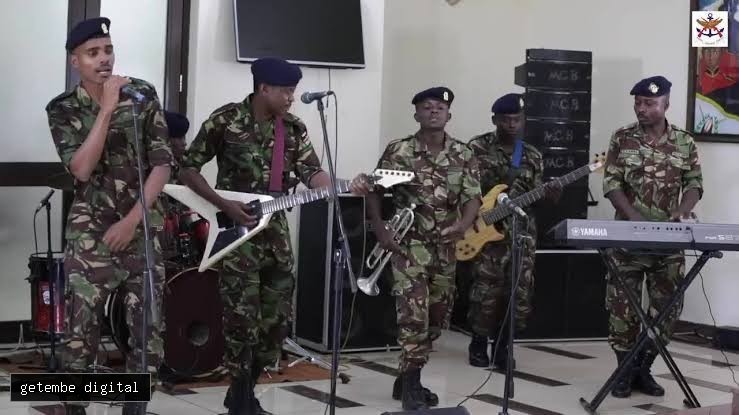
Maroon Commandos continued recruiting musicians as members were transferred to other military assignments, retired or moved on to different responsibilities.
The band expanded its repertoire with songs including Christina, Riziki Haivutwi, Bi Sophia and Wazazi Wako Wamenikata. Its longevity rested partly on its ability to introduce new performers while preserving the musical identity established by earlier members.
That continuity is one of the most remarkable aspects of its history. Unlike many popular bands that disband when their founding members leave, Maroon Commandos has operated through successive generations of musicians within a military institution.
Its story also reflects a broader chapter in Kenyan music history, when locally produced recordings, live bands and radio airplay helped create a distinctive popular sound that travelled across the country and the wider East African region.
More Than a Band
Maroon Commandos emerged from a military officer’s effort to establish a performing band, but its influence extended far beyond the original objective.
The group demonstrated that military service and artistic expression could coexist, and that music created within an institution could become part of a country's cultural heritage.
Its history contains ambition, opportunity, tragedy, reinvention and endurance. From the early days at Bamboo Night Club to the recording studios of the 1970s, from the devastating accident of 1972 to the success of Charonyi Ni Wasi, the journey reflects the determination of musicians who continued creating despite significant setbacks.
Today, the name Maroon Commandos evokes more than a military formation or a collection of classic songs. It recalls an era when Kenyan bands helped define the sound of a generation and when a group born in the barracks found a lasting place in the hearts of music lovers.
ADVERTISEMENT
Watch Getembe TV Live
Broadcast Getembe TV Live Stream
Listen Getembe FM Live
Tune in to Getembe FM Live Broadcast
How do you feel about this article?
Let us know by choosing a reaction below.

Written by FRANKLINE NYANDORO
Reporter and staff writer at Getembe News.
Comments 0
Please log in to participate in the comments section.
No comments yet. Be the first to share your thoughts!
ADVERTISEMENT
Related Stories

Have a news tip?
Do you have an investigation, local story or news event you think we should cover? Contact our newsroom directly.
Submit Tip
Mobile App
Download Getembe Digital App Today
Download Getembe Digital App today for live news updates, breaking notifications, and seamless live streaming.