
FROM FINANCE BILL TO ELECTIONS BILL: HAS GOVERNMENT LEARNT ANYTHING? FROM KENYANS’ PROTESTS?
From the Finance Bill protests to the 2027 election laws, Ruto’s repeated claims of propaganda raise a deeper question: is his government listening to Kenyans or dismissing constitutional demands for transparency and accountability?
Watch Getembe TV Live
Broadcast Getembe TV Live Stream
Listen Getembe FM Live
Tune in to Getembe FM Live Broadcast
When President William Ruto dismissed opposition to the Finance Bill 2024 as propaganda, Kenyans took to the streets to demonstrate that public concerns over government policy could not simply be wished away. More than two years later, the President is again invoking propaganda as controversy grows over proposed changes to election laws. The question is whether the government has learnt the lessons of the Finance Bill protests or whether it believes that dismissing public criticism is a substitute for constitutional accountability.
The Finance Bill protests were more than a disagreement over taxation. They became a national confrontation over the relationship between the government and the people it governs.
Young Kenyans challenged proposed tax increases, questioned public spending and demanded greater accountability. The demonstrations reached a turning point on June 25, 2024, when protesters stormed Parliament. Ruto subsequently withdrew the Finance Bill, acknowledging the weight of public opposition.
Yet, in remarks reported on October 25, 2026, the President argued that the original Bill had been withdrawn because of propaganda rather than because its proposals were fundamentally wrong. He maintained that its provisions were eventually passed through other legislation.
That explanation raises a difficult question: if the proposals were sound, why did public opposition become so overwhelming that the government had to abandon the original Bill?
The withdrawal was a reminder that constitutional authority does not give a government an unlimited mandate to ignore public concerns. Citizens are not merely recipients of government decisions. They are the source of sovereign power.
When public concerns becomes “propaganda”
The President's latest remarks have revived concerns about how his administration responds to criticism.
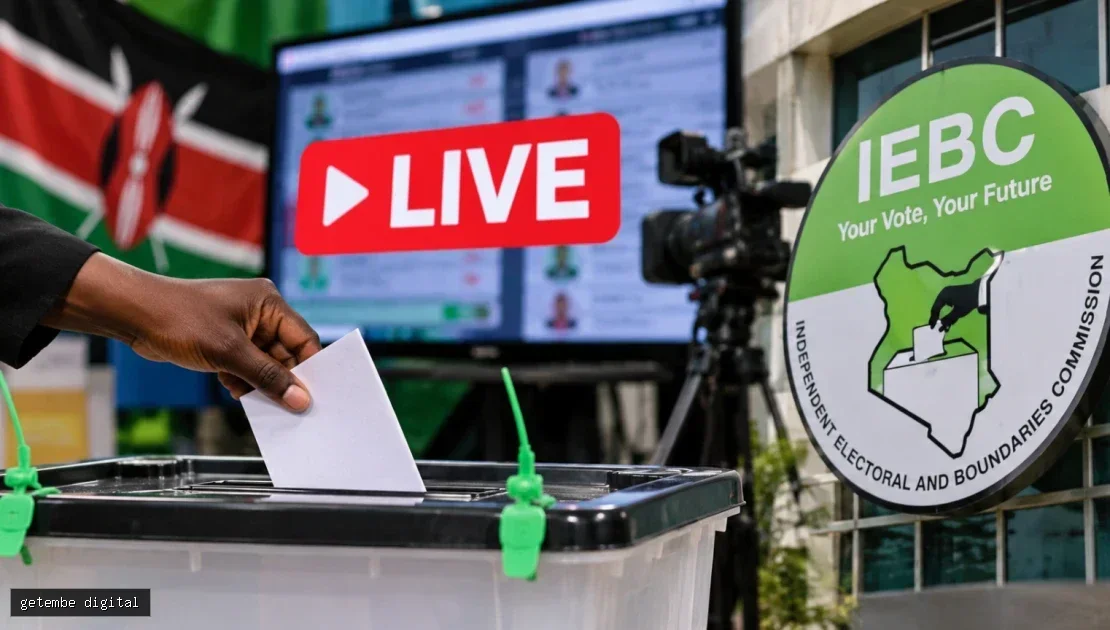
The controversy over the Elections (Amendment) Bill offers a fresh example. The proposed changes to the legal framework governing presidential election results have triggered concerns about livestreaming, public access to results and electoral transparency ahead of the 2027 General Election.
Ruto has dismissed allegations that his government intends to stop livestreaming election results, accusing political opponents of spreading propaganda similar to what he says happened during the Finance Bill protests.
But the central issue is not whether every claim made by political opponents is accurate. It is whether the government can distinguish deliberate misinformation from legitimate public concern.
That distinction matters.
Parliament has clarified that the National Assembly deleted Clause 22 of the Senate-approved Bill, retaining the existing Section 39 of the Elections Act and its livestreaming requirement. The legislative process, however, is not yet complete, and questions remain about the final law and the safeguards that will govern the 2027 elections.
Kenyans are therefore entitled to seek clarification. Asking whether election results will be accessible, verifiable and transmitted transparently is not, in itself, propaganda. It is a legitimate question about the integrity of a constitutional process.
A government confident in its position should be able to answer such questions with evidence, legal clarity and public accountability.
The constitution is not a favor from statehouse
At the heart of these controversies lies a fundamental constitutional principle: government derives its authority from the people, and that authority must be exercised within the limits of the law.
Article 1 of the Constitution vests sovereign power in the people of Kenya. Article 10 establishes national values and principles of governance, including democracy, participation of the people, transparency and accountability. Article 37 protects the right to assemble, demonstrate, picket and present petitions peacefully and unarmed.
These are not privileges granted by the President. They are constitutional rights.
When citizens protest against taxation, question electoral reforms or demand explanations from public officials, they are exercising their place in a constitutional democracy.
The government does not have to agree with every demand. Nor does every protester's allegation automatically become a fact. But disagreement does not erase the obligation to respect lawful dissent and engage with legitimate grievances.
The question, therefore, is not simply whether the government is obeying the Constitution in every individual instance. That requires examining specific decisions, actions and applicable court rulings. The broader concern is whether the administration is consistently demonstrating the constitutional values it is required to uphold.
From taxes to ballots: The same question of accountability
The Finance Bill and the Elections (Amendment) Bill concern different areas of public policy. One deals with taxation and government revenue; the other concerns the legal framework governing elections.
Yet both have generated a similar public demand: Kenyans want decisions affecting their lives and democracy to be transparent, explainable and accountable.
In 2024, protesters challenged the government's proposed approach to raising revenue. In the current debate, critics are questioning whether the electoral framework offers sufficiently clear safeguards for public scrutiny of results.
In both cases, dismissing criticism as politically motivated does not resolve the underlying questions.
The Finance Bill controversy demonstrated that public opposition can force a government to reconsider its position. It also demonstrated the dangers of allowing distrust between citizens and state institutions to escalate.
The lesson should be that public participation is not a procedural hurdle to be cleared before leaders proceed with predetermined decisions. It is a constitutional principle that requires meaningful engagement.
Similarly, electoral transparency should not be treated as a partisan demand. The credibility of an election matters whether the eventual winner belongs to the government or the opposition.
The dander of treating protest as the problem
There is a troubling possibility whenever leaders focus more on who is mobilising citizens than on why citizens are concerned.
Political actors can exploit public anger. False information can circulate. Opposition figures can pursue partisan interests. These are legitimate matters for scrutiny.
But none of them automatically invalidates the grievances being expressed.
If a proposed tax measure is unpopular, the government must explain its necessity and consequences. If an election law is contested, Parliament must explain what the proposed changes mean and why they are justified. If citizens believe their constitutional rights are threatened, institutions must respond through lawful and transparent processes.
The answer cannot always be to blame political opponents, question the motives of young people or dismiss public concern as propaganda.
Nor should Kenyans have to take to the streets before their concerns receive serious attention.
Peaceful protest is a constitutional right, not proof that the protesters have been manipulated. Equally, public anger alone does not establish that a government action is unconstitutional. Facts, law and evidence must determine that question.
Will 2027 repeat lessons from 2024?
With the next General Election approaching, the stakes are considerable.
The government has an opportunity to demonstrate that it understands the importance of public trust. Parliament can clarify the final electoral provisions, the IEBC can explain how results will be transmitted and made accessible, and the President can insist that any legislation presented for assent meets constitutional standards.
These steps would do more to address public concerns than political accusations.
Kenya's constitutional order depends not only on the existence of laws but also on whether public institutions respect their obligations and whether citizens can hold those institutions accountable.
The Finance Bill protests forced the government to confront the consequences of public distrust. The current election-law controversy presents another test of its willingness to listen before disagreement deepens.
The real question is whether the government sees public criticism as a constitutional warning to be taken seriously or merely as propaganda to be defeated.
A President may disagree with protesters. A government may defend its policies. Parliament may reject proposed amendments. But none of these powers places public institutions above the Constitution.
Ultimately, Kenya's democracy will not be strengthened by dismissing every controversy as misinformation. It will be strengthened when leaders answer difficult questions, respect constitutional rights and demonstrate through their actions that public accountability applies to those in power as much as it does to the citizens they govern.
ADVERTISEMENT
Watch Getembe TV Live
Broadcast Getembe TV Live Stream
Listen Getembe FM Live
Tune in to Getembe FM Live Broadcast
How do you feel about this article?
Let us know by choosing a reaction below.

Written by FRANKLINE NYANDORO
Reporter and staff writer at Getembe News.
Comments 0
Please log in to participate in the comments section.
No comments yet. Be the first to share your thoughts!
ADVERTISEMENT
Related Stories


Have a news tip?
Do you have an investigation, local story or news event you think we should cover? Contact our newsroom directly.
Submit Tip
Mobile App
Download Getembe Digital App Today
Download Getembe Digital App today for live news updates, breaking notifications, and seamless live streaming.