
KENYA CONFIRMS SECOND EBOLA CASE AS CONCERNS GROW OVER VIRUS SPREAD
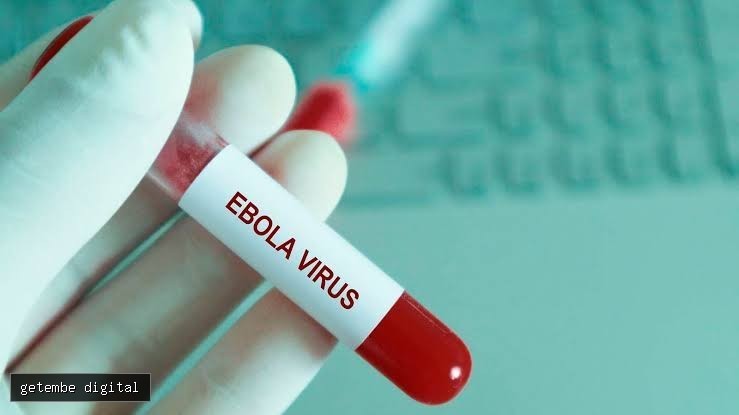
Kenya has confirmed a second Bundibugyo Ebola case involving a relative of the first patient, with health officials maintaining quarantine and contact-tracing measures as WHO monitors the situation.
Watch Getembe TV Live
Broadcast Getembe TV Live Stream
Listen Getembe FM Live
Tune in to Getembe FM Live Broadcast
Kenya’s Ministry of Health has confirmed a second case of Ebola virus disease, involving a close relative of the country’s first patient, even as the World Health Organization maintains there is no evidence of an ongoing outbreak or community transmission.

The new patient, a 39-year-old man, developed symptoms including fever, fatigue and joint pains on Tuesday while already under mandatory quarantine and daily medical surveillance. He was isolated immediately and tested positive for the Bundibugyo strain of the virus, the same type that killed the index patient.
Health officials stressed that the two cases are directly linked and that there is no sign the virus has spread more widely. “Both cases are linked, and there is no evidence of spread in the wider community,” the ministry said in a statement. “Kenya remains open, with no restrictions on travel, trade or public gatherings.”
Kenya recorded its first-ever Ebola case on October 6 after a 40-year-old Kenyan citizen who had lived in the Democratic Republic of Congo for seven years died in a Nairobi hospital. The man fell ill in the DRC about a month earlier, travelled by road to Kampala, Uganda, and flew into Nairobi on October 3. Despite standard airport screening, he was taken by relatives to hospital with fever, chills, muscle pain, sore throat and bleeding under the skin. Laboratory tests at the National Virology Reference Laboratory and the Kenya Medical Research Institute confirmed Bundibugyo virus. He died on the night of October 5 and was buried under strict safe-burial protocols.
Authorities have identified 128 contacts of the first patient. Of these, 113 have been located, with 108 in quarantine in Kenya. Tracing of the remaining contacts continues, including some outside the country.
The World Health Organization has repeatedly reassured the public that the situation remains contained. Dr Martins Chibueze, WHO Kenya’s Head of Health Emergencies, said this week: “There’s no evidence of an ongoing Ebola outbreak in Kenya following the confirmation of one imported case.” WHO has provided testing kits, personal protective equipment and technical support while working closely with Kenyan authorities on contact tracing and surveillance.
Kenya is the fourth country to record a case linked to the large Bundibugyo Ebola outbreak in eastern Democratic Republic of Congo, which has already caused thousands of cases and more than 4,000 deaths. Uganda reported linked cases earlier in the year but was declared free of the disease in August.
Health Cabinet Secretary Aden Duale has urged calm and vigilance, noting that more than 650,000 travellers have been screened at points of entry and nearly 5,000 health workers trained in Ebola response. Five laboratories are testing samples, and isolation facilities are ready.
Officials continue to appeal to the public to seek medical care if they have possible exposure or develop symptoms, and to rely on verified information from the Ministry of Health and WHO.
ADVERTISEMENT
Watch Getembe TV Live
Broadcast Getembe TV Live Stream
Listen Getembe FM Live
Tune in to Getembe FM Live Broadcast
How do you feel about this article?
Let us know by choosing a reaction below.

Written by FRANKLINE NYANDORO
Reporter and staff writer at Getembe News.
Comments 0
Please log in to participate in the comments section.
No comments yet. Be the first to share your thoughts!
ADVERTISEMENT
Related Stories


Have a news tip?
Do you have an investigation, local story or news event you think we should cover? Contact our newsroom directly.
Submit Tip
Mobile App
Download Getembe Digital App Today
Download Getembe Digital App today for live news updates, breaking notifications, and seamless live streaming.