
“NO KENYAN LEFT BEHIND”: MATIANG’I’S PUSHBACK ON GACHAGUA’S VOTE CALCULATIONS
Matiang’i has challenged Gachagua’s ethnic vote calculations, warning that excluding other leaders could fracture the opposition before it settles on a presidential candidate to challenge Ruto in 2027.

Watch Getembe TV Live
Broadcast Getembe TV Live Stream
Listen Getembe FM Live
Tune in to Getembe FM Live Broadcast
Jubilee Party leader Fred Matiang’i has challenged former Deputy President Rigathi Gachagua's approach to opposition politics, warning that calculating political power through ethnic voting blocs could undermine efforts to build a united front against President William Ruto in the 2027 General Election.
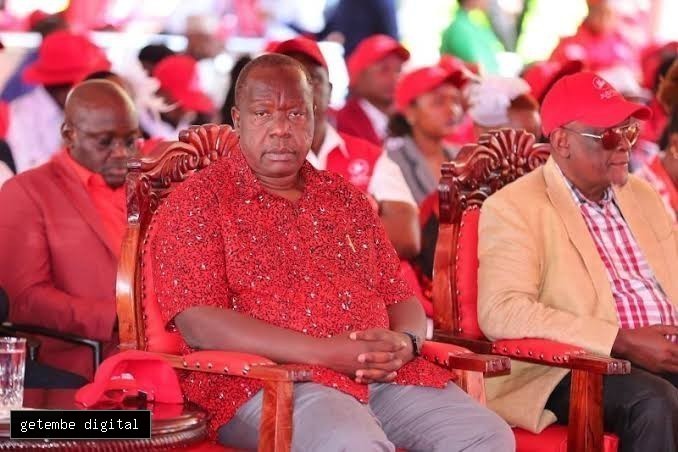
The disagreement exposes a growing fault line within the opposition: whether the next presidential candidate should emerge from negotiations based on perceived ethnic voting strength or through a broader process that considers leadership credentials, national appeal and political inclusion.
The dispute followed Gachagua's interview on Inooro TV on Sunday, November 1, 2026, during which he outlined what appeared to be his preferred arithmetic for assembling an opposition victory.
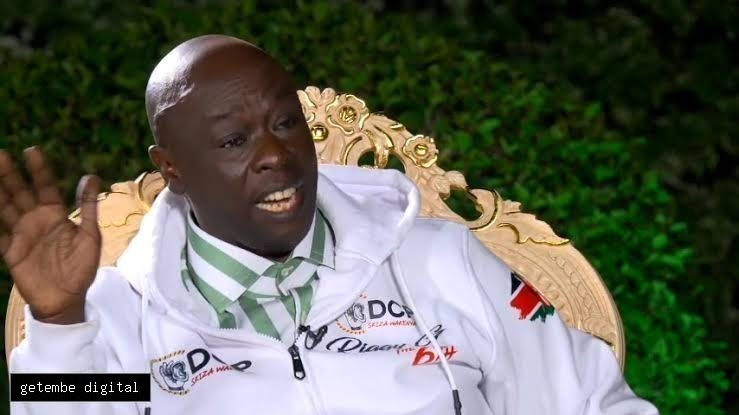
The Democracy for the Citizens Party (DCP) leader estimated that he could bring approximately 10 million votes from the Mount Kenya and Maasai communities, while Wiper leader Kalonzo Musyoka could contribute about three million votes from Ukambani. He also attributed roughly four million votes to Nairobi Senator Edwin Sifuna's Linda Mwananchi movement in Western Kenya.
Gachagua placed Matiang'i's potential support from the Gusii community at approximately 800,000 votes, suggesting that the three other political figures already had sufficient numbers to form the next government, with additional leaders free to join.
However, these figures remain political estimates rather than verified commitments from voters. More importantly, they raised a question about how leaders outside the proposed arrangement would fit into an opposition coalition seeking to present itself as a national alternative.
Responding during an interview with NTV later that Sunday, Matiang'i dismissed the approach, describing it as a form of majoritarian arrogance that could fracture the opposition before it even settles on a presidential candidate.
"That majoritarian arrogance and that particular pride is precisely what is going to split the opposition and make it very difficult for the opposition to come together," he said.
The former Interior Cabinet Secretary argued that Kenya's leadership should not be determined by a handful of political figures assigning communities to particular candidates and calculating their combined electoral strength.
"I thought that this was a competition of ideas, platforms, track records, competence and qualifications," Matiang'i said, insisting that the opposition should focus on presenting a credible alternative to the current administration rather than treating communities as political bargaining units.
He questioned what would happen to Kenyans whose communities were not included in the proposed calculations, arguing that national leadership must accommodate the country's diverse population.
"No Kenyan left behind. We must have everyone on board," he said, adding that Kenya's future could not be decided through ethnic balkanisation.
Matiang'i also invoked the 2007 post-election crisis, warning against the kind of political arrogance and ethnic exclusivity that contributed to the divisions witnessed during that period.
"Our country does not belong to three groups; our country belongs to more than 40 groups," he argued.
His criticism goes beyond the question of how many votes individual politicians claim to control. It challenges the assumption that ethnic communities can be treated as predictable political assets that automatically follow the positions taken by their leaders.
Gachagua's arithmetic may offer a convenient starting point for coalition negotiations, but it leaves unanswered questions about the millions of Kenyans outside the proposed blocs, the actual preferences of voters within those communities and the criteria through which a presidential candidate should be selected.
There is also a political contradiction at the centre of the opposition's unity campaign. While leaders are calling for a common front against Ruto, the competition to establish who brings the largest voting bloc risks creating an informal hierarchy in which some politicians are treated as indispensable while others are expected to negotiate from a weaker position.
Matiang'i said he would support any candidate selected through an inclusive, acceptable and respectful process. However, he objected to a situation where a small group of leaders could effectively decide the coalition's direction and expect everyone else to fall in line.
He also argued that credible opinion surveys suggested a divided opposition would offer Ruto a clearer path to retaining power, making the disagreements particularly consequential as the 2027 election approaches.
Ultimately, the disagreement exposes a fundamental challenge facing the opposition. It must find a way to balance regional political influence with national inclusion without allowing the presidential succession contest to become a competition over whose community carries the greatest numerical weight.
The opposition may need numbers to win an election, but numbers alone cannot settle questions of leadership, public trust, policy direction and the legitimacy of the process through which its candidate emerges.
If Gachagua's arithmetic becomes the foundation of coalition negotiations, leaders outside his proposed arrangement may question whether they are being invited to build a national movement or simply asked to endorse a political formula already designed by a few influential figures.
That is the tension Matiang'i has brought into the open, and one the opposition will have to confront before its search for unity becomes another source of division.
ADVERTISEMENT
Watch Getembe TV Live
Broadcast Getembe TV Live Stream
Listen Getembe FM Live
Tune in to Getembe FM Live Broadcast
How do you feel about this article?
Let us know by choosing a reaction below.

Written by FRANKLINE NYANDORO
Reporter and staff writer at Getembe News.
Comments 0
Please log in to participate in the comments section.
No comments yet. Be the first to share your thoughts!
ADVERTISEMENT
Related Stories
Have a news tip?
Do you have an investigation, local story or news event you think we should cover? Contact our newsroom directly.
Submit Tip
Mobile App
Download Getembe Digital App Today
Download Getembe Digital App today for live news updates, breaking notifications, and seamless live streaming.