25 YEARS, MANY PARTIES: IS ONYONKA’S FLEXIBILITY PRINCIPLE OR POLITICAL SURVIVAL?
Onyonka wants broad opposition partnerships, but his own shifting loyalties invite scrutiny. Is it principle or political convenience?
Watch Getembe TV Live
Broadcast Getembe TV Live Stream
Listen Getembe FM Live
Tune in to Getembe FM Live Broadcast
Political loyalty is one of the most important currencies in politics, yet it is also one of the most frequently abused. Politicians demand loyalty from their supporters, expect their allies to stand by them through difficult moments and invoke political solidarity whenever it serves their interests. But when their own allegiances change with the prevailing political winds, questions about consistency, principles and credibility inevitably arise.
Kisii Senator Richard Onyonka's latest remarks defending his political decisions have brought this debate back into focus. Responding to criticism over his political positioning, Onyonka insists that the opposition's priority should be removing President William Ruto from office rather than building ethnic political kingdoms. He argues that defeating the President requires partnerships across communities and political formations, insisting that the opposition must mobilise at least eight million votes.
His argument about the importance of political partnerships deserves consideration. No serious national political movement can afford to isolate entire communities or dismiss leaders simply because they come from different political backgrounds. However, the question surrounding Onyonka goes beyond coalition-building. It concerns the consistency of his own political loyalties and what his journey tells Kenyans about the relationship between political principles and political convenience.
Onyonka's political history provides considerable material for this discussion. First elected to Parliament in 2007 on a People's Democratic Party (PDP) ticket, he subsequently gravitated towards the Orange Democratic Movement (ODM). He later moved to Jubilee in 2015, returned to ODM in 2016, and joined Ford Kenya in 2017, before returning to ODM in November 2021. These movements were accompanied by changing political circumstances and explanations, including disagreements over party nominations and political direction.
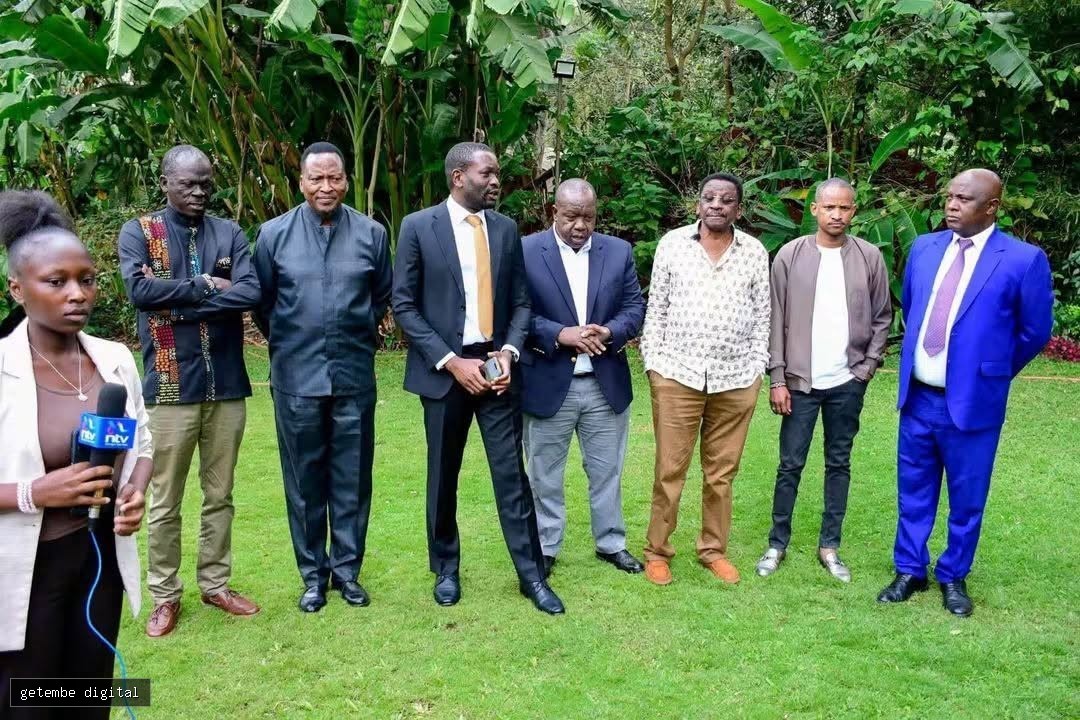
More recently, his political positioning has attracted attention because of his support for former Interior Cabinet Secretary Fred Matiang'i's presidential ambitions and his subsequent association with Edwin Sifuna's Linda Mwananchi political camp. On October 30, 2026, he was appointed treasurer of the movement, a development that generated questions about his earlier political commitments.
There is nothing inherently wrong with changing political parties or reconsidering alliances. Political parties are not permanent marriages, and politicians should not be expected to defend positions they no longer believe in simply to demonstrate loyalty. Political circumstances change, coalitions evolve, and leaders must sometimes make difficult decisions when their principles conflict with party positions.
Indeed, blind loyalty can be just as damaging as opportunistic politics. A politician who refuses to question their party leadership, even when confronted with wrongdoing or failed policies, is not necessarily demonstrating integrity. Sometimes, leaving a political formation is precisely what principled leadership requires.
But there is an important distinction between changing one's political position because of conviction and repeatedly repositioning oneself without providing voters with a convincing explanation. Political flexibility should not become an excuse for abandoning accountability. When leaders change political homes, their supporters deserve to understand what has changed: their ideology, their political objectives, their assessment of leadership or simply their calculation of where their interests are best served.
This is where Onyonka's invocation of his more than 25 years in active politics becomes particularly interesting. Experience should certainly count for something. It gives politicians an understanding of political negotiations, electoral realities and the compromises required to build coalitions. However, longevity in politics should also invite greater scrutiny. The longer someone has participated in public life, the more important it becomes to examine the consistency of their decisions and the explanations behind them.
Political credibility is not built merely by remaining relevant through successive political administrations. It is built by establishing a recognisable set of principles, communicating those principles honestly and accepting responsibility when political decisions contradict previous commitments. Voters may forgive a politician for changing their mind, but they are less likely to trust someone who appears to change their convictions whenever political circumstances become unfavourable.
There is also a wider implication for Kenya's democratic culture. Political parties risk becoming temporary vehicles for individual ambitions rather than institutions organised around identifiable ideologies, policy priorities and governing philosophies. When politicians move freely between formations without meaningful ideological explanations, party identities become difficult for voters to distinguish. Elections then risk becoming contests between personalities, alliances and political arithmetic rather than competing ideas about how the country should be governed.
Onyonka is right to raise the importance of building partnerships beyond ethnic and regional boundaries. However, national coalition-building must be accompanied by political honesty. A movement seeking to persuade millions of Kenyans to trust it with national leadership must demonstrate that its members share more than a temporary desire to remove an incumbent president.
Ultimately, political loyalty should not mean unquestioning allegiance to individuals or parties. It should mean commitment to principles, public accountability and the electorate whose interests politicians claim to represent. Leaders are entitled to change their political positions, but citizens are equally entitled to question those changes.
After more than two decades in politics, Onyonka's experience may explain his flexibility. What it cannot do is place his political decisions beyond public examination. In a democracy, political experience is not a substitute for consistency, and political survival should never become the ultimate measure of leadership.
The question is not whether Richard Onyonka has the right to change political allegiance. He does. The more important question is whether the reasons behind those changes demonstrate a consistent political philosophy or simply an ability to remain on the side of whichever political arrangement offers the most favourable prospects.
ADVERTISEMENT
Watch Getembe TV Live
Broadcast Getembe TV Live Stream
Listen Getembe FM Live
Tune in to Getembe FM Live Broadcast
How do you feel about this article?
Let us know by choosing a reaction below.

Written by FRANKLINE NYANDORO
Reporter and staff writer at Getembe News.
Comments 0
Please log in to participate in the comments section.
No comments yet. Be the first to share your thoughts!
ADVERTISEMENT
Related Stories


Have a news tip?
Do you have an investigation, local story or news event you think we should cover? Contact our newsroom directly.
Submit Tip
Mobile App
Download Getembe Digital App Today
Download Getembe Digital App today for live news updates, breaking notifications, and seamless live streaming.