RAILA’S LEGACY, THE ODINGA DYNASTY AND THE 2027 TEST: CAN POLITICAL LOYALTY BE INHERITED?
As Kenya edges closer to the 2027 General Election, the Odinga family faces a defining political question: can the loyalty that sustained Raila Odinga’s decades-long political career be passed on to his relatives, or must each member earn it afresh?
Watch Getembe TV Live
Broadcast Getembe TV Live Stream
Listen Getembe FM Live
Tune in to Getembe FM Live Broadcast
The death of former Prime Minister Raila Odinga in October 2025 marked the end of an era in Kenyan politics. For decades, he was more than an opposition leader. To millions of supporters, he represented political resistance, the struggle for democratic reform and the hope of a different political order.
Now, with several members of the Jaramogi Oginga Odinga family reportedly positioning themselves for elective office, attention is shifting from Raila’s legacy to the people seeking to carry it forward.
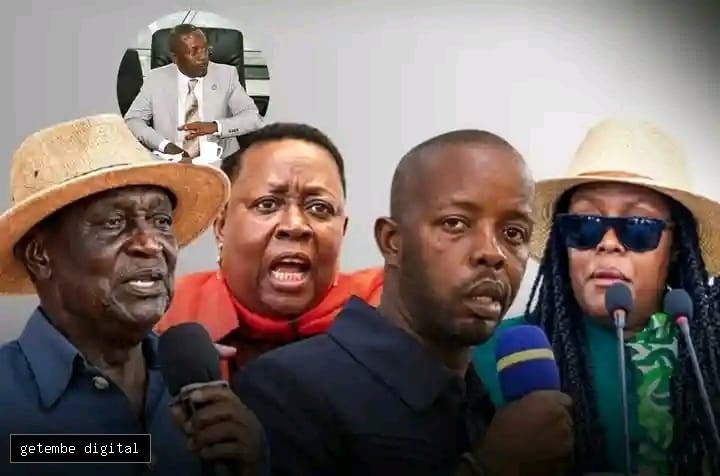
Dr. Oburu Oginga, the Siaya senator and Orange Democratic Movement (ODM) leader, faces the challenge of maintaining party cohesion and preserving the political influence built over generations. Meanwhile, Kisumu MP Ruth Odinga has declared interest in the Kisumu gubernatorial race, Raila Odinga Junior is seeking the Kibra parliamentary seat, and Jaoko Oburu, Oburu’s son, has expressed interest in the Bondo parliamentary seat. Winnie Odinga, the East African Legislative Assembly (EALA) representative, is also reported to be eyeing the Nairobi senatorial seat.
If these ambitions materialise, the 2027 elections could become a significant test of the family's political reach. But the number of relatives seeking office may prove less important than whether voters believe they can independently command the support associated with Raila.
A famous name is not a guarantee nor an advantage
The Odinga name carries considerable political weight, particularly in Nyanza, where Raila maintained a formidable support base for decades. His family possesses political networks, public recognition and a historical connection to a movement that shaped Kenya’s multiparty politics.
Yet political inheritance is rarely automatic.
Raila’s influence was built through years of political struggle, periods of detention, repeated presidential bids, mass mobilisation and his ability to connect with supporters across generations. His political identity was forged through personal experiences that no relative can inherit simply by sharing his surname.
The family name may open doors, but it cannot guarantee that voters will walk through them.
Each aspirant must demonstrate an understanding of local concerns, present a convincing political agenda and establish a relationship with constituents that extends beyond nostalgia for Raila.
For voters struggling with unemployment, the cost of living, access to public services and questions of accountability, historical loyalty may matter but so will practical results.
Who inherits Raila's following?
Perhaps the most difficult question is whether Raila’s supporters will rally behind one family member, distribute their support among several relatives or make decisions based on individual candidates and the offices they seek.
Raila’s political following was never simply a family possession. It was also a coalition of voters, political organisers, elected leaders and citizens who identified with his political positions.
That distinction matters because loyalty to Raila did not necessarily mean unconditional loyalty to every member of his family.
Some supporters may view Oburu as the figure best placed to preserve ODM’s institutional stability. Others may connect more closely with Winnie’s political generation, while still others may judge Ruth, Raila Junior or Jaoko on their individual records and ambitions.
There is also the question of political direction. What does it mean to carry Raila’s legacy in a changing political environment? Does it require cooperation with the government, a return to a more confrontational opposition role, or a renewed commitment to the principles on which ODM built its identity?
These questions could shape the party’s future as much as the outcome of individual elections.
The risk of turning a legacy into a dynasty
Multiple family candidacies could strengthen the Odingas’ political presence across different constituencies. But they could also expose the limits of family-based political mobilisation.
Where several relatives pursue elective office simultaneously, voters may begin asking whether the family is offering distinct political solutions or consolidating influence within a single political network.
That question is not unique to the Odingas. It reflects a wider democratic debate in Kenya: when does a political family’s continued participation represent legitimate voter choice, and when does it risk narrowing opportunities for other leaders?
There is nothing inherently undemocratic about relatives seeking public office. The decisive issue is whether they win competitive elections on the strength of their own programmes, records and public support.
The ballot box, rather than family history, ultimately determines who receives a mandate.
The 2027 verdict
The coming election could reveal whether Raila Odinga’s political influence can survive beyond his personal leadership and whether the institutions and relationships he built are strong enough to endure without him.
For the Odinga family, the challenge is not merely to preserve a famous name. It is to convince voters that its next generation can offer credible leadership in its own right.
Raila’s legacy may give his relatives a head start, but it cannot guarantee their destination.
Ultimately, the most revealing measure of his political inheritance will not be how many family members secure elective seats. It will be whether the principles, political loyalties and public trust associated with him continue to influence Kenya’s political direction after his death.
The question facing the Odingas is therefore bigger than succession: can they inherit Raila’s political platform without assuming that they have automatically inherited his people?
In 2027, voters will have the final say.
ADVERTISEMENT
Watch Getembe TV Live
Broadcast Getembe TV Live Stream
Listen Getembe FM Live
Tune in to Getembe FM Live Broadcast
How do you feel about this article?
Let us know by choosing a reaction below.

Written by FRANKLINE NYANDORO
Reporter and staff writer at Getembe News.
Comments 0
Please log in to participate in the comments section.
No comments yet. Be the first to share your thoughts!
ADVERTISEMENT
Related Stories
Have a news tip?
Do you have an investigation, local story or news event you think we should cover? Contact our newsroom directly.
Submit Tip
Mobile App
Download Getembe Digital App Today
Download Getembe Digital App today for live news updates, breaking notifications, and seamless live streaming.