
MBADI’S INTERVIEW UNDER SCRUTINY: WHEN THE TREASURY CS CANNOT ANSWER ON BILLION-SHILLING PROJECTS
Mbadi was confident on the economy but unsure on the Dangote investment and the stadium’s final cost. What does it say about accountability in government?
Watch Getembe TV Live
Broadcast Getembe TV Live Stream
Listen Getembe FM Live
Tune in to Getembe FM Live Broadcast
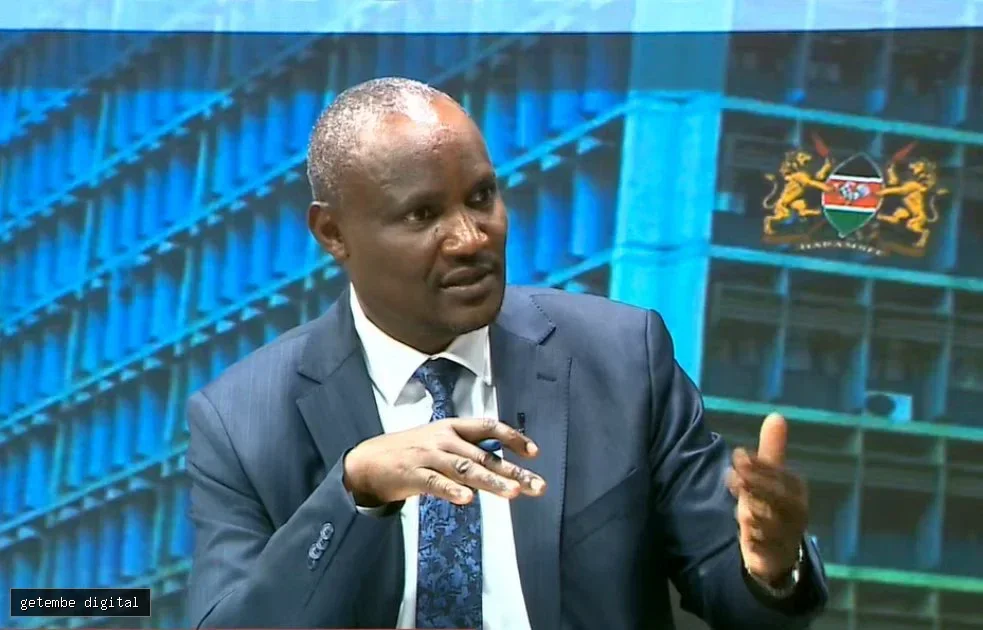
Treasury Cabinet Secretary John Mbadi is facing fresh questions over his grasp of key government projects after a recent televised interview exposed apparent gaps in his knowledge of decisions involving billions of shillings.
For a Cabinet Secretary expected to understand the country’s financial direction, some of his responses were difficult to ignore. At a time when the government is selling ambitious investment plans and defending major spending decisions, Kenyans would reasonably expect the man in charge of the Treasury to have clear answers.
The most striking moment concerned the proposed National Infrastructure Fund investment in the Dangote refinery project. Asked whether the Fund’s board had considered the investment, Mbadi initially said he did not think so. He later suggested that the board might have made a decision without his knowledge.
That answer raised an uncomfortable question: how can a Cabinet Secretary who chairs the Fund’s Oversight Council be uncertain about a major investment proposal publicly associated with the President’s economic agenda?
President William Ruto has previously spoken about the proposed investment as part of the government's infrastructure financing ambitions. Mbadi’s uncertainty therefore exposed a possible disconnect between the President’s public declarations and the officials expected to oversee the financial machinery behind them.
It is not necessarily proof that the project has been mishandled, but it does raise questions about communication, institutional coordination and who actually knows what is happening inside government.
The uncertainty did not end with the Dangote proposal. When the discussion turned to Talanta Stadium, now renamed Raila Odinga International Stadium, Mbadi expressed satisfaction with the financing model involving the Sports Fund and bond raising. However, when pressed on the figures, he estimated that approximately KSh40 billion had been raised through the bond arrangement, only to indicate that he would need to confirm the details.
More significantly, he could not provide the stadium’s final cost, referring the matter to officials in the sports sector.
For a project that has attracted considerable public attention and involved substantial public financing, the inability of the Treasury CS to state its final cost raises legitimate accountability concerns. The public should not have to piece together the financial details of major national projects from scattered statements by different government officials.
Mbadi was considerably more confident when discussing broader economic indicators. He defended the government's debt management record, pointing to improvements in debt-service indicators, reduced exposure to dollar-denominated borrowing and the stabilisation of the shilling.
He also discussed a proposed PAYE tax reduction, saying the Bill had been prepared and signed off and was expected to reach Parliament before the recess, with implementation targeted for January 2027. However, that timeline remains dependent on parliamentary approval and the necessary legislative process.
The contrast was telling. On broad economic talking points, the CS appeared comfortable. But when the questions moved from general figures to specific projects, investment decisions and final costs, his answers became less certain.
Another uncomfortable moment came when he was asked about the concept of odious debt. Rather than directly engaging with the substance of the question, Mbadi challenged the credibility of the person associated with the argument. That response may have deflected the political criticism, but it did little to settle the underlying question about the country's borrowing and accountability.
This is where the familiar political description of Ruto's Cabinet as a collection of clueless Cabinet Secretaries finds fresh material. The phrase is often used by critics to question whether some members of the President's team understand the policies they are implementing or can adequately defend the decisions made under their ministries.
However, the concern goes beyond one interview or one Cabinet Secretary. A government cannot expect citizens to trust ambitious financial plans when the officials responsible for overseeing them appear uncertain about basic details.
Mbadi is not expected to memorise every technical figure or personally manage every construction project. But there is a difference between acknowledging the need to verify a technical detail and appearing unaware of major decisions within institutions he is expected to oversee.
Ultimately, the Treasury CS's responsibility is not simply to defend the government's economic record. It is also to explain how public money is being raised, allocated and spent.
And when a Cabinet Secretary cannot provide clear answers about projects worth billions, the question becomes bigger than whether he had a bad interview. It becomes a question of whether the government has the information, coordination and accountability systems needed to deliver on its promises.
ADVERTISEMENT
Watch Getembe TV Live
Broadcast Getembe TV Live Stream
Listen Getembe FM Live
Tune in to Getembe FM Live Broadcast
How do you feel about this article?
Let us know by choosing a reaction below.

Written by FRANKLINE NYANDORO
Reporter and staff writer at Getembe News.
Comments 0
Please log in to participate in the comments section.
No comments yet. Be the first to share your thoughts!
ADVERTISEMENT
Related Stories


Have a news tip?
Do you have an investigation, local story or news event you think we should cover? Contact our newsroom directly.
Submit Tip
Mobile App
Download Getembe Digital App Today
Download Getembe Digital App today for live news updates, breaking notifications, and seamless live streaming.