RUTO’S VISION BEYOND 2030: WHAT IT MEANS FOR ORDINARY KENYANS
President Ruto has launched a nationwide conversation for Kenyans to help craft a new long-term development plan after Vision 2030 ends.
Watch Getembe TV Live
Broadcast Getembe TV Live Stream
Listen Getembe FM Live
Tune in to Getembe FM Live Broadcast
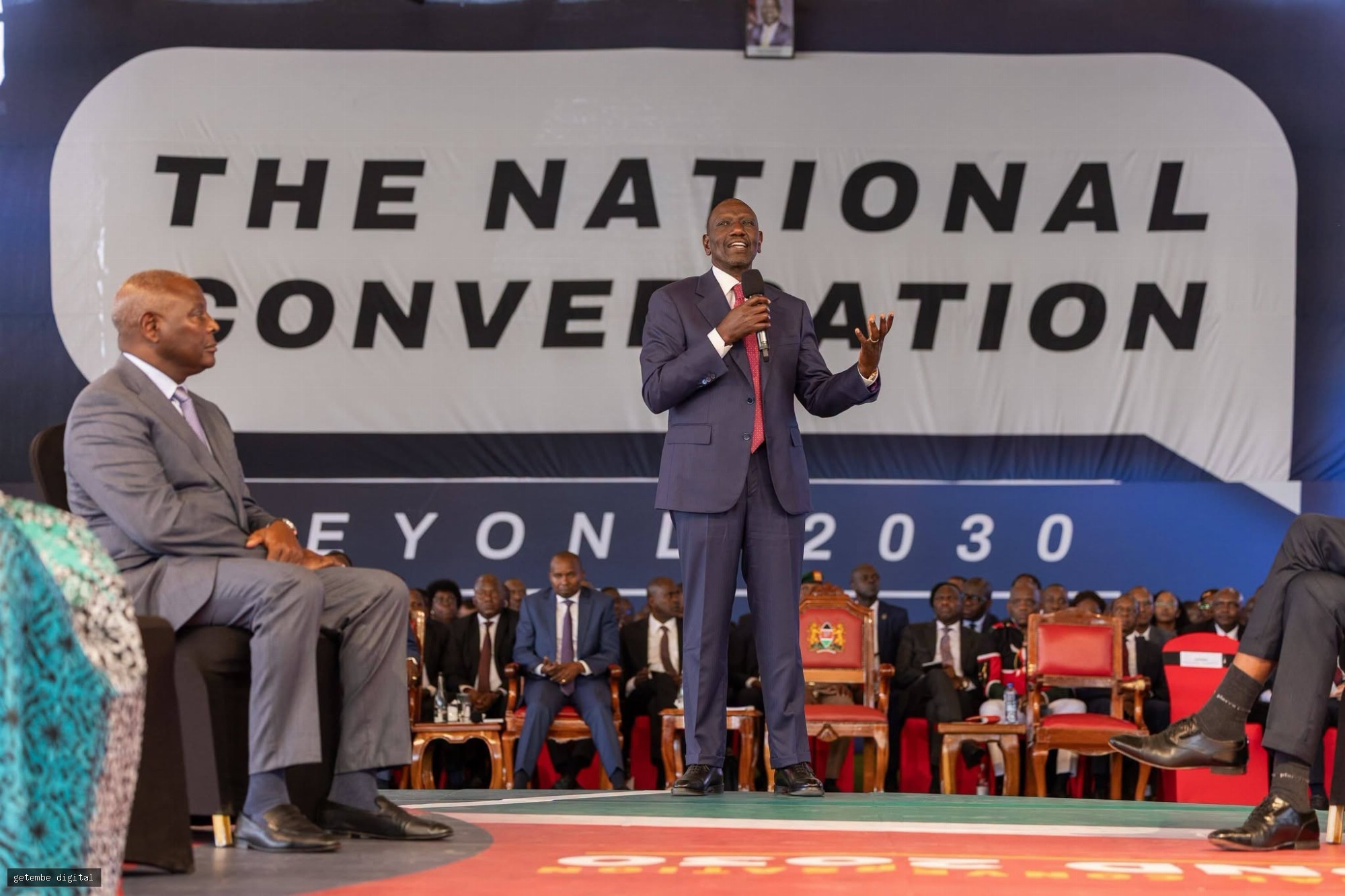
President William Ruto has started a nationwide process to create Kenya’s next long-term development plan after Vision 2030 comes to an end.
This is not a finished document handed down from State House. It is the beginning of a big public conversation so ordinary Kenyans can help decide what kind of country we want to build over the next generation, roughly the next 25 to 30 years. Some reports have referred to the emerging idea as Vision 2060.
In 2008, under President Mwai Kibaki, Kenya launched Vision 2030 as the country’s main long-term roadmap. Its big goal was to turn Kenya into a newly industrialised, middle-income country with a high quality of life by 2030. The plan guided investments in roads, railways, electricity, education, health and other areas, and it shaped how successive governments thought about the future. Vision 2030 is now in its final years. President Ruto has said it served Kenya well in many respects but that some key targets, especially becoming an upper-middle-income country, have not been fully met. The time has therefore come to look ahead honestly, keep what worked, learn from what did not, and set a new direction.
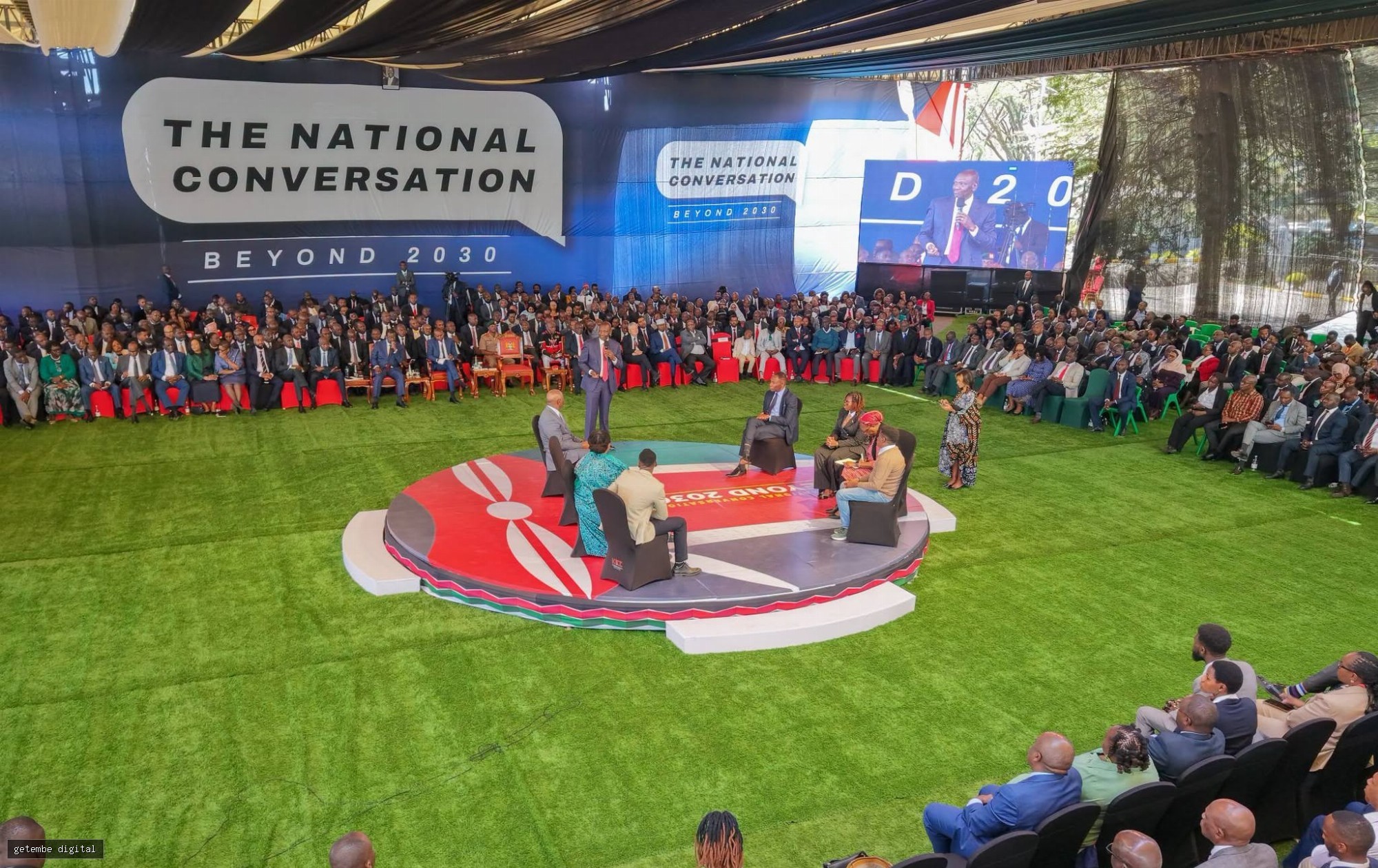
On 30 July 2026, Ruto gave a special national address from State House and announced that Kenya would begin a formal National Conversation on Kenya’s Future Beyond Vision 2030. The official launch of that conversation took place on 12 August 2026 at the KICC in Nairobi. The aim is to create a new people-driven National Development Charter that is stronger than ordinary government plans or party manifestos so it can survive changes of government and election cycles. It is meant to be anchored in the 2010 Constitution, which already requires public participation and sets out development goals for Kenyans. Experts who prepared initial proposals, led by Professors Hiroyuki Hino and Anyang’ Nyong’o among others, suggested that Kenya can become a prosperous, industrialised, high-income and globally competitive nation within one generation if the country remains focused and united.
Ruto has stressed repeatedly that this is not a government project written only by officials in Nairobi. Government will provide the platform and resources, but Kenyans — young people, workers, farmers, business people, churches, civil society, counties, professionals and others — are expected to shape the content. He has described it as one of the most important national conversations since the promulgation of the 2010 Constitution itself.
For an ordinary Kenyan, this matters because Vision 2030 was the old map. We are now drawing a new one together for the years after 2030. The new plan is expected to focus on practical issues that affect daily life: jobs especially for the youth, industrialisation and value addition, better education and skills, affordable healthcare, food security, climate resilience, infrastructure, technology and good governance. The goal is long-term transformation rather than short-term political promises that change every five years. If done well, the new charter should give the country a shared destination that future presidents and governors are expected to follow instead of starting from scratch after every election.
Public consultations and conversations are now under way across the country. Kenyans are being invited to give ideas. The expert proposals are only a starting point for discussion, not the final document. The process is meant to be inclusive and transparent so the final vision truly belongs to the people of Kenya. In short, President Ruto has opened the floor for Kenyans to help write the country’s next big development story after Vision 2030. The process has just begun. Whether it delivers real change will depend on how seriously the public, leaders and institutions engage with it in the months and years ahead.
This is not a finished document handed down from State House. It is the beginning of a big public conversation so ordinary Kenyans can help decide what kind of country we want to build over the next generation, roughly the next 25 to 30 years. Some reports have referred to the emerging idea as Vision 2060.
In 2008, under President Mwai Kibaki, Kenya launched Vision 2030 as the country’s main long-term roadmap. Its big goal was to turn Kenya into a newly industrialised, middle-income country with a high quality of life by 2030. The plan guided investments in roads, railways, electricity, education, health and other areas, and it shaped how successive governments thought about the future. Vision 2030 is now in its final years. President Ruto has said it served Kenya well in many respects but that some key targets, especially becoming an upper-middle-income country, have not been fully met. The time has therefore come to look ahead honestly, keep what worked, learn from what did not, and set a new direction.
On 30 July 2026, Ruto gave a special national address from State House and announced that Kenya would begin a formal National Conversation on Kenya’s Future Beyond Vision 2030. The official launch of that conversation took place on 12 August 2026 at the KICC in Nairobi. The aim is to create a new people-driven National Development Charter that is stronger than ordinary government plans or party manifestos so it can survive changes of government and election cycles. It is meant to be anchored in the 2010 Constitution, which already requires public participation and sets out development goals for Kenyans. Experts who prepared initial proposals, led by Professors Hiroyuki Hino and Anyang’ Nyong’o among others, suggested that Kenya can become a prosperous, industrialised, high-income and globally competitive nation within one generation if the country remains focused and united.
Ruto has stressed repeatedly that this is not a government project written only by officials in Nairobi. Government will provide the platform and resources, but Kenyans — young people, workers, farmers, business people, churches, civil society, counties, professionals and others — are expected to shape the content. He has described it as one of the most important national conversations since the promulgation of the 2010 Constitution itself.
For an ordinary Kenyan, this matters because Vision 2030 was the old map. We are now drawing a new one together for the years after 2030. The new plan is expected to focus on practical issues that affect daily life: jobs especially for the youth, industrialisation and value addition, better education and skills, affordable healthcare, food security, climate resilience, infrastructure, technology and good governance. The goal is long-term transformation rather than short-term political promises that change every five years. If done well, the new charter should give the country a shared destination that future presidents and governors are expected to follow instead of starting from scratch after every election.
Public consultations and conversations are now under way across the country. Kenyans are being invited to give ideas. The expert proposals are only a starting point for discussion, not the final document. The process is meant to be inclusive and transparent so the final vision truly belongs to the people of Kenya. In short, President Ruto has opened the floor for Kenyans to help write the country’s next big development story after Vision 2030. The process has just begun. Whether it delivers real change will depend on how seriously the public, leaders and institutions engage with it in the months and years ahead.
ADVERTISEMENT
Watch Getembe TV Live
Broadcast Getembe TV Live Stream
Listen Getembe FM Live
Tune in to Getembe FM Live Broadcast
How do you feel about this article?
Let us know by choosing a reaction below.
Comments 0
Please log in to participate in the comments section.
No comments yet. Be the first to share your thoughts!
ADVERTISEMENT
Related Stories
Have a news tip?
Do you have an investigation, local story or news event you think we should cover? Contact our newsroom directly.
Submit Tip
Mobile App
Download Getembe Digital App Today
Download Getembe Digital App today for live news updates, breaking notifications, and seamless live streaming.