BEYOND PLACEMENT: IS KENYA READY FOR THE SECOND GRADE 10 COHORT?
Over 1.2 million learners are sitting KJSEA, but are senior schools ready? Staffing, labs, funding and career guidance gaps will decide how the second Grade 10 cohort fares.
Watch Getembe TV Live
Broadcast Getembe TV Live Stream
Listen Getembe FM Live
Tune in to Getembe FM Live Broadcast
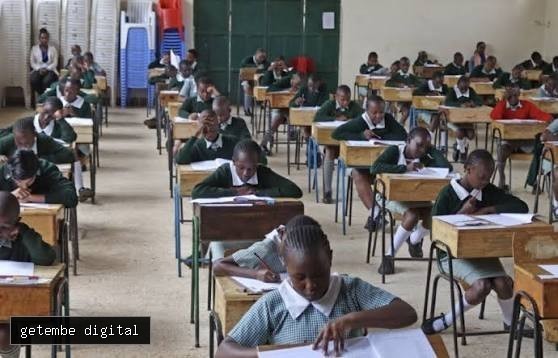
The five-day assessment, which began on October 26, has registered 1,206,028 candidates, up from 1,130,679 in 2025. Their results will guide placement into senior schools in January 2027, when the second cohort is expected to enter Grade 10 under the Competency-Based Education (CBE) framework.
But beyond the numbers, the transition raises questions about the quality of learning awaiting the incoming learners, particularly in Science, Technology, Engineering and Mathematics (STEM), where strong foundational skills, trained teachers and adequately equipped laboratories are essential.
The pioneer cohort, which entered senior school in January 2026, exposed gaps in staffing, infrastructure, career guidance and financing. With another large intake approaching, education stakeholders will be watching to see whether the system has made meaningful progress or whether the same challenges will follow learners into the next academic year.
The 2025 KJSEA results offered an early warning about the academic foundations on which senior school learning would depend.
According to figures released by the Kenya National Examinations Council (KNEC), only 32.44 per cent of the 1,130,459 candidates met or exceeded expectations in mathematics. Integrated Science performed better, with 61.77 per cent meeting or exceeding expectations.
The figures do not mean that every learner outside the mathematics expectations category is incapable of pursuing STEM. They do, however, highlight the need for targeted support before learners encounter more demanding scientific and mathematical concepts.
The challenge is particularly important under CBE, which allows learners to pursue pathways aligned with their interests, abilities and career ambitions.
When learners enter STEM without adequate numeracy foundations, they may struggle with calculations, scientific reasoning and the practical application of concepts. Teachers must therefore balance the delivery of senior school content with efforts to address gaps inherited from earlier grades.
The question is whether schools have the capacity to do both.
A rapid survey by the Elimu Bora Working Group, published in April 2026, found that only 6.3 per cent of surveyed schools considered themselves fully staffed for Grade 10. Only 33.9 per cent reported adequate science laboratories, while 66.5 per cent said their STEM laboratories were only partially equipped and functional.
The survey covered respondents in 14 counties and drew 475 responses, making its findings an important warning rather than a definitive measure of every school nationwide.
Nevertheless, the findings point to a practical challenge: learners may be encouraged to pursue science-based careers, but their success will depend partly on whether schools can provide the teachers, equipment and learning environments those pathways require.
The first Grade 10 transition gave schools an opportunity to identify weaknesses in pathway selection, subject combinations and the implementation of CBE.
In the months following the January 2026 intake, reports emerged of learners seeking to change their pathways after discovering that their initial choices did not match their interests or strengths. School heads attributed some of the confusion to inadequate career guidance before learners left junior school.
The experience highlighted the importance of helping learners and parents understand the demands of each pathway before making decisions that could influence future education and career options.
KNEC provides performance information intended to help guide pathway selection. However, the effectiveness of that information depends on whether schools, teachers and parents can interpret it and use it to support individual learners.
The second cohort is expected to benefit from the experience gained during the first transition. Schools now have practical lessons on placement, timetabling, resource allocation and learner support that were not available on the same scale before the inaugural intake.
The government has also reported substantial investment in teacher training. In March 2025, the Government Advertising Agency reported that 229,292 teachers from public and private institutions had undergone retooling to support CBE implementation.
However, the April 2026 preparedness survey suggests that training numbers alone do not establish whether every school has enough appropriately prepared teachers to deliver its senior school curriculum.
For the incoming cohort, the test will be whether training translates into effective classroom instruction, meaningful practical lessons and stronger support for learners struggling with foundational concepts.
Even where teachers and facilities are available, financial constraints can undermine learning.
In September 2026, School heads were facing a capitation shortfall, with the Kenya Secondary School Heads Association raising concerns about the gap between the approved annual allocation and the money reaching school accounts.
The association's chairperson, Willie Kuria, said schools were receiving less than the amount required to meet their operational needs. The funding pressure has left institutions struggling to pay suppliers and maintain services while also being warned against imposing unauthorised levies on parents.
These financial pressures matter for Grade 10 because senior schools must provide learning materials, maintain facilities and support pathway-specific activities. Science lessons, technical subjects and practical learning can be particularly demanding where equipment and consumables are insufficient.
For families, meanwhile, the cost of education extends beyond tuition. Uniforms, transport, meals, boarding expenses and other approved household contributions can affect whether learners report to school and remain there throughout the term.
In January 2026, the government directed senior school principals to admit learners without making payment of fees or possession of the correct uniform a condition of admission. Learners were allowed to report in their junior school uniforms while families arranged the necessary requirements.
The directive reinforced the principle that financial difficulties should not prevent admission. Yet admission alone does not guarantee consistent attendance or retention.
The challenge for 2027 will be ensuring that learners from low-income households are not excluded in practice by costs that remain difficult for their families to meet.
The next transition presents an opportunity to turn the lessons of the first cohort into practical improvements.
First, junior schools need to identify and address weaknesses in literacy and numeracy before learners enter senior school. Reading comprehension, writing and mathematical reasoning are essential across all three pathways, not only STEM.
Second, career guidance should begin early enough to help learners make informed choices. Parents and learners need clear explanations of subject combinations, pathway requirements and the relationship between demonstrated competencies and future ambitions.
Third, staffing and infrastructure gaps require measurable action. Schools offering STEM and technical subjects need qualified teachers, functioning laboratories, adequate learning materials and sufficient equipment for practical instruction. The same principle applies to Arts and Sports Science and Social Sciences, which also require appropriate teaching resources.
Finally, funding must reach schools in sufficient amounts and on time. Directives against excluding learners over fees are important, but schools also need realistic resources to deliver the education they are expected to provide.
These priorities require coordination between the Ministry of Education, KNEC, the Kenya Institute of Curriculum Development, the Teachers Service Commission, school administrators, county-level support structures and families.
The government has maintained that sufficient senior school capacity is available for the incoming cohort, and the second KJSEA assessment is now underway. But the number of learners placed in Grade 10 will tell only part of the story.
The more consequential measure will be whether learners can access the teachers, facilities and foundational support needed to succeed after reporting to school.
For the second cohort, January 2027 offers an opportunity for a better start. Schools have more experience, assessment feedback is available, and the first transition has exposed areas requiring attention.
Whether that experience produces meaningful improvement will depend on the steps taken before the new academic year begins.
Kenya has committed itself to an education system that recognises learners' different abilities and prepares them for a range of academic, technical and creative opportunities. Delivering on that promise requires more than placing learners in their preferred pathways.
It requires ensuring that the pathways they enter are properly supported, that foundational learning gaps are addressed, and that financial hardship does not determine who gets the opportunity to succeed.
The central question for 2027 is no longer simply whether every learner can enter senior school, but whether the education system is ready to help every learner make progress once they get there.
ADVERTISEMENT
Watch Getembe TV Live
Broadcast Getembe TV Live Stream
Listen Getembe FM Live
Tune in to Getembe FM Live Broadcast
How do you feel about this article?
Let us know by choosing a reaction below.

Written by FRANKLINE NYANDORO
Reporter and staff writer at Getembe News.
Comments 0
Please log in to participate in the comments section.
No comments yet. Be the first to share your thoughts!
ADVERTISEMENT
Related Stories


Have a news tip?
Do you have an investigation, local story or news event you think we should cover? Contact our newsroom directly.
Submit Tip
Mobile App
Download Getembe Digital App Today
Download Getembe Digital App today for live news updates, breaking notifications, and seamless live streaming.