
VOTES OR VALUES? THE PRICE OF GACHAGUA’S SUPPORT FOR SIFUNA
Can Sifuna ally with Gachagua without compromising his promise of accountable, inclusive government?
Watch Getembe TV Live
Broadcast Getembe TV Live Stream
Listen Getembe FM Live
Tune in to Getembe FM Live Broadcast
Politics is a game of numbers, but leadership is a test of principles. As Kenya moves towards the 2027 General Election, that tension is becoming increasingly visible in the opposition's search for a candidate capable of challenging President William Ruto.
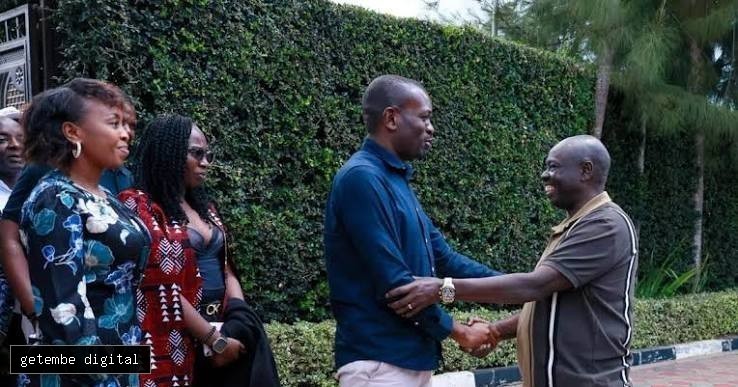
At the centre of this emerging dilemma is former Deputy President Rigathi Gachagua, a politician with considerable influence in Mount Kenya politics, an expanding opposition network and a reputation shadowed by controversy over ethnic rhetoric.
His potential value to presidential aspirants is difficult to ignore. So is the political cost of standing beside him.
For Nairobi Senator Edwin Sifuna, who has placed constitutionalism, transparency and accountable government at the centre of his political message, the question is particularly delicate. Can a politician who promises a different kind of government build an alliance with a figure whose public record raises questions about the kind of politics that alliance might represent?
The answer could reveal whether Kenya's opposition is building a credible alternative or merely assembling a coalition of political interests united by a common opponent.
Gachagua is not an ordinary political recruit.
As former deputy president and leader of the Democracy for the Citizens Party, he brings political networks, a recognisable public profile and the ability to mobilise supporters, particularly in Mount Kenya. His willingness to negotiate with leaders outside his traditional political base has also opened conversations about a broader opposition alliance.
In September 2026, Gachagua indicated that he would be willing to support Sifuna as a presidential candidate or serve as his running mate if that arrangement offered the opposition its best opportunity to defeat Ruto.
That proposition presents a strategic calculation for any aspirant.
A candidate may have a compelling national agenda but lack the political networks necessary to compete across the country. Another may command a regional following but struggle to establish credibility elsewhere. An alliance can potentially bridge that gap.
Gachagua's support could therefore offer an aspirant access to an established political constituency, campaign infrastructure and a network of influential local leaders.
But political influence is not a blank cheque. The candidate who receives that support must still explain what the alliance stands for, what compromises it entails and whether its partners share a common vision for governing Kenya.
The question is not whether Gachagua has political value. It is whether that value can be translated into a national coalition without undermining the principles the coalition claims to defend.
Gachagua's most persistent political vulnerability is the accusation that his rhetoric encourages ethnic divisions.
During the parliamentary proceedings that culminated in his impeachment in October 2024, lawmakers accused him of making divisive remarks and promoting an exclusionary approach to government. These were among the allegations advanced in the impeachment process; they should not be confused with a criminal conviction.
Gachagua has repeatedly rejected the tribalist label, arguing that advocating for his community does not mean he hates other communities. In an August 2025 interview, he described himself as a nationalist and challenged his critics to identify statements in which he had spoken against other Kenyans.
Nevertheless, the controversy has continued to follow him.
In August 2026, the National Cohesion and Integration Commission summoned him over public utterances it was investigating for possible violations relating to hate speech and incitement. The summons was part of an investigation, not a finding of guilt.
For an aspirant seeking to build an inclusive national government, this is not a minor public-relations problem. It is a question of political identity.
Kenya's presidency carries a constitutional obligation to promote national unity and respect the country's diversity. Any candidate seeking the office must demonstrate that their political project can unite citizens beyond ethnic arithmetic.
An alliance with Gachagua would therefore require more than a shared desire to remove the current administration. It would require an explicit commitment to political language that respects every community and rejects the idea that any ethnic group owns the government.
If Gachagua is willing to support such a commitment, that willingness should be demonstrated through consistent conduct, not simply campaign declarations.
If an aspirant is unwilling to demand it, voters are entitled to ask whether the promise of national unity is a governing principle or merely a campaign slogan.
Sifuna's political positioning makes this dilemma particularly interesting.
He was among the political figures involved in the process that led to Gachagua's impeachment in 2024. Yet, as he pursues a wider opposition project, he has argued that past disagreements should not automatically prevent political cooperation.
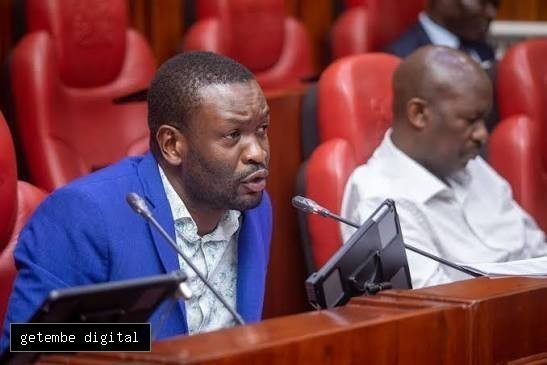
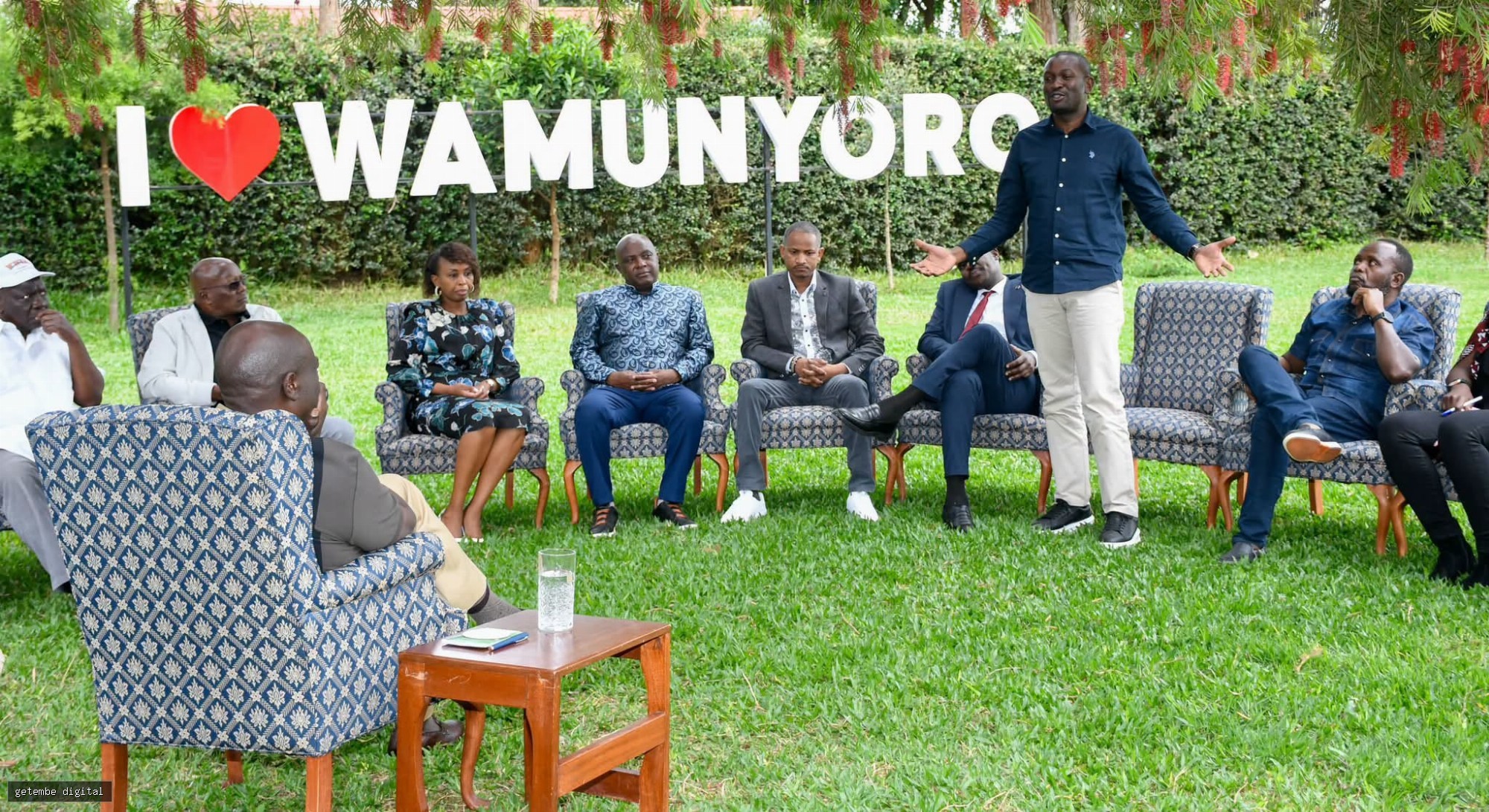
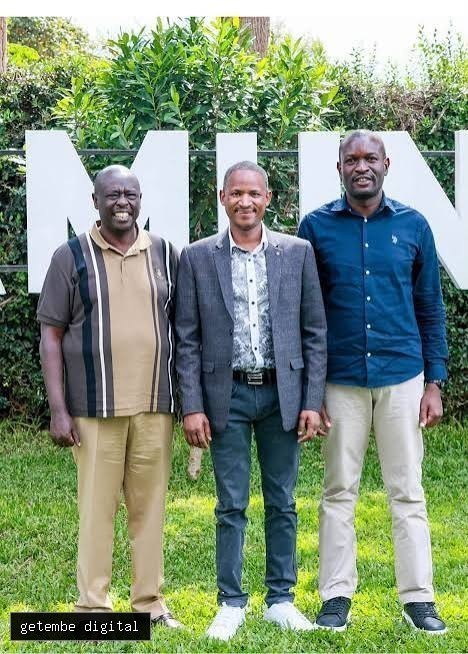
Following a meeting with Gachagua at his Wamunyoro residence in October 2026, Sifuna defended his engagement with the former deputy president, arguing that political cooperation should not be restricted by regional boundaries.
There is a reasonable argument for that position. Democratic politics requires dialogue, negotiation and the ability to work with people with whom one disagrees. Refusing to engage with an entire political constituency because of its most prominent leader could make national coalition-building unnecessarily difficult.
But there is an equally important distinction between engaging a political opponent and endorsing everything that opponent has said or done.
Sifuna's emphasis on accountability creates a standard against which any future alliance should be judged. If transparency, constitutionalism and responsible leadership are central to his proposed government, those principles must apply to his partners as well as his opponents.
Would a government formed with Gachagua's support investigate wrongdoing involving its allies? Would it respect constitutional institutions when their decisions become politically inconvenient? Would it reject discriminatory rhetoric even when that rhetoric energises an important voting bloc?
These are not questions that can be answered by photographs of political meetings or declarations of unity.
They require commitments that can be scrutinised by the public.
Every serious presidential candidate must build coalitions. Kenya's political landscape makes it difficult for any aspirant to compete nationally without negotiating with leaders who command established constituencies.
The danger begins when coalition-building becomes an excuse for abandoning the very principles that distinguish a candidate from the government they seek to replace.
If an aspirant criticises ethnic mobilisation when it benefits political opponents but embraces it when it delivers votes, the public has reason to question the consistency of that position.
If a candidate promises to end political patronage but distributes influence among allies without clear standards of accountability, the promise becomes difficult to distinguish from familiar political bargaining.
And if the only common ground between coalition partners is opposition to one individual, the alliance may have little to guide it once the election is over.
Gachagua's political influence may make him an important partner in the opposition's calculations. But no presidential candidate should allow the pursuit of his support to become more important than the principles on which they intend to govern.
The same standard applies to every other potential coalition partner, regardless of their region, party or political history.
The debate should not be reduced to whether Sifuna should meet Gachagua or whether another aspirant should seek his endorsement.
Political engagement is not an offence, and no community should be treated as politically untouchable because of the controversies surrounding one of its leaders.
The more important question is what an alliance would demand in return.
Would Gachagua's support strengthen a national reform agenda, or would the coalition become dependent on regional mobilisation? Would the partnership expand political inclusion, or reproduce the competition over which community has the greatest claim to power? Would its leaders agree to transparent standards of public service, or would accountability stop at the doors of their own political camps?
Those questions should be answered before candidates ask voters to trust a coalition with the presidency.
Gachagua, too, has an opportunity to address the concerns surrounding his political record. Demonstrating that he can mobilise support without divisive rhetoric would strengthen his claim to be a national political figure rather than merely a regional power broker.
The burden, however, cannot rest on him alone. Any aspirant who seeks his support must make clear what they stand for and what they will not compromise.
Kenya's opposition faces a familiar challenge: bringing together leaders with different ambitions, political histories and regional constituencies without allowing the search for electoral advantage to overwhelm the promise of better governance.
Gachagua could become a significant player in that process. His political networks and public profile make him a figure few aspirants can dismiss without considering the consequences.
But influence does not confer immunity from scrutiny, and political expediency is not a substitute for principle.
Sifuna and other presidential hopefuls must decide whether they are building a coalition that merely has the numbers to challenge Ruto or one capable of governing differently if it wins.
They do not have to agree with every aspect of Gachagua's political record to engage him. They do, however, have to explain the terms on which they would work together and demonstrate that accountability applies equally to allies and adversaries.
Ultimately, the measure of a political alliance will not be how many votes its partners can promise one another. It will be whether they can agree on the standards by which they expect to exercise power.
Because if a candidate must abandon the principles of clean, accountable and inclusive government to assemble the coalition needed to win State House, what exactly will be left of that promise when the votes are counted?
ADVERTISEMENT
Watch Getembe TV Live
Broadcast Getembe TV Live Stream
Listen Getembe FM Live
Tune in to Getembe FM Live Broadcast
How do you feel about this article?
Let us know by choosing a reaction below.

Written by FRANKLINE NYANDORO
Reporter and staff writer at Getembe News.
Comments 0
Please log in to participate in the comments section.
No comments yet. Be the first to share your thoughts!
ADVERTISEMENT
Related Stories

Have a news tip?
Do you have an investigation, local story or news event you think we should cover? Contact our newsroom directly.
Submit Tip
Mobile App
Download Getembe Digital App Today
Download Getembe Digital App today for live news updates, breaking notifications, and seamless live streaming.