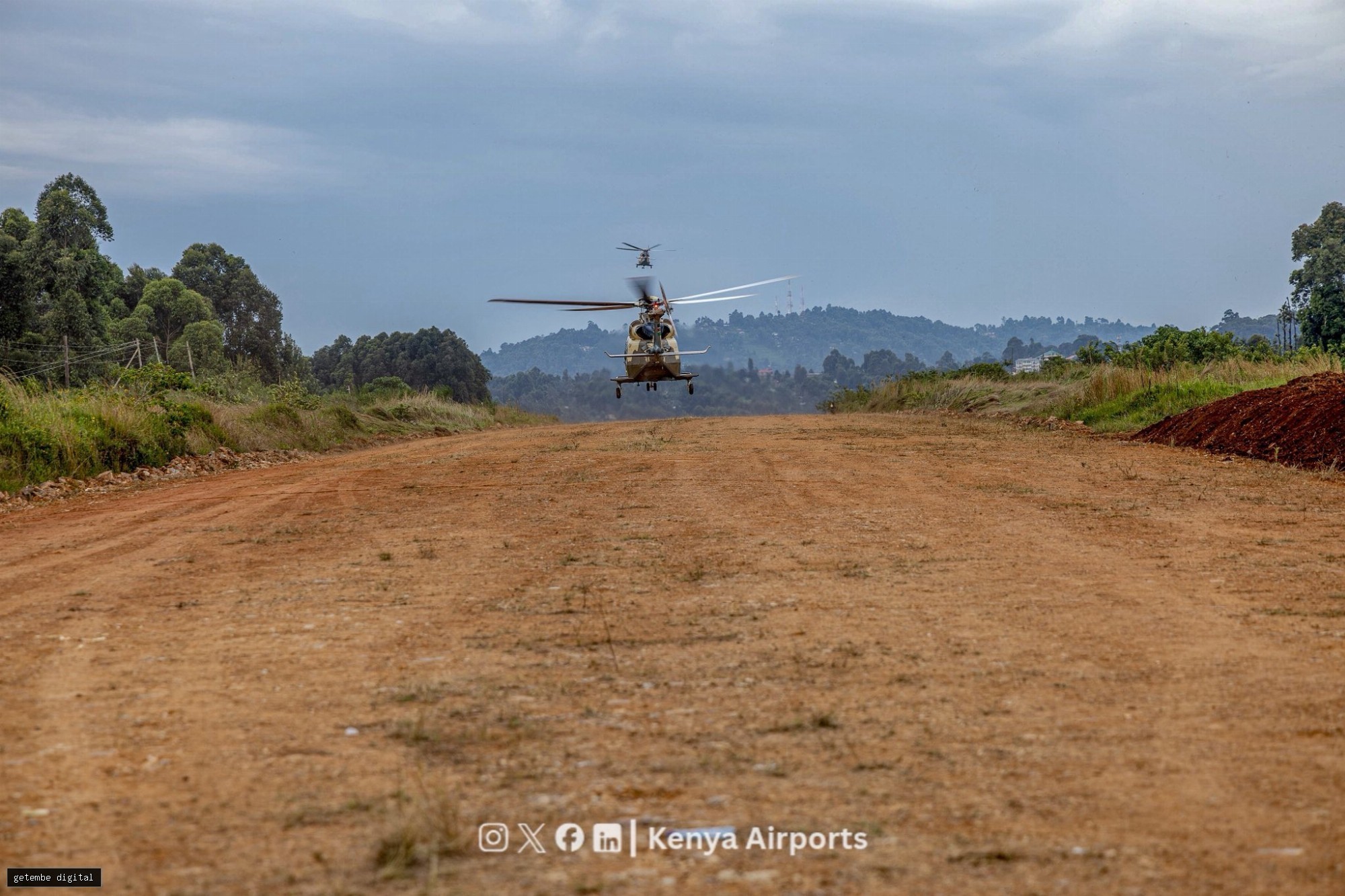
WHEN THE INNER CIRCLE BECOMES THE LIABILITY: THE KIBET-ARATI CONFRONTATION IN KISII
A viral clash between Farouk Kibet and Governor Arati in Kisii raises a bigger question: can Ruto’s inner circle undermine the partnerships he needs for 2027?
Watch Getembe TV Live
Broadcast Getembe TV Live Stream
Listen Getembe FM Live
Tune in to Getembe FM Live Broadcast
In Kenyan politics, a president's greatest political liabilities do not always come from the opposition. Sometimes, they emerge from the people closest to him. Those entrusted with access to power can become so influential that they begin exercising authority beyond their formal positions, creating political tensions that the principal must eventually answer for.
The confrontation in Kisii involving President William Ruto's close aide Farouk Kibet and Governor Simba Arati offers a striking illustration of this danger.
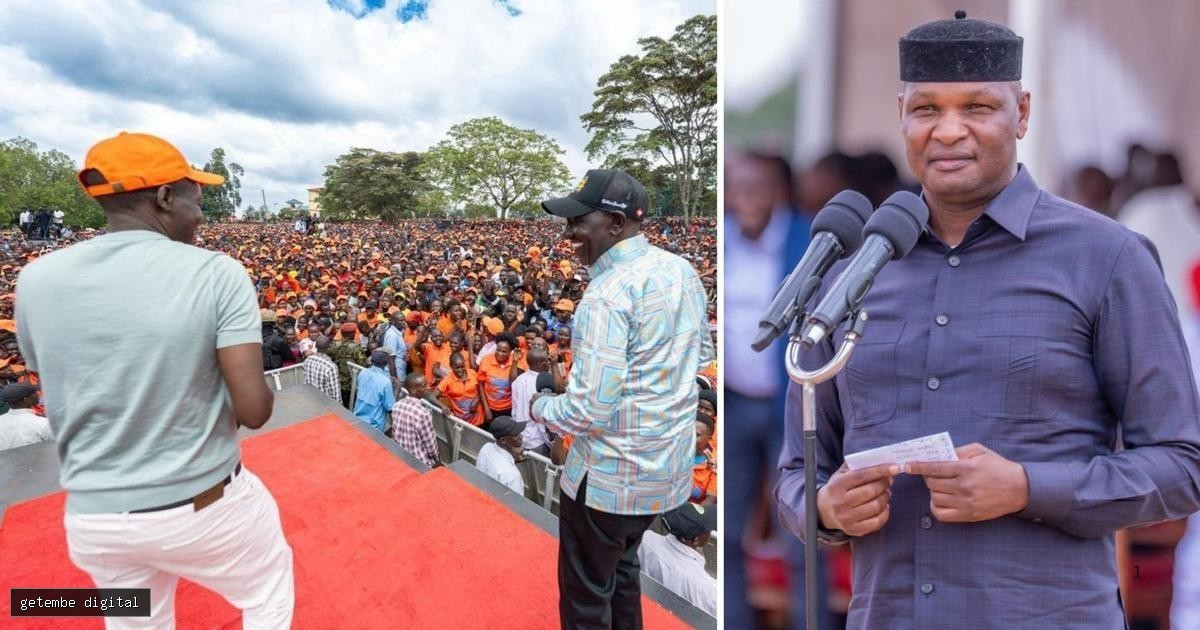
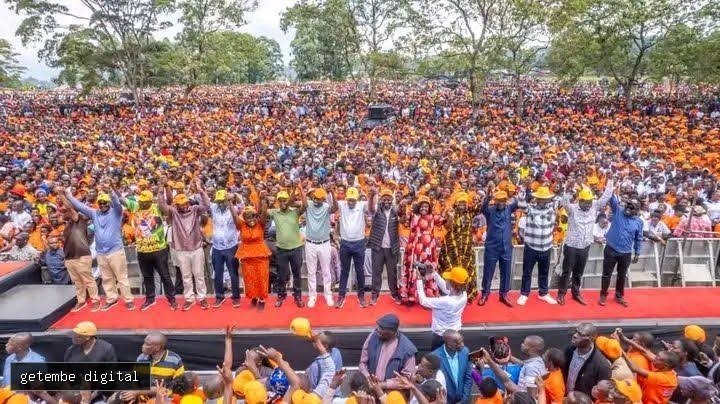
During Ruto's November 11, 2026, political rally at the Kisii Agricultural Training Centre, Kibet was captured in a heated exchange with Arati before the governor was moved away from the podium area. South Mugirango MP Silvanus Osoro also became caught up in the confrontation, with footage of the incident circulating widely online.
What was supposed to be another demonstration of political cooperation between Ruto and influential leaders from the Gusii region instead produced an uncomfortable spectacle of disagreement and exclusion.
The significance of the incident goes beyond a disagreement over who should stand next to the President. Arati is not an ordinary political guest. He is the elected governor of Kisii County and an ODM deputy party leader, representing a party whose cooperation with Ruto's administration is central to the emerging political calculations ahead of 2027.
When an unelected presidential aide appears to have the authority to remove such a leader from the presidential platform, questions inevitably arise about the hierarchy within the political arrangement.
Who actually determines the place of elected leaders in a government that publicly celebrates political inclusion?
Farouk Kibet's influence within Ruto's political establishment has been a subject of controversy for some time.
The debate is not entirely new. In April 2025, former Deputy President Rigathi Gachagua publicly accused Kibet of wielding excessive influence in government, going as far as describing him as a co-president who effectively ran government affairs.
Gachagua alleged that Kibet interfered with appointments and the operations of senior government offices, including his own office when he served as Deputy President.
Those were Gachagua's allegations, not independently established findings. However, the Kisii confrontation has revived questions about the influence exercised by individuals who occupy no elected constitutional office but enjoy privileged access to the President.
This is where the problem becomes political rather than personal.
Presidential aides are expected to coordinate access, manage protocol and protect the President's schedule. Their proximity to power, however, should never become an alternative source of political authority over elected leaders.
An aide can represent the President's office, but cannot replace the political legitimacy of an elected governor or legislator.
When that distinction becomes blurred, the President risks creating an environment where loyalty to individuals within his inner circle appears more important than the political partnerships he is trying to build.
Ruto's political fallout with Gachagua should have offered an important lesson about the dangers of allowing internal rivalries and competing centres of influence to undermine relationships within government.
Before his removal in October 2024, Gachagua repeatedly complained about what he described as exclusion, disrespect and the influence of individuals surrounding the President.
His grievances became part of a wider political disagreement that eventually exposed the fractures within Kenya Kwanza.
It would be simplistic to suggest that the collapse of the Ruto-Gachagua relationship was entirely the work of presidential aides. Their political differences, competing interests and disagreements over the administration's direction were much broader.
Nevertheless, the controversy surrounding the influence of the President's inner circle became one of the defining features of their fallout.
The Kisii incident raises the possibility that some of those concerns have not disappeared.
A president may be personally committed to political cooperation, but if the people managing his immediate political environment communicate exclusion and dominance, the message reaching potential partners will be very different.
The timing of the confrontation makes it particularly sensitive.
Ruto is attempting to consolidate political relationships beyond his traditional support base as he prepares for the 2027 General Election. The cooperation with ODM, established under the late Raila Odinga, remains an important part of that calculation.
Arati himself has been among the prominent defenders of the arrangement.
In April 2026, he expressed confidence that ODM and UDA would form the next government, while warning that certain individuals could undermine the partnership from within.
His subsequent demand for a 50-50 power-sharing arrangement between ODM and UDA further demonstrated that the governor views the relationship as a political partnership requiring meaningful representation rather than symbolic association.
This is an important distinction.
Political cooperation cannot survive indefinitely on presidential invitations, development tours and photographs of leaders standing together. It requires trust, respect and a shared understanding of the political value each partner brings to the table.
The Gusii region is also not a politically insignificant constituency that can be taken for granted. Kisii and Nyamira have their own competing political interests, influential personalities and emerging calculations ahead of the next election.
Arati's position as governor and ODM deputy leader gives him influence that extends beyond the county administration.
Consequently, humiliating or appearing to sideline him at a presidential function risks creating resentment among political networks that the President needs to cultivate.
It also provides an opportunity for alternative political figures to present themselves as better defenders of Gusii interests.
One of the greatest dangers facing Ruto is the possibility that his inner circle develops a political identity that contradicts the image he wants to project.
The President frequently presents himself as a leader committed to national development, political inclusion and cooperation across traditional political divisions.
But those messages become difficult to sell when public events produce scenes of confrontation involving the very leaders expected to demonstrate that unity.
Defenders of Kibet may argue that presidential rallies require strict protocol and that access to the President cannot be determined by individual political preferences.
That argument has merit. Presidential security and event management require discipline.
However, protocol should not become an excuse for conduct that publicly diminishes elected leaders, particularly when the administration is actively seeking their political cooperation.
Ultimately, the President cannot separate himself entirely from the behaviour of those who operate within his immediate political circle.
He appoints, retains and empowers the people who manage his political environment. Their conduct therefore becomes part of his political identity, whether he personally participates in it or not.
The Kisii confrontation should consequently be viewed as more than an embarrassing moment captured on camera. It is a test of whether Ruto's political establishment understands that power is sustained through relationships, not simply proximity to the President.
Kenyan political history is full of alliances that appeared formidable on paper but struggled when their members began questioning their place within the arrangement.
The broad-based government partnership faces a similar test.
ODM leaders must convince their supporters that cooperation with Ruto does not mean surrendering their political identity or accepting a subordinate position. Equally, Ruto must demonstrate that his political partners are valued participants rather than guests who can be moved aside whenever the interests of his inner circle demand it.
The Kisii incident presents an uncomfortable question for the President: What happens when the people closest to him become obstacles to the political relationships he needs most?
If the confrontation was an isolated disagreement over protocol, the administration has an opportunity to contain the damage and prevent a repeat.
But if it reflects a deeper culture in which unelected insiders exercise disproportionate influence and elected leaders are expected to accept their authority, the consequences could be much greater.
As 2027 approaches, Ruto will need more than a strong campaign machinery and an impressive list of political endorsements. He will need partners who genuinely believe they have a stake in the government they are helping him pursue.
The greatest threat to his re-election campaign may not always be the opposition standing outside State House.
It could also come from the inner circle standing closest to him.
ADVERTISEMENT
Watch Getembe TV Live
Broadcast Getembe TV Live Stream
Listen Getembe FM Live
Tune in to Getembe FM Live Broadcast
How do you feel about this article?
Let us know by choosing a reaction below.

Written by FRANKLINE NYANDORO
Reporter and staff writer at Getembe News.
Comments 0
Please log in to participate in the comments section.
No comments yet. Be the first to share your thoughts!
ADVERTISEMENT
Related Stories

Have a news tip?
Do you have an investigation, local story or news event you think we should cover? Contact our newsroom directly.
Submit Tip
Mobile App
Download Getembe Digital App Today
Download Getembe Digital App today for live news updates, breaking notifications, and seamless live streaming.