
THE FINAL WALK AND THE LAST CONVERSATION: TWO ACCOUNTS OF LOSING RAILA ODINGA
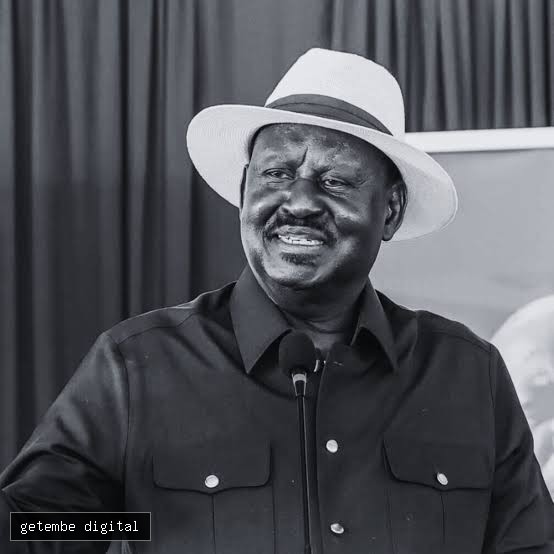
One was a metre away on Raila’s final walk; the other was waiting at home. Two accounts show the quiet grief left behind.
Watch Getembe TV Live
Broadcast Getembe TV Live Stream
Listen Getembe FM Live
Tune in to Getembe FM Live Broadcast
There is a moment in every great loss when the world moves on, but the people closest to the departed remain trapped in the details.
A familiar voice. An ordinary conversation. A walk that was supposed to continue. A door that still seems capable of opening at any moment.
For Maurice Ogeta, that moment was measured in distance.
One metre.
For Mama Ida Odinga, it was measured differently: in the space between an ordinary night and a phone call that changed everything.
Their stories appear separate. One was beside Raila Odinga during his final moments in India. The other was thousands of miles away, unaware that an ordinary day was about to become a permanent memory.
But months later, their paths crossed again at the family home in Karen, and a seemingly innocent remark exposed a wound that had not quite healed.
It was not an accusation. It was not a confrontation.
Yet it raised a question that grief sometimes leaves behind: What happens to the people who were always there when the person they served, loved and protected is suddenly gone?
For nearly three decades, Maurice Ogeta occupied a position few people ever truly understood.
He was more than the bodyguard walking behind Raila. He was his driver, personal assistant, trusted companion and, at times, caretaker. He witnessed the routines that public appearances rarely reveal: the late-night journeys, the early-morning exercises and the quiet hours when the political figure known to millions was simply a man going about his day.
The trust extended beyond professional duty. By Ogeta's own account, the family had come to trust him deeply.
Mama Ida had even entrusted him with a simple but weighty responsibility: to take care of Jakom and ensure he remained safe wherever he went.
Then came the morning in India.
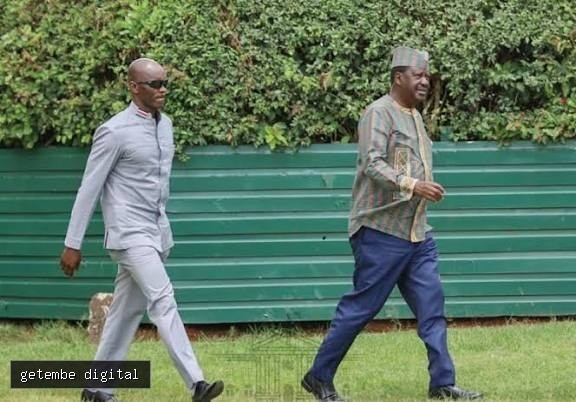
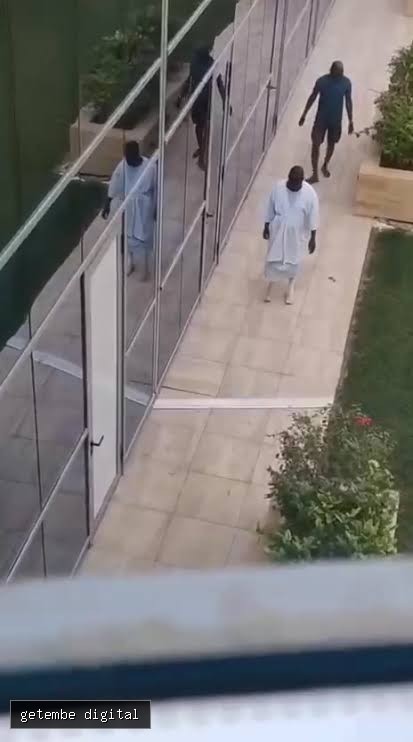
It began as it apparently had on other days, with Raila making his usual rounds at the villa. The first lap was completed. The second began.
But something changed before it was over.
Raila covered only about a quarter of the second lap before stopping.
There was no dramatic scene of the kind people might imagine when they hear that someone has collapsed. There was simply a sudden halt in an otherwise familiar routine.
Ogeta was about a metre away.
He asked whether the problem was with Raila's back or leg.
The response, as Ogeta later recounted it, was brief: “Aih.”
Then came the weight of the moment.
The man he had spent decades protecting was no longer moving as expected. The routine had ended, and the life around it would never be quite the same.
For the public, the account offered a glimpse into Raila's final moments. For Ogeta, it was something far more intimate: the memory of being close enough to ask a question, yet unable to stop what followed.
And that was only the beginning of what he would have to carry.
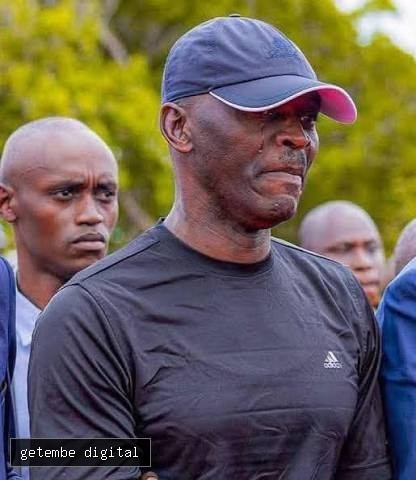
After the burial, Ogeta did not immediately return to the Karen home.
At first, his absence might have seemed puzzling. He had been part of the family's daily life for years. If anyone could have been expected to remain close, surely it was the man who had spent nearly three decades at Raila's side.
But grief does not always draw people towards familiar places. Sometimes, it sends them away.
The house was filled with memories of routines that could no longer be repeated. The journeys, the conversations, the movements of a man whose presence had become so ordinary that nobody needed to think about it.
For Ogeta, returning may have meant confronting those memories without the person who gave them meaning.
So he stayed away.
Time passed, but the absence did not go unnoticed.
Then came the day Gor Mahia brought its trophy to Mama Ida.
What should have been a celebratory visit became an unexpectedly revealing moment.
Mama Ida saw Ogeta and remarked that she thanked God Gor Mahia had finally brought him to the house because, since Baba died, he had not come back.
Rosemary added that the family had not known where to find him.
There it was: a simple observation carrying the weight of months of silence.
The man who had helped keep Raila safe was now missing from the home of the very family he had served.
Ogeta tried to soften the moment with humour. He spoke about being Gor Mahia's third patron and asked where he could sign the visitors' book. Junior gently encouraged his mother to ease up.
The exchange moved on.

But some moments do not end when the conversation changes.
Why had Ogeta stayed away? Why had the family been unable to find him? And what did it take for a man who had been so deeply woven into their lives to return to the house at last?
The answers offered by the circumstances point towards grief, not necessarily conflict. Yet the encounter revealed something that the public rarely sees: even a trusted relationship can become difficult to navigate when death removes the person at its centre.
While Ogeta was beside Raila during the final walk, Mama Ida was in Nairobi when the final news reached her.
Her account of the night before was striking precisely because it sounded so ordinary.
They had spoken. Raila had indicated that he was fine. There had been no obvious reason, from her perspective, to believe that the hours ahead would end in tragedy.
She remained in Nairobi because the trip did not appear serious enough to require her presence. Their children travelled with Raila.
She stayed behind.
Then the calls came.
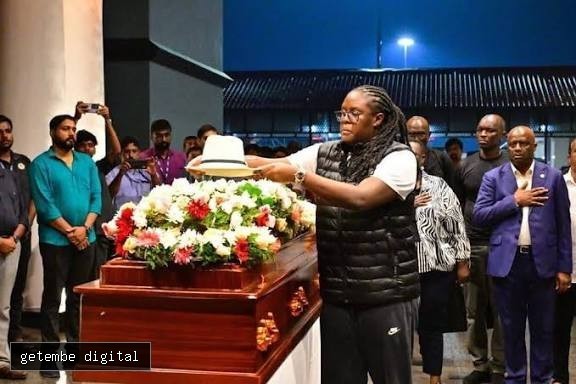
Concern gave way to devastating news. Winnie eventually delivered the words that no family wants to hear: “We've lost the battle. Dad is gone.”
In a single moment, an ordinary separation became something permanent.
There would be no next conversation to revisit, no opportunity to ask another question, no chance to turn that final ordinary night into anything other than a memory.
Mama Ida has spoken about how grief continues to follow her into the familiar spaces of home. Sometimes, she still finds herself expecting Raila to walk through the door late, as he had done before.
That detail matters.
Because the public remembers Raila through rallies, elections, political battles and historic moments. A wife remembers the person who came home, the conversations that filled the evening and the habits that made a shared life feel predictable.
For her, the loss is not only the absence of a national political figure. It is the absence of a husband whose return had once been an ordinary expectation.
The door remains where it has always been.
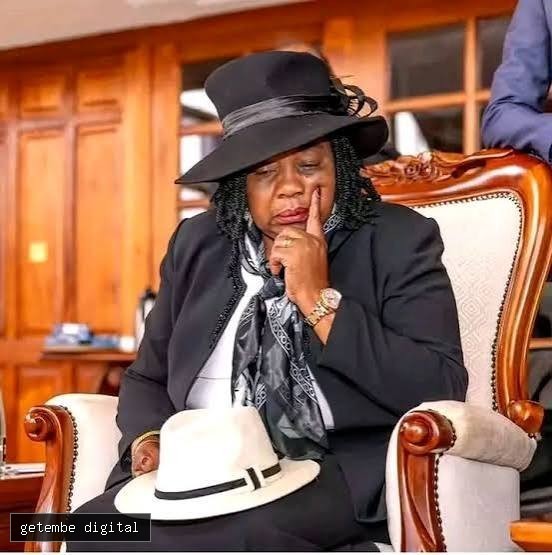
The person she expects to walk through it does not.
Place the two accounts side by side, and a striking contrast emerges.
Ogeta remembers the final walk. Mama Ida remembers the final conversation.
He was close enough to notice that Raila had stopped moving. She was far away enough to believe, until the calls came, that the separation was temporary.
He experienced the moment in person. She experienced its finality through the phone.
Neither account tells the entire story of a life. Neither can explain every emotion the other person carried after the loss.
But together, they reveal two different sides of the same tragedy.
For Ogeta, the familiar routine became an unbearable reminder of what he could no longer do. For Mama Ida, ordinary domestic life became a landscape filled with expectations that reality could no longer satisfy.
And somewhere between those experiences lies the detail that makes their stories so deeply human: the people who were closest to Raila were left to mourn not only his death, but also the everyday life that had existed around him.
The public saw the leader.
They knew the man.
It would be easy to turn Ogeta's absence from Karen into a story of suspicion or to read Mama Ida's remark as evidence of a deeper family dispute.
But the available accounts do not establish either conclusion.
There is no need to manufacture a mystery about the cause of Raila's death to recognise the emotional questions his passing left behind. The more revealing story is what happened after the crowds dispersed, the tributes slowed and the people closest to him were left alone with their memories.
Ogeta had spent decades protecting a man whose movements were part of his own daily existence. When that responsibility ended in tragedy, the place where those memories lived became difficult to revisit.
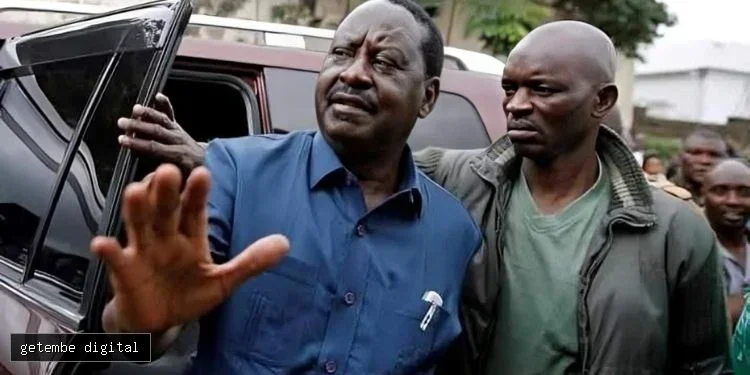
Mama Ida, meanwhile, was left waiting for a return that would never happen, even as she understood the reality of her loss.
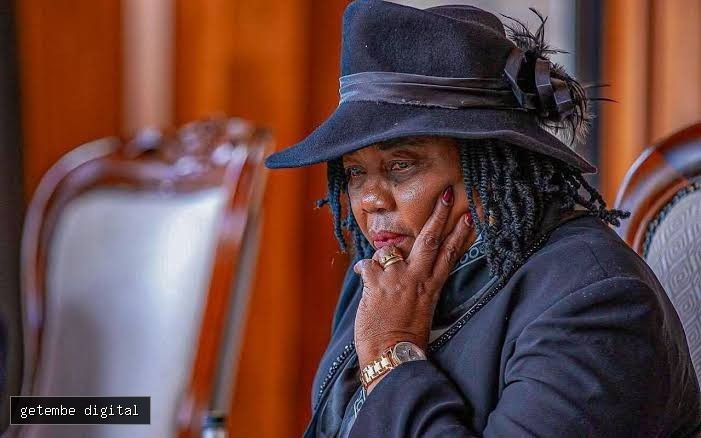
Her words to Ogeta were significant not because they proved a conflict, but because they showed that his absence, too, had been felt.
He was not simply an employee who had completed his assignment. He was someone whose presence had become part of the family's life.
And when he disappeared from that familiar setting, the family noticed.
Perhaps that is the quietest, most overlooked consequence of losing someone around whom an entire circle of people has organised its life: grief does not belong to one person, and it does not always look the same.
Sometimes it is a widow listening for footsteps.
Sometimes it is a trusted companion avoiding a house filled with memories.
Sometimes it is a remark made during a trophy presentation that unexpectedly brings months of absence into the open.
Nearly a year later, the final walk and the last conversation continue to hold their place in the accounts of those who knew Raila privately.
One man remembers being a metre away.
One woman remembers the night before the calls.
Between them is an absence that neither loyalty nor love could prevent.
And perhaps that is why their stories continue to resonate. Not because they establish a hidden explanation for what happened, but because they reveal how little the public sees of the lives left behind when a prominent figure dies.
The most consequential moments are not always the loudest. Sometimes they are found in the details people repeat because they cannot quite move beyond them: a familiar walk interrupted, a phone call that changes everything, a house left unvisited and a door that still invites someone to hope, if only for a second, that the past might return.
Raila is gone. His public legacy will continue to be debated, celebrated and contested.
But for the people who stood closest, the loss is measured in smaller things.
A morning routine that never resumed.
A home that became difficult to enter.
A familiar voice that no longer answers.
And a door that opens to the world outside, while the person expected on the other side remains forever in memory.
ADVERTISEMENT
Watch Getembe TV Live
Broadcast Getembe TV Live Stream
Listen Getembe FM Live
Tune in to Getembe FM Live Broadcast
How do you feel about this article?
Let us know by choosing a reaction below.

Written by FRANKLINE NYANDORO
Reporter and staff writer at Getembe News.
Comments 0
Please log in to participate in the comments section.
No comments yet. Be the first to share your thoughts!
ADVERTISEMENT
Related Stories

Have a news tip?
Do you have an investigation, local story or news event you think we should cover? Contact our newsroom directly.
Submit Tip
Mobile App
Download Getembe Digital App Today
Download Getembe Digital App today for live news updates, breaking notifications, and seamless live streaming.