
IS MATIANG’I BORROWING GACHAGUA’S PLAYBOOK? THE WANTAM RALLIES AND THE FIGHT FOR GUSII
Matiang’i’s sharper tone in Kisii and Keroka marks a change in style. Is the technocrat embracing rally politics, and can it win beyond Gusii?
Watch Getembe TV Live
Broadcast Getembe TV Live Stream
Listen Getembe FM Live
Tune in to Getembe FM Live Broadcast
For a politician who has largely built his public image around discipline, measured statements and a technocratic approach to leadership, Fred Matiang’i's latest appearance in Kisii and Keroka marked a noticeable change in political tone.
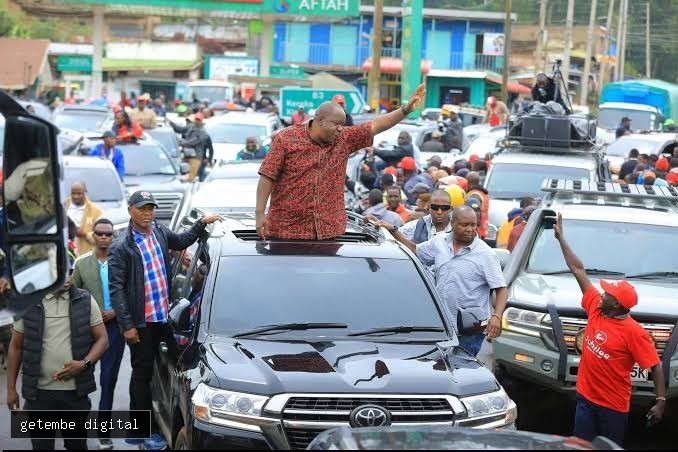
On Sunday, November 15, 2026, the former Interior Cabinet Secretary returned to his political backyard with a message that was considerably more confrontational than his traditionally reserved public engagements.
Accompanied by Martha Karua, Ndindi Nyoro and Siaya Governor James Orengo, among other opposition figures, Matiang’i addressed residents at Capital Roundabout in Kisii Town before proceeding to Keroka Market in Nyamira County.
The rallies came barely four days after President William Ruto concluded his four-day development tour of the Gusii region, where he announced and showcased several government projects as his administration seeks to strengthen its political presence in the area.
The timing was difficult to ignore.
Matiang’i was not simply returning home to meet his supporters. He was responding to a political contest that had become increasingly visible in a region widely considered his political stronghold.
But what attracted particular attention was not just the size of the opposition delegation or the crowds that turned up. It was Matiang’i's language, delivery and willingness to confront the President directly.
For much of his political career, Matiang’i has cultivated an image of a firm administrator who prefers institutional arguments, government performance and policy discussions over the theatrics of political rallies.
During his tenure in government, particularly at the Interior Ministry, he became associated with a direct, disciplined and sometimes uncompromising administrative style.
His political messaging since positioning himself as a presidential contender has largely reflected that background.
However, the Kisii and Keroka rallies revealed a more combative side.
Matiang’i invoked the Wantam narrative, declaring that the Gusii region was committed to ending Ruto's presidency after one term. He insisted that the community was not for sale and that financial inducements would not determine its political choices.
He also questioned the administration's record, describing its performance as horribly incompetent and accusing it of repeatedly launching projects, unveiling foundation stones and erecting plaques without delivering completed developments.
The former CS also accused the President's political machinery of using money to mobilise crowds during the recent Gusii tour, citing an alleged recording in which KSh2 million was reportedly discussed for mobilisation in Keroka.
That allegation remains a claim made by Matiang’i and should not be treated as independently established evidence.
Nevertheless, the language represented a departure from the restrained approach he had publicly defended just two days earlier.
On November 13, while attending the burial of his uncle in Nyamira County, Matiang’i had said he would not respond to the President with insults, insisting that political competition should be conducted respectfully.
By Sunday, his criticism had become considerably sharper.
One question emerging from the rallies is whether Matiang’i is beginning to embrace the combative political style associated with former Deputy President Rigathi Gachagua.
There are noticeable similarities.
Gachagua has built much of his opposition messaging around direct confrontation, grassroots mobilisation, accusations of political manipulation and appeals to communities not to surrender their political bargaining power in exchange for government projects or financial inducements.
The language of rejecting political handouts, declaring communities not for sale and demanding an end to Ruto's presidency reflects some of that wider opposition vocabulary.
Matiang’i's latest messaging appears to operate within the same increasingly confrontational political environment.
However, interpreting his performance as a complete transformation into Gachagua's political style would overlook an important distinction.
Matiang’i's central argument remained anchored in government performance.
His criticism focused on incomplete projects, development announcements, public accountability, corruption and the government's ability to deliver on its commitments.
This is consistent with his attempt to position himself as an administrator capable of offering an alternative approach to governance.
The difference is that he is increasingly communicating that argument through the language of grassroots political mobilisation rather than relying almost exclusively on his technocratic credentials.
Gachagua's influence on the wider opposition environment may be visible, but Matiang’i is still attempting to establish a political identity of his own.
Perhaps the biggest significance of Sunday's rallies lies in the political geography of the region.
For years, Gusii has been regarded as an important opposition support base. Matiang’i's emergence as a potential presidential contender has further elevated its significance in the national political conversation.
Ruto's November tour was therefore more than a development engagement.
By announcing projects and engaging local leaders in Kisii and Nyamira, the President was also seeking to strengthen his administration's political relationship with a region whose voting patterns could become important in the 2027 contest.
Matiang’i's return, accompanied by leaders from different opposition political formations, was an attempt to challenge that outreach.
The presence of Martha Karua, James Orengo and Ndindi Nyoro was particularly significant.
It presented a cross-party opposition delegation, bringing together politicians with different regional constituencies and political backgrounds.
Their joint appearance also reinforced the opposition's continuing argument that individual ambitions should be put aside in favour of a common presidential candidate capable of challenging Ruto.
For Matiang’i, the rallies offered an opportunity to demonstrate that he remains an active political figure in Gusii rather than allowing the President's development tour to dominate the regional conversation.
However, the political significance of the turnout should not be confused with an established measure of electoral support. Rally attendance alone cannot determine how voters will behave in 2027.
Another important feature of the Kisii engagements was the presence of Ndindi Nyoro.
The Kiharu MP has increasingly become a visible figure in opposition political conversations, particularly around government expenditure, economic management and the need for an alternative political direction.
His appearance alongside Matiang’i, Karua and Orengo gave the gathering a wider national dimension.
It also raised an important question about the opposition's emerging political architecture.
Can leaders with different political ambitions, regional interests and party affiliations sustain a common platform long enough to agree on one presidential candidate?
The public declarations of unity are significant, but the difficult work lies ahead.
Opposition cooperation requires more than appearing together at rallies. It requires agreement on leadership, policy priorities, campaign structures, resource mobilisation and the management of competing presidential ambitions.
Matiang’i's political future will partly depend on how effectively he navigates these relationships while maintaining his own national profile.
The political contest in Gusii is also a test of Matiang’i's wider presidential ambitions.
Being influential in one's home region is an important political asset, but a presidential candidate must demonstrate appeal beyond their traditional support base.
Ruto's visit placed pressure on Matiang’i to defend his regional political standing. The joint opposition rallies provided a response, but the broader question remains whether the former CS can translate his administrative reputation into a nationwide political movement.
He must also contend with an opposition landscape in which Gachagua, Kalonzo Musyoka, Karua, Orengo and other political figures are pursuing their own positions within the emerging alliance.
That environment demands a careful balance between projecting individual leadership and demonstrating the ability to work within a collective political arrangement.
His increasingly combative rhetoric may help him communicate urgency to supporters, but it also raises expectations that he will provide detailed alternatives to the government's policies and development record.
The 2027 contest will ultimately require more than declaring a region Wantam or insisting that political loyalty cannot be purchased.
It will require convincing voters that an alternative administration has a credible plan for the economy, employment, public debt, education, healthcare and infrastructure.
Matiang’i's November 15 rallies offered a glimpse of a politician adjusting his communication to the demands of an increasingly competitive political environment.
The measured former administrator is now using sharper language, more direct confrontation and a more emotionally charged style of grassroots mobilisation.
Whether this represents a permanent change in his political personality or a calculated response to the growing pressure of the 2027 contest remains to be seen.
What is clear is that Gusii is not politically settled.
Ruto has demonstrated an interest in strengthening his presence in the region, while Matiang’i is determined to preserve his political influence and project himself as a credible national alternative.
The involvement of Karua, Orengo and Nyoro further suggests that the contest is becoming part of a wider opposition effort to consolidate political support.
Perhaps the most interesting question is no longer whether Matiang’i can command attention in Kisii and Keroka. It is whether he can transform that regional political energy into a national movement without losing the administrative identity that has distinguished him from other opposition figures.
For now, the technocrat appears increasingly willing to enter the political trenches.
And in a contest where Gachagua has helped popularise a more confrontational opposition language, Matiang’i is showing that he, too, is prepared to raise his voice.
ADVERTISEMENT
Watch Getembe TV Live
Broadcast Getembe TV Live Stream
Listen Getembe FM Live
Tune in to Getembe FM Live Broadcast
How do you feel about this article?
Let us know by choosing a reaction below.

Written by FRANKLINE NYANDORO
Reporter and staff writer at Getembe News.
Comments 0
Please log in to participate in the comments section.
No comments yet. Be the first to share your thoughts!
ADVERTISEMENT
Related Stories

Have a news tip?
Do you have an investigation, local story or news event you think we should cover? Contact our newsroom directly.
Submit Tip
Mobile App
Download Getembe Digital App Today
Download Getembe Digital App today for live news updates, breaking notifications, and seamless live streaming.