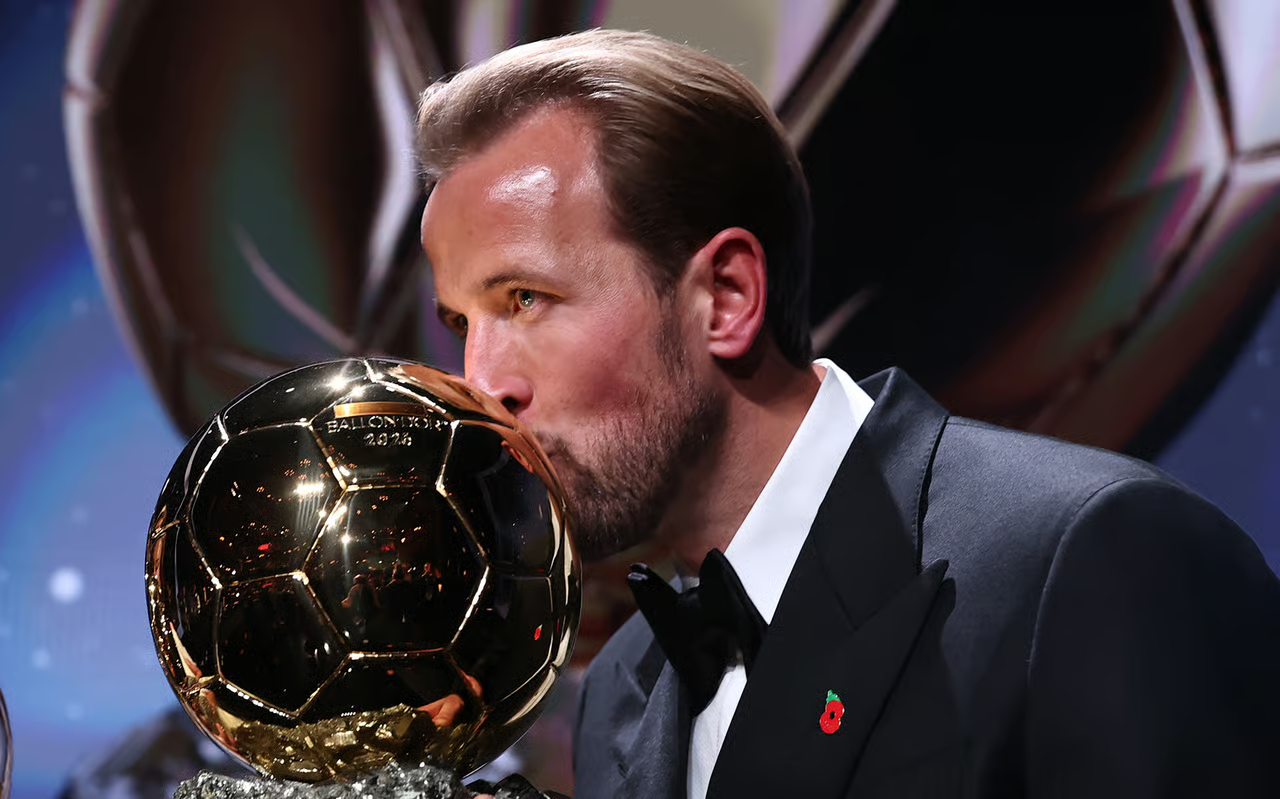
FROM ARSENAL REJECT TO BALLON D’OR KING: HARRY KANE’S LONG ROAD TO GLORY
Harry Kane has been crowned the 2026 Ballon d’Or winner, the first Englishman to do so since Michael Owen in 2001. This is the story of how a boy released by Arsenal became the best player in the world.
Watch Getembe TV Live
Broadcast Getembe TV Live Stream
Listen Getembe FM Live
Tune in to Getembe FM Live Broadcast
At 11 years old, Harry Kane was still trying to prove he belonged. At 33, he stood before the football world holding its most coveted individual prize.
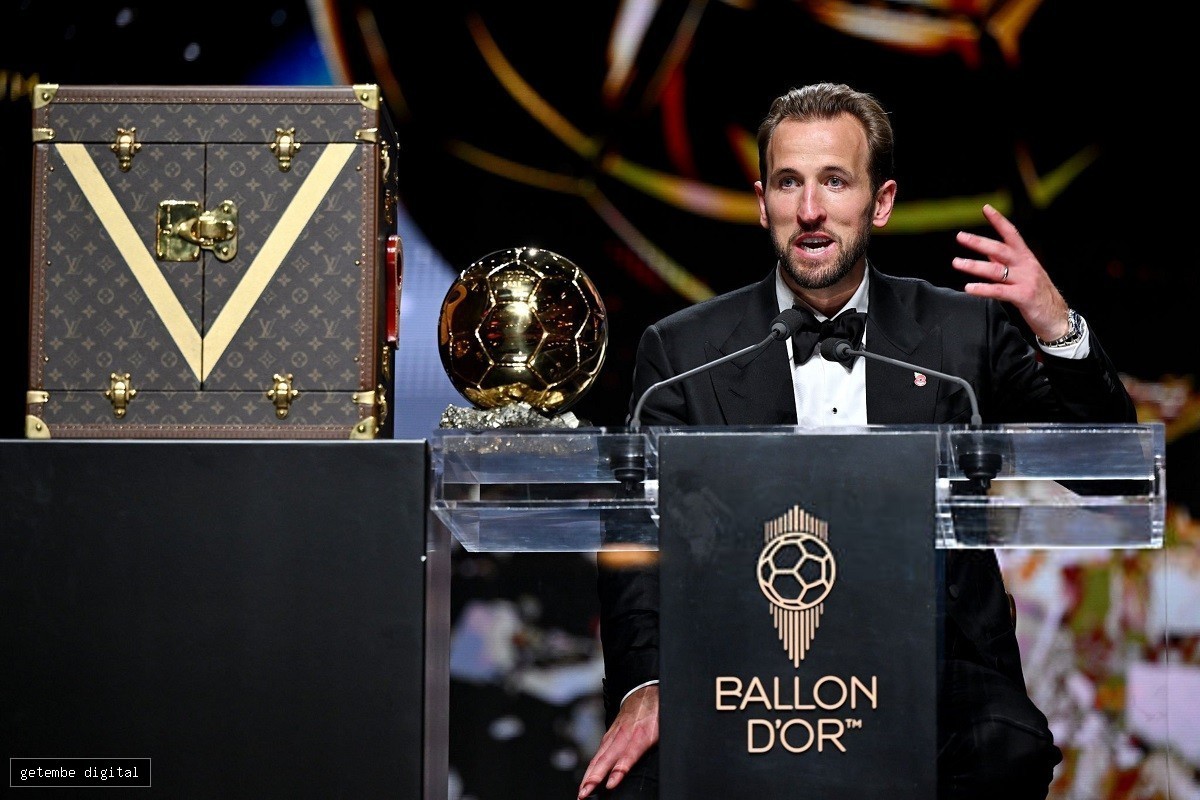
On Monday night, at the London Palladium, the Bayern Munich striker was crowned the 2026 Ballon d’Or winner, beating Kylian Mbappé and Lamine Yamal to become the first Englishman to claim the award since Michael Owen in 2001.
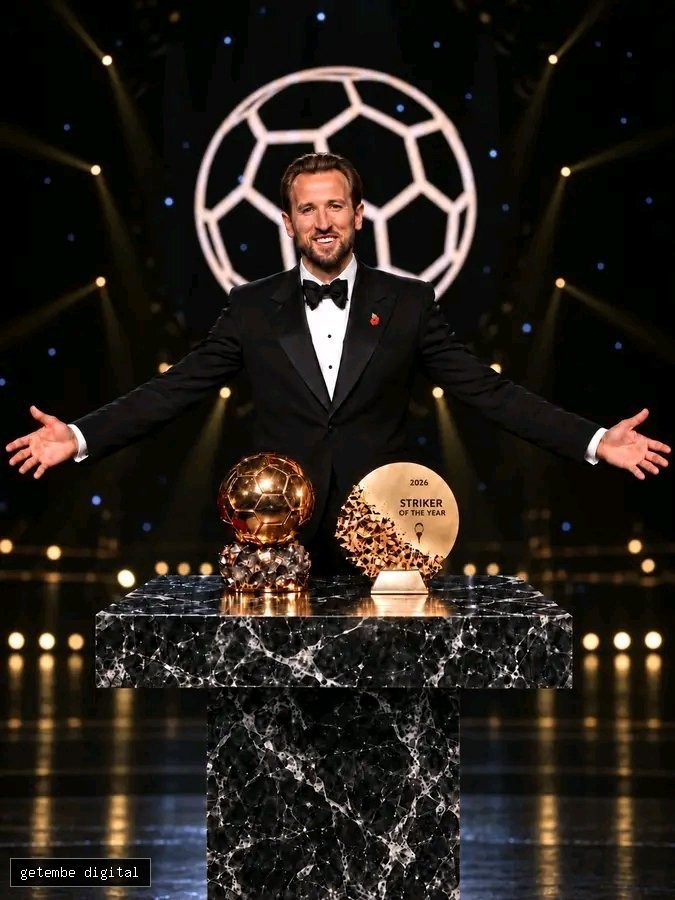
For a player whose career was once defined by rejection, missed opportunities and the cruel label of a footballer who could score goals but not win trophies, the moment was more than an individual triumph. It was the culmination of a journey that took him from the streets of Chingford to the pinnacle of world football.
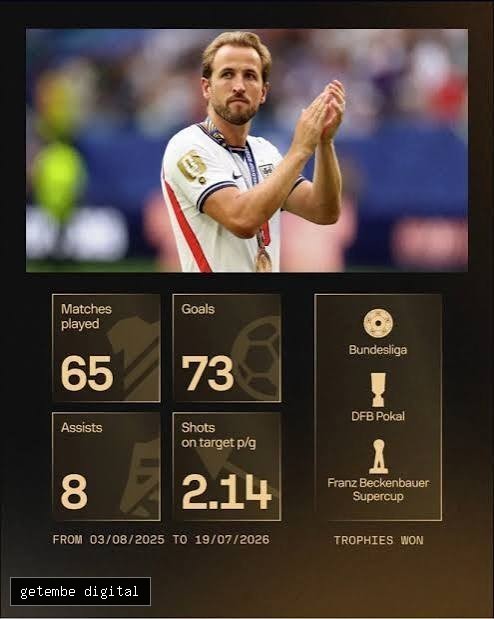
Kane arrived at the ceremony armed with extraordinary numbers: 61 goals for Bayern Munich and 12 for England during the 2025–26 campaign, giving him 73 goals in 65 appearances for club and country. He helped Bayern win the Bundesliga and German Cup, while England finished third at the 2026 World Cup.
But behind the statistics lies a story of setbacks that could easily have derailed a less determined footballer.
THE BOY ARSENAL LET GO
Born on July 28, 1993, in Walthamstow, London, Kane developed his love for football at a young age, playing for local side Ridgeway Rovers before joining Arsenal's academy.
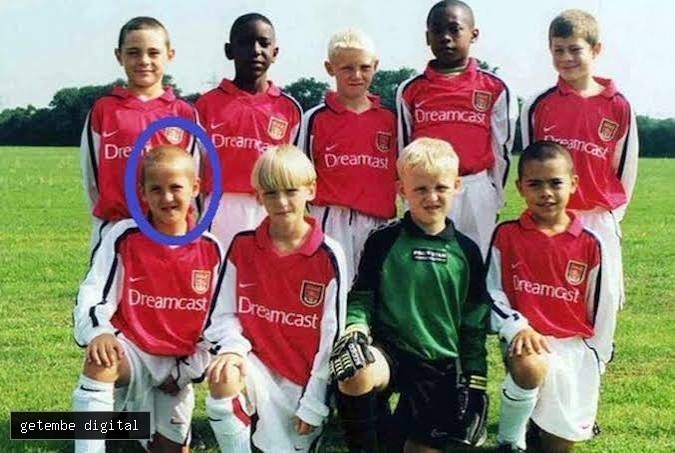
His stay at the north London club was brief. Arsenal released him after one season, with doubts about his physical attributes and athleticism undermining his prospects.
It was an early rejection that would later become one of football's most uncomfortable what-ifs: what might have happened had Arsenal recognised the potential of the boy who would eventually become one of England's greatest goalscorers?
Kane did not allow the setback to define him. After another short spell in youth football, he joined Tottenham Hotspur's academy in 2009, beginning a relationship that would shape his career and make him one of the club's most celebrated players.
Yet even at Tottenham, his path to the top was far from straightforward.
FOUR LOANS, ONE DREAM AND YEARS OF UNCERTAINTY
Kane's early professional career was a test of patience. Rather than walking straight into Tottenham's first team, he was sent out on loan to Leyton Orient, Millwall, Norwich City and Leicester City.
At Leyton Orient, he experienced the demands of senior football. At Millwall, he developed a reputation as a promising young striker and earned the club's Young Player of the Year award. His subsequent spells at Norwich and Leicester proved more difficult, with injuries and limited opportunities slowing his progress.
For a player who would eventually command the attention of Europe's biggest clubs, these years offered little glamour. They were about learning, competing and convincing coaches that he deserved another opportunity.
Kane made his Tottenham first-team debut in 2011, but his breakthrough came during the 2013–14 season, when he began turning occasional appearances into goals and forcing his way into the starting line-up.
The following campaign announced his arrival. Kane emerged as one of the Premier League's most dangerous forwards, beginning a remarkable run that would bring individual awards, scoring records and a place among the league's elite.
The rejected academy prospect had become a star.
TOTTENHAM: THE LOVE STORY THAT NEVER ENDED WITH A TROPHY
For nearly two decades, Tottenham was home. Kane grew from an academy graduate into the face of the club, its captain and its most dependable source of goals.
He scored 280 goals in 435 appearances, surpassing Jimmy Greaves to become Tottenham's all-time leading goalscorer. In the Premier League, his 213 goals placed him second on the competition's all-time scoring list, behind Alan Shearer.
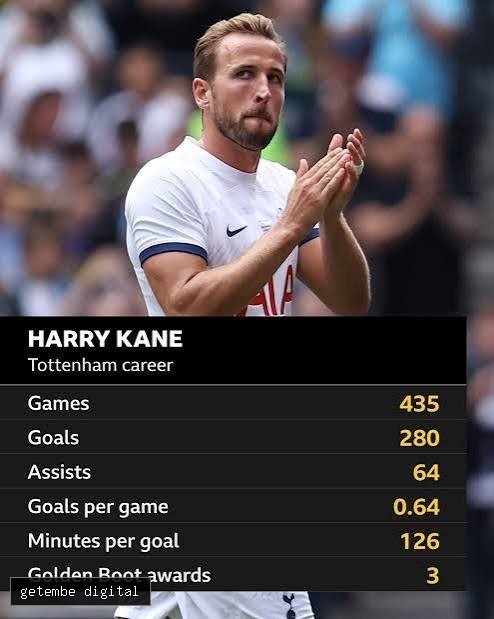
Three Premier League Golden Boots, multiple individual honours and years of extraordinary consistency cemented his reputation as one of the finest strikers of his generation.
Yet the one achievement that mattered most remained beyond his reach.
Tottenham reached the League Cup finals in 2015 and 2021 and the Champions League final in 2019. Each time, the club fell short.
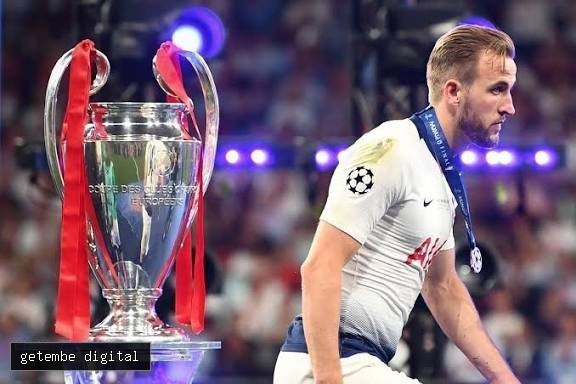
Kane kept scoring, kept leading and kept believing. But the medals that often define football greatness remained absent from his collection.
As Tottenham's ambitions collided with repeated disappointments, the question became increasingly difficult to ignore: could one of England's best strikers win the biggest trophies while remaining loyal to the club that had raised him?
The answer would require him to leave.
THE SUMMER THAT CHANGED EVERYTHING
In August 2023, Kane made the difficult decision to leave Tottenham for Bayern Munich in a transfer worth more than €100 million.
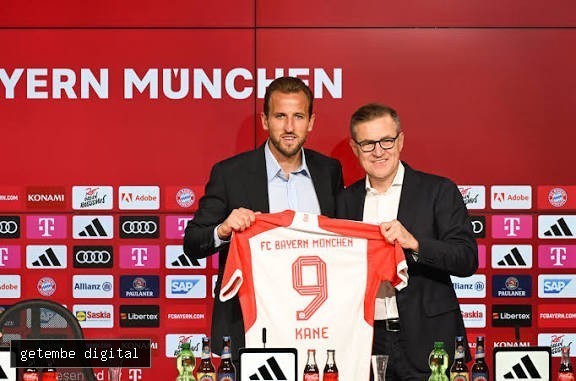
It was a move that carried enormous emotional weight. He was leaving the club where he had spent his formative years, broken records and become a local hero. He was also leaving behind the familiar comfort of English football in pursuit of the team honours that had eluded him.
Bayern offered a different proposition: a club built around winning championships, competing for European glory and expecting its leading players to deliver silverware.
Kane settled into German football with remarkable speed. He scored 36 Bundesliga goals in his debut season, winning the European Golden Shoe, although Bayern finished without the league title.
For a player who had moved specifically to win trophies, the first campaign brought another frustrating wait.
But unlike his Tottenham years, the story in Munich was only beginning.
Bayern reclaimed the Bundesliga title in 2024–25, giving Kane the first major team trophy of his senior career. The breakthrough removed one of the most persistent criticisms of his achievements and cleared the way for an even more extraordinary season.
In 2025–26, he scored 61 goals in 51 competitive appearances for Bayern, including 36 in the Bundesliga, 14 in the Champions League and 10 in the German Cup. He helped the club win the Bundesliga and DFB-Pokal, while also lifting the Franz Beckenbauer Supercup.
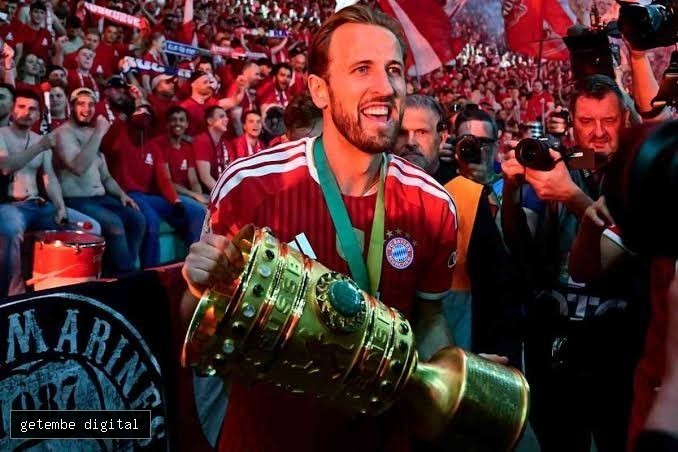
His goals were no longer merely personal milestones. They were helping deliver the collective success he had pursued for years.
73 GOALS AND A WORLD CUP THAT STRENGTHENED HIS CASE
Kane's club form was matched by his contribution to England.
The national team finished third at the 2026 World Cup, its best finish since winning the tournament in 1966. Kane scored six goals during the competition, further strengthening his claim to football's highest individual honour.
By the end of the campaign, he had scored 73 goals across club and international football.
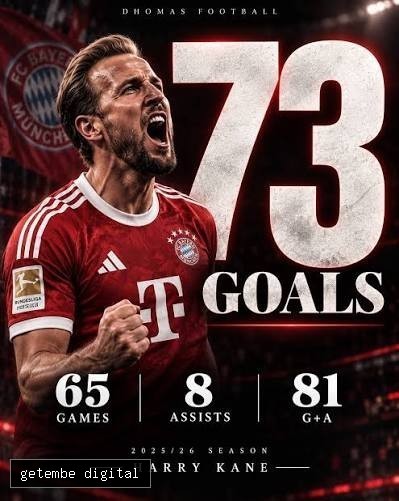
The figures placed him in rare company and made his Ballon d'Or case difficult to dismiss. His rivals included Mbappé, whose explosive attacking displays continued to attract global attention, and Yamal, whose extraordinary talent had already established him among the sport's brightest young stars.
Kane's advantage was the combination of individual productivity and team success. He was not simply scoring at an extraordinary rate; he was helping Bayern collect trophies and leading England through a major international tournament.
When the votes were counted, the long wait was over.
LONDON NIGHT: THE NEARLY MAN BECOMES THE BEST
The setting made the victory even more meaningful.
The 2026 ceremony marked the Ballon d'Or's 70th anniversary and the first time the event was held outside France. London was chosen in tribute to Sir Stanley Matthews, the inaugural winner in 1956.
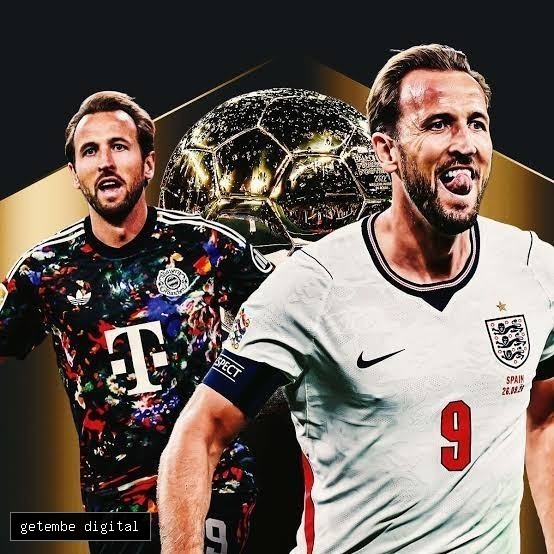
In that historic setting, Kane became only the fifth Englishman to win the men's award, following Matthews, Bobby Charlton, Kevin Keegan and Owen.
The significance extended beyond the trophy itself. For years, Kane had been celebrated as a prolific goalscorer while facing questions about whether he could translate individual brilliance into team success.
At Bayern, he finally won major silverware. With England, he helped deliver a memorable World Cup campaign. And in London, he received the recognition that had eluded him throughout his career.
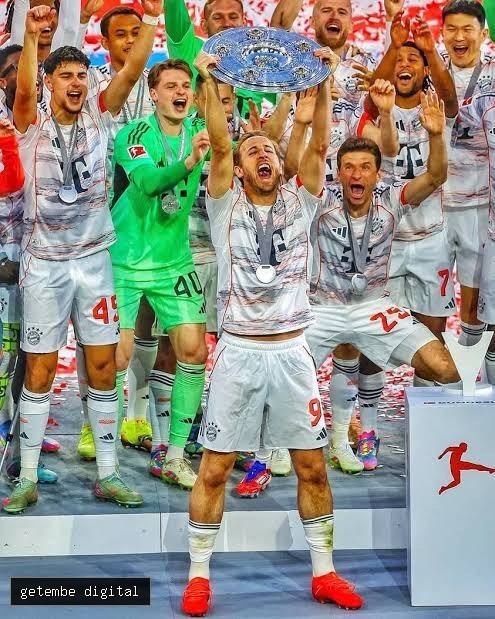
His victory also offered a reminder that football careers rarely follow a straight line. The boy released by Arsenal had endured difficult loans, years without a major trophy and the painful decision to leave the club he loved before reaching the game's highest individual summit.
Now, his name stood above those of the world's most celebrated attacking talents.
A TRIBUTE TO THE CLUB THAT MADE HIM
Despite leaving Tottenham without a major trophy, Kane did not turn his departure into a rejection of the club that developed him.
During his acceptance speech, he acknowledged the role Tottenham had played in his rise, thanking the coaches and staff who had guided him since his youth.
The gesture carried particular significance. His move to Bayern had been driven by the desire to win trophies, but the achievements that followed did not erase the years he spent in north London.
Tottenham had given him the platform. Bayern had given him the silverware. England had provided another stage on which to demonstrate his influence.
Together, those chapters shaped the player who stood in London holding the Ballon d'Or.
For Tottenham supporters, the triumph may bring mixed emotions: pride in a player they helped develop, alongside the knowledge that his greatest team successes came after he left.
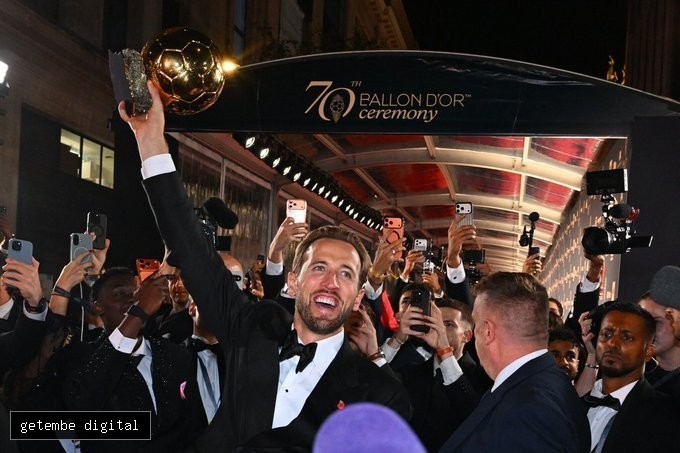
For Kane, however, the journey has come full circle. The boy who once struggled to convince an academy that he belonged has become the footballer every young striker can look to as proof that rejection need not be the end of a dream.
His story is no longer about the trophies he failed to win, the opportunities he missed or the clubs that doubted him.
It is about what happened when he refused to give up.
Harry Kane spent years chasing the moment that would change the way the world judged his career. On a historic night in London, he finally got it.
ADVERTISEMENT
Watch Getembe TV Live
Broadcast Getembe TV Live Stream
Listen Getembe FM Live
Tune in to Getembe FM Live Broadcast
How do you feel about this article?
Let us know by choosing a reaction below.

Written by FRANKLINE NYANDORO
Reporter and staff writer at Getembe News.
Comments 0
Please log in to participate in the comments section.
No comments yet. Be the first to share your thoughts!
ADVERTISEMENT
Related Stories

Have a news tip?
Do you have an investigation, local story or news event you think we should cover? Contact our newsroom directly.
Submit Tip
Mobile App
Download Getembe Digital App Today
Download Getembe Digital App today for live news updates, breaking notifications, and seamless live streaming.