
KWARE DUMPSITE: TWO YEARS ON, FAMILIES STILL WAIT FOR ANSWERS
More than two years after human remains were found at Kware dumpsite, only five victims have been publicly identified and the prime suspect remains at large. Families are still waiting for answers.
Watch Getembe TV Live
Broadcast Getembe TV Live Stream
Listen Getembe FM Live
Tune in to Getembe FM Live Broadcast
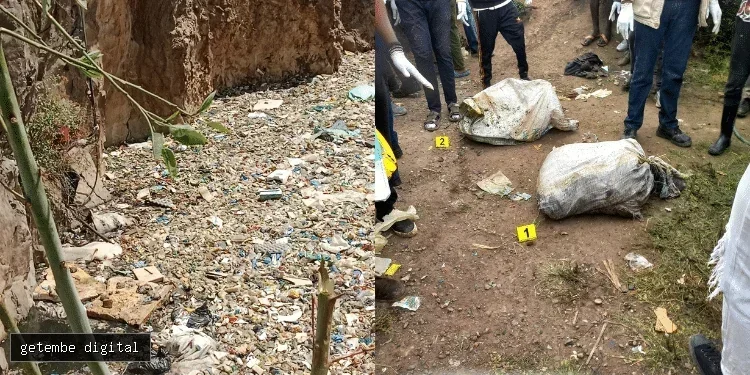
More than two years after dismembered human remains were discovered at the Kware dumpsite in Mukuru kwa Njenga, Nairobi, the search for justice remains overshadowed by unanswered questions, the identification of only a fraction of the victims and the escape of the prime suspect from police custody.
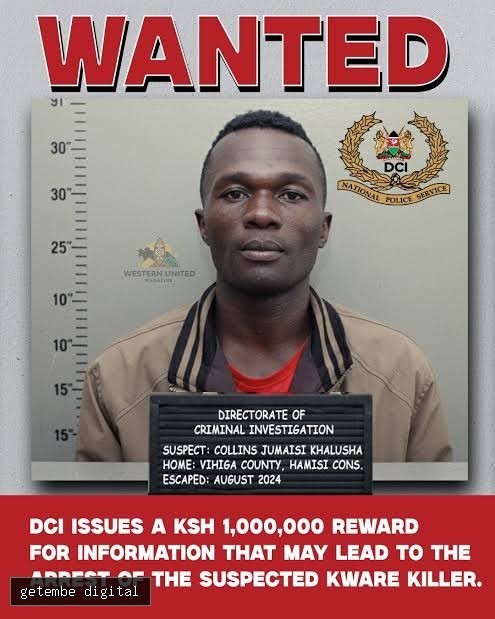
Collins Jumaisi Khalusha, whom investigators identified as the prime suspect in the killings, escaped from Gigiri Police Station on August 20, 2024, alongside 12 other detainees. As of the latest official update available for this report, he remained at large, with an arrest warrant still in force.
The Directorate of Criminal Investigations (DCI) has previously dismissed reports circulating online that Jumaisi had been rearrested. In October 2025, the agency reiterated that he was still wanted and offered a KSh1 million reward for credible information that could lead to his arrest.
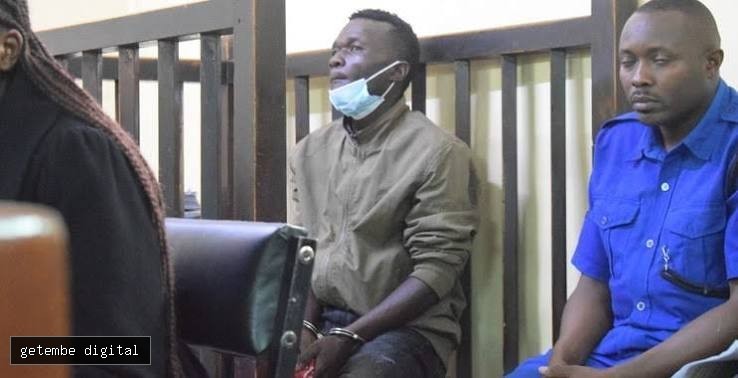
The escape raised serious questions about police custody and the ability of investigators to bring a suspect in one of the country's most disturbing murder cases before a court. It also left families of missing women waiting for answers about what happened to their loved ones.
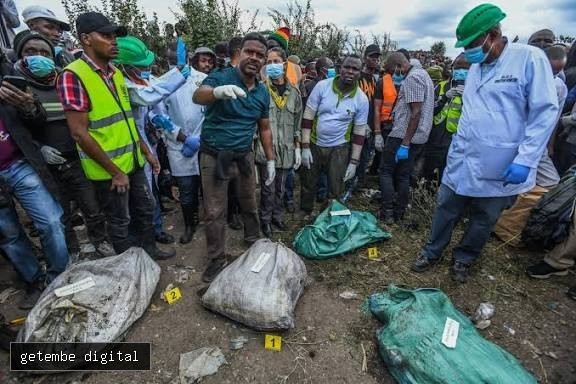
The tragedy came to national attention in July 2024, when residents and other people at the Kware quarry and dumpsite in Mukuru kwa Njenga discovered sacks containing dismembered human remains.
The discovery prompted a major police operation involving homicide detectives and forensic investigators. According to Interior Cabinet Secretary Kipchumba Murkomen's statement to Parliament on August 13, 2025, the operation resulted in the recovery of 17 packages containing dismembered human body parts.
Most of the remains were in an advanced state of decomposition, complicating the work of post-mortem examinations and identification.
The discovery sparked widespread public outrage and renewed concerns over the safety of women, disappearances and the effectiveness of investigations into violent crimes.
At the time, police identified Jumaisi as a key suspect. Investigators said forensic work linked him to the killings, while earlier police statements alleged that he had confessed to killing 42 women. Those allegations must be distinguished from findings established in court: Jumaisi escaped before the case could proceed to trial, and the allegations against him have not been tested through a completed criminal trial.
In his August 2025 statement to Parliament, Murkomen said DNA analysis had positively identified five victims whose remains were matched with their families.
They were Josephine Mulongo Owino, Rosalyn Moth Ogongo, Wilkistar Ajiambo Ososo, Christine Mwende Mathina and Rosemary Ajiambo.
The government said the identified remains had been handed over to the respective families. The announcement provided some families with answers, but it also highlighted the challenges facing investigators as they sought to establish the identities of the other victims.
The identification process relied on forensic analysis, including DNA matching, because the condition of many of the remains made visual identification difficult.
The parliamentary update did not establish the identities of all the victims represented by the recovered remains. It also did not provide a comprehensive public account resolving every question about the number of victims or the circumstances surrounding their deaths.
For families who suspect that missing relatives could be among the unidentified victims, the absence of clear answers leaves a painful gap between the discovery of the remains and the possibility of closure.
Jumaisi's escape from Gigiri Police Station on August 20, 2024, became a major setback in the case.
According to police reports at the time, the escape was discovered during a routine check. The detainees were reported to have cut through wire mesh in the station's holding area before scaling a perimeter wall.
Murkomen later told Parliament that a warrant of arrest had been issued against Jumaisi and remained active. He said the Internal Affairs Unit had launched an independent inquiry into the circumstances surrounding the escape, while multi-agency operations continued to trace and apprehend him.
In September 2025, the DCI announced a KSh1 million reward for information leading to Jumaisi's arrest. The agency again dismissed claims of his re-arrest the following month.
The circumstances surrounding the escape remain an important part of the wider accountability questions raised by the case. Beyond locating the suspect, the public has a legitimate interest in knowing how a high-profile detainee facing grave allegations managed to escape from police custody.
For the families of missing women, the case extends beyond the identity of the prime suspect. It concerns the whereabouts of their relatives, the confirmation of their deaths where applicable and the opportunity to bury them with dignity.
DNA identification can provide crucial answers, but it requires reliable forensic processes, cooperation with families and clear communication from authorities. Where identification remains incomplete, families may continue to live with uncertainty over whether their missing relatives are among the recovered remains.
The case has also drawn attention to the work of community members and organisations supporting affected families and calling for accountability. Their concerns have kept public attention on the investigation, even as the initial shock surrounding the discovery has faded.
However, claims about additional remains, the precise number of unidentified victims or alleged failures during the recovery operation should be supported by verifiable evidence and attributed to the people or organisations making them. They should not be presented as established findings without confirmation from investigators or other reliable records.
In August 2025, Murkomen told Parliament that investigations were ongoing and that security agencies were pursuing leads to locate Jumaisi. The government also outlined broader measures intended to strengthen investigations, improve forensic capacity and enhance accountability in cases involving abductions and gender-based violence.
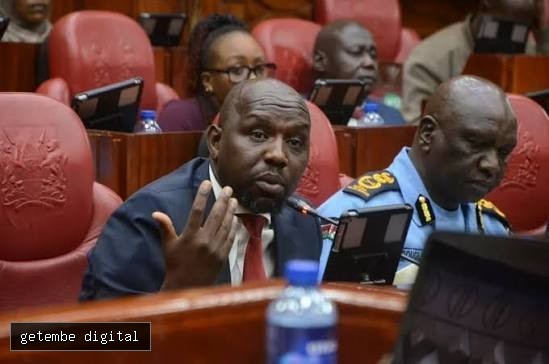
Those assurances leave several important questions for the authorities: Has the investigation established the identities of any additional victims since the parliamentary update? What progress has been made in the inquiry into the escape from Gigiri Police Station? And what further evidence can investigators disclose without compromising the case?
The answers matter not only for the families affected by the Kware tragedy but also for public confidence in the criminal justice system.
The case should not be treated as resolved simply because the remains were recovered or because a prime suspect was identified. A complete account requires credible investigations, proper identification of victims, accountability for any failures established by the evidence and a lawful process through which allegations can be tested in court.
More than two years after the discovery at Kware, the central questions remain: Who were all the victims, what happened to them, and will investigators bring those responsible before a court of law?
Until those questions are answered, Kware remains an unfinished search for truth and justice.
ADVERTISEMENT
Watch Getembe TV Live
Broadcast Getembe TV Live Stream
Listen Getembe FM Live
Tune in to Getembe FM Live Broadcast
How do you feel about this article?
Let us know by choosing a reaction below.

Written by FRANKLINE NYANDORO
Reporter and staff writer at Getembe News.
Comments 0
Please log in to participate in the comments section.
No comments yet. Be the first to share your thoughts!
ADVERTISEMENT
Related Stories


Have a news tip?
Do you have an investigation, local story or news event you think we should cover? Contact our newsroom directly.
Submit Tip
Mobile App
Download Getembe Digital App Today
Download Getembe Digital App today for live news updates, breaking notifications, and seamless live streaming.