NAKUMATT, TUSKYS AND UCHUMI FELL: WHAT DID NAIVAS UNDERSTAND THAT THE OTHERS DID NOT?
Nakumatt, Tuskys and Uchumi once dominated Kenya's retail industry. Naivas survived and expanded, offering lessons on debt, corporate governance, succession and sustainable business growth.
Watch Getembe TV Live
Broadcast Getembe TV Live Stream
Listen Getembe FM Live
Tune in to Getembe FM Live Broadcast
There was a time when walking into a Nakumatt supermarket was almost an experience in itself. Its expansive stores, impressive product displays and growing presence across Kenya made it a symbol of modern retail and a business many competitors could only admire. Tuskys enjoyed a similar reputation, while Uchumi had already established itself as one of the country's most recognisable supermarket brands.
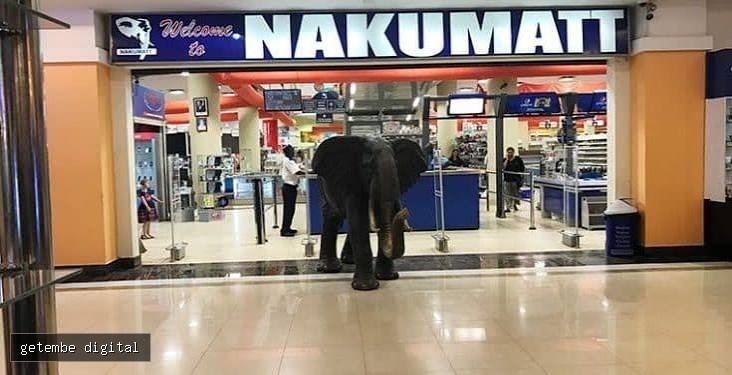


Today, however, their stories tell a very different tale. Nakumatt collapsed under enormous financial obligations, Tuskys gradually disappeared after years of financial and internal management problems, and Uchumi struggled to recover from repeated corporate crises. Yet one name from that generation has continued to grow: Naivas.
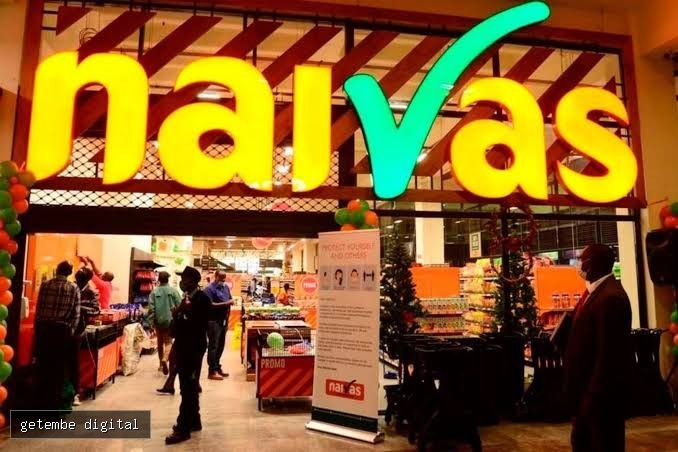
For the financial year ended June 2026, Naivas reportedly recorded a 42 per cent increase in net profit to approximately KSh3.3 billion, with revenue of about KSh123.7 billion and a network of 114 stores. These figures are significant, but the more interesting story is how the retailer managed to remain standing in an industry that has claimed some of its biggest pioneers.
Naivas' success raises a question worth examining beyond the supermarket industry: what did the company understand about running a business that its former competitors failed to appreciate?
One of the biggest mistakes in Kenya's retail industry was the assumption that expansion was always evidence of success. For a long time, the number of branches a supermarket operated appeared to be the clearest measure of its strength. The more towns it entered and the larger its stores became, the more dominant it seemed.
Nakumatt was perhaps the clearest example of this ambition. At its peak, it had expanded beyond Kenya into other East African markets and established itself as a regional retail powerhouse. But behind the impressive stores was a growing financial burden. The company became heavily dependent on supplier credit and accumulated debts estimated at more than KSh35 billion. When suppliers began demanding payment and the business struggled to maintain its obligations, the expansion that had once appeared to demonstrate strength became part of its undoing.
Tuskys experienced a similarly painful decline. Its rapid expansion was accompanied by mounting financial obligations, while internal family disagreements and governance problems further weakened the business. By the time its remaining stores were shutting down, the supermarket had accumulated substantial debts and lost much of the confidence it had built among suppliers and customers.
Uchumi's difficulties were different but equally instructive. The retailer's prolonged struggles exposed the consequences of weak management, operational inefficiencies and governance problems in a business where margins are already tight.
These failures reveal an uncomfortable reality about entrepreneurship in Kenya: a business can become famous without becoming financially healthy. It can occupy prime locations, attract thousands of customers and open branches across the country while quietly accumulating obligations it cannot sustain.
Naivas appears to have understood that distinction.
Rather than treating expansion as a race to occupy every available shopping location, the retailer pursued a more measured approach, placing greater emphasis on store performance, financial discipline and the sustainability of its operations. Its growth was not without challenges, but it avoided the same degree of dependence on the financial arrangements that crippled some of its competitors.
It also benefited from opportunities created by their collapse. As Nakumatt and Tuskys withdrew from prominent locations, Naivas was able to occupy some of the spaces they left behind and attract customers who had lost their familiar shopping destinations. But inheriting a competitor's customers and locations is only an opportunity. Turning those opportunities into a sustainable business requires the financial capacity and management systems to support them.
Perhaps the most important difference in Naivas' journey was its willingness to evolve beyond a traditional family business.
For decades, the company was closely associated with the Mukuha family, which built the retailer from a modest shop in Rongai into a major supermarket chain. However, as the business grew, so did the need for capital, stronger management systems and more sophisticated corporate structures.
The entry of institutional investors marked an important turning point. In 2020, a consortium led by French investment firm Amethis, alongside partners including the International Finance Corporation and Germany's DEG, acquired a stake in the business. In 2022, a new investor consortium led by Mauritius-based IBL Group, together with Proparco and DEG, took over a significant stake.
This transition brought Naivas into a different phase of corporate development, with greater institutional involvement and a stronger emphasis on professional management. The founding family retained a substantial interest, but the company was no longer operating simply as a family enterprise.
That distinction matters because one of the recurring weaknesses in family-owned businesses is the difficulty of separating ownership from management. Building a successful company requires entrepreneurial instinct, but sustaining it across generations demands structures that can function beyond the influence of its founders.
A business cannot depend indefinitely on the personal relationships, instincts or decisions of one family. It needs clear accountability, competent leadership, reliable financial controls and succession arrangements that do not threaten its operations whenever ownership changes hands.
This is where the supermarket story becomes a much bigger lesson for Kenyan businesses.
Across different sectors, companies have struggled not necessarily because their products lacked demand or their founders lacked ambition, but because their internal structures failed to keep pace with their growth. Some borrow heavily to finance expansion without adequately assessing whether new branches can generate enough revenue. Others allow family disagreements to interfere with management decisions. Some become so dependent on their founders that the business begins to weaken the moment succession becomes necessary.
There is also a tendency to confuse visibility with profitability. Opening a new branch, acquiring another company or announcing expansion plans creates excitement and attracts attention. Yet none of these achievements guarantees that a business is generating sufficient cash to meet its obligations.
In a low-margin industry such as supermarket retail, that mistake can be particularly costly. A retailer must constantly pay suppliers, maintain inventory, meet operational expenses and keep customers coming back. Even a company recording impressive sales can encounter serious financial difficulties if cash flow is poorly managed.
Naivas' continued growth therefore offers a useful reminder that ambition must be accompanied by discipline. The objective should not simply be to become the biggest retailer in the market, but to build a business capable of financing its growth, managing its obligations and surviving changes in leadership and ownership.
Of course, Naivas is not immune to competition or economic pressure. Quickmart, Carrefour and other retailers continue to compete for customers, while inflation and constrained household spending can affect sales. Its future success will depend on whether it can maintain the financial discipline and management standards that have supported its expansion so far.
But its journey already offers an important contrast with the supermarket giants that once appeared impossible to challenge.
Nakumatt had the stores, Tuskys had the reach, and Uchumi had decades of brand recognition. Yet none of those advantages could compensate for the deeper weaknesses within their businesses.
Naivas, meanwhile, has demonstrated that surviving in business requires more than opening branches and attracting customers. It requires knowing when to expand, how to finance growth, whom to trust with management and how to build an institution that can outlive the people who started it.
Perhaps that is the most important lesson from Kenya's retail graveyard. The country does not necessarily lack ambitious entrepreneurs or businesses capable of achieving remarkable growth. What it needs are more companies that can manage that growth without becoming victims of their own success.
In the end, Naivas' greatest achievement may not be that it became bigger than some of its former competitors. It is that it understood something they could not afford to learn too late: building a business is one achievement; building one that can survive its own success is an entirely different challenge.
ADVERTISEMENT
Watch Getembe TV Live
Broadcast Getembe TV Live Stream
Listen Getembe FM Live
Tune in to Getembe FM Live Broadcast
How do you feel about this article?
Let us know by choosing a reaction below.

Written by FRANKLINE NYANDORO
Reporter and staff writer at Getembe News.
Comments 0
Please log in to participate in the comments section.
No comments yet. Be the first to share your thoughts!
ADVERTISEMENT
Related Stories


Have a news tip?
Do you have an investigation, local story or news event you think we should cover? Contact our newsroom directly.
Submit Tip
Mobile App
Download Getembe Digital App Today
Download Getembe Digital App today for live news updates, breaking notifications, and seamless live streaming.