
RUTO'S SUDDEN FLIGHT TO CONGO RAISES QUESTIONS ABOUT GOVERNMENT PRIORITIES AS KENYANS WAIT FOR ACTION AT HOME
Ruto's abrupt departure from Kisumu for Congo raises questions about government priorities as Kenyans await action on insecurity, collapsing buildings, high taxes, rising living costs and constitutional concerns.
Watch Getembe TV Live
Broadcast Getembe TV Live Stream
Listen Getembe FM Live
Tune in to Getembe FM Live Broadcast
President William Ruto's sudden departure from Kisumu for a high-level diplomatic meeting in the Republic of Congo has offered an interesting glimpse into how quickly the government can mobilise when an issue demands presidential attention. But while the President and his delegation moved with urgency to attend the Oyo summit, Kenyans back home are still waiting for that same level of urgency on issues affecting their daily lives.

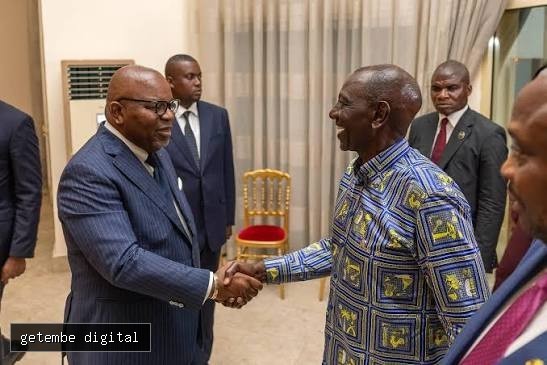
On Saturday, November 21, 2026, Ruto interrupted his Western Kenya development tour and departed from Kisumu International Airport for Oyo, Republic of Congo, where he was expected to meet three other African leaders, including Democratic Republic of Congo President Félix Tshisekedi, Republic of Congo President Denis Sassou-N'Guesso and Togo's Faure Gnassingbé.
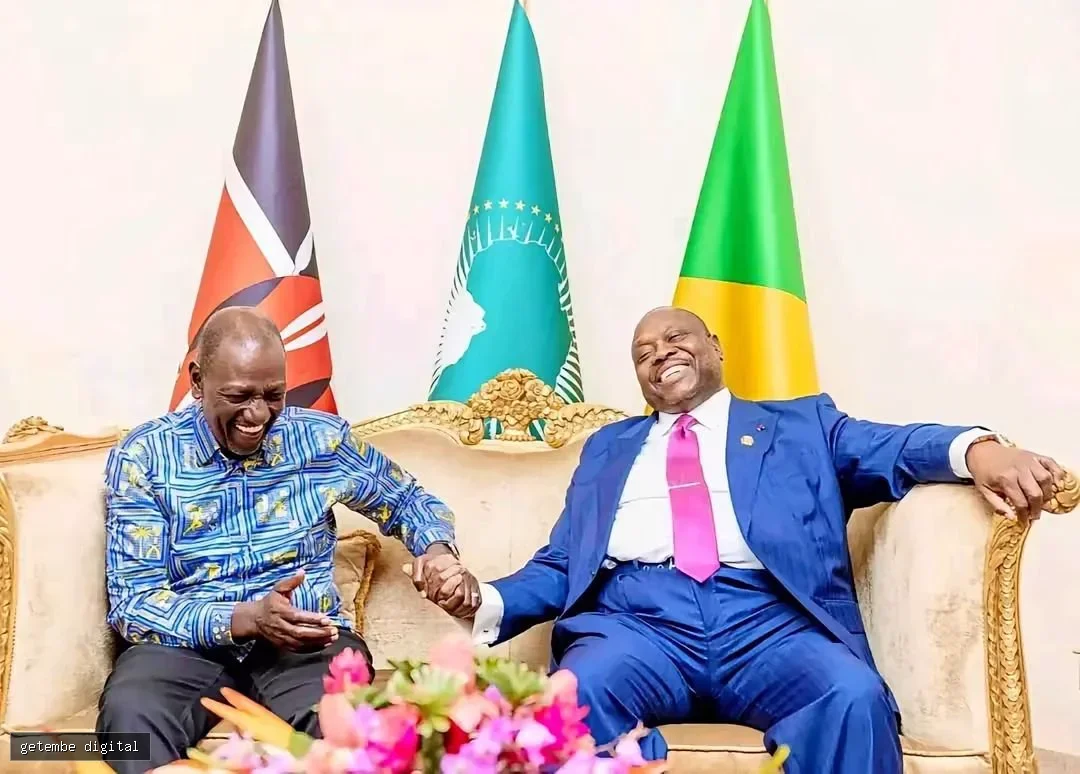
The departure was particularly striking because it was not publicly announced beforehand by State House. The President effectively cut short his regional engagements and travelled directly to attend the diplomatic meeting, which was aimed at addressing strained relations between Kenya and the DRC.
There is nothing inherently wrong with the President prioritising regional diplomacy. Kenya has strategic interests in the Great Lakes region, and repairing diplomatic relations with a neighbouring country is important for trade, security and regional cooperation. Indeed, the meeting resulted in an agreement between Nairobi and Kinshasa to work towards restoring full diplomatic relations, including diplomatic representation at ambassadorial level.
But the speed with which the President and his team responded to the Congo meeting invites a much bigger question: Why does the government appear capable of demonstrating such urgency abroad while pressing national problems continue demanding attention at home?
For communities in Kenya's North Eastern region, insecurity is not a diplomatic talking point. It is a lived reality. Residents in parts of Garissa and Mandera continue to contend with security threats associated with Al-Shabaab, including attacks targeting security personnel, infrastructure and movement along key roads.
The 2026 State of National Security report presented to Parliament acknowledges that Al-Shabaab activities continue to threaten security along the Kenya-Somalia border and the Boni Enclave. It documents attacks on security establishments, infrastructure and security vehicles, as well as recruitment and reconnaissance activities.
These are not problems that can be addressed through occasional statements of reassurance. They require sustained security operations, intelligence coordination, protection of vulnerable communities and visible government presence.
If regional security is important enough to bring together four African leaders in an urgent diplomatic engagement, surely the security of Kenyans living under the threat of terrorist attacks deserves equally consistent presidential attention.
The same concern applies to the country's growing building safety crisis.
The October 23 collapse of an 18-storey building in Nairobi's Eastleigh area exposed serious questions about construction approvals, regulatory enforcement and the protection of human life. The disaster claimed eight lives, while other construction-related incidents in Nairobi and its surroundings subsequently brought the death toll from three separate disasters to 18 within just over three weeks.
Architects have since called on the President to declare the building collapse crisis a national disaster and establish an independent mechanism to investigate structural failures and enforce safety standards.
What makes the situation particularly troubling is that Kenya already has institutions responsible for regulating the construction industry. The National Construction Authority has inspection powers, and the country has building regulations. Yet, enforcement remains a serious concern.
Kenyans should not have to wait for buildings to collapse, workers to die and families to lose their loved ones before regulatory failures attract the attention they deserve.
A presidential intervention should not only come after another disaster has dominated headlines. The government must demonstrate that preventing the next tragedy is just as important as responding to the last one.
Then there is the economic reality facing ordinary households.
While the President travels to engage regional leaders on diplomatic relations and cooperation, millions of Kenyans are preoccupied with a much more immediate concern: how to make ends meet.
The latest figures from the Kenya National Bureau of Statistics show that annual inflation rose to 7.3 per cent in October 2026, up from 6.8 per cent in September. Food prices increased by 10.2 per cent over the year, while transport costs rose by 17.1 per cent. Housing, water, electricity, gas and other fuels also recorded increases.
These figures translate into real difficulties for households. Families have to spend more on food, transport, electricity and other basic necessities, often without corresponding improvements in their incomes.
For salaried workers, business owners, casual labourers and young people struggling to find employment, the cost of living remains a daily concern.
Taxation adds another layer to this pressure. Kenyans have repeatedly raised concerns about the cumulative burden of taxes, statutory deductions and the cost of doing business. The question is no longer simply how much revenue the government can collect, but whether the economic environment allows citizens to earn, save and live with dignity.
The government cannot keep asking citizens to meet their tax obligations while the public continues demanding better services, affordable living conditions and accountability for public resources.
And while these challenges persist, the government is also facing a constitutional accountability question concerning the Cabinet.
On June 30, 2026, the High Court ruled that the composition of Ruto's Cabinet violated the two-thirds gender principle under Article 27(8) of the Constitution and directed the appointing authority to correct the imbalance within 120 days.
The deadline subsequently expired in late October, prompting Busia Senator Okiya Omtatah and other petitioners to return to court seeking orders barring Cabinet Secretaries from exercising executive powers.
Although the High Court declined to grant an immediate order stopping the Cabinet from performing its functions, the constitutional dispute has not disappeared. The government remains under scrutiny over its compliance with the court's gender-balance directive.
This is an important distinction because constitutional compliance cannot be treated as an optional government undertaking. The Executive, just like every other institution and citizen, is bound by the Constitution.
A government that expects citizens to obey the law must also demonstrate that it respects court decisions and constitutional obligations. The question of the Cabinet's composition should therefore not be reduced to a political disagreement between the government and its critics.
It is about the credibility of institutions and whether constitutional requirements apply equally to those exercising power.
Taken together, these issues reveal a troubling contrast in the public's experience of government urgency. A diplomatic meeting can trigger an abrupt change in the President's itinerary, an immediate international journey and the mobilisation of senior officials. Yet, communities facing persistent insecurity, families affected by collapsing buildings and households struggling with the cost of living continue demanding sustained interventions.
The point is not that every domestic problem requires the President to board a plane or personally supervise every government department. Kenya has Cabinet Secretaries, principal secretaries, security agencies, regulators and county governments whose responsibilities should not depend on the President's physical presence.
However, presidential leadership is also about setting priorities, demanding results and ensuring that government institutions respond to pressing public concerns.
If the President can interrupt a carefully planned regional tour to attend an important diplomatic engagement, he can equally demand that the relevant ministries and agencies demonstrate urgency in addressing problems affecting Kenyans.
The government must also resist the temptation to measure its performance through international engagements, development tours, public announcements and diplomatic photographs alone. The real test of leadership is whether those engagements translate into tangible improvements in the lives of citizens.
The Congo meeting may eventually prove valuable for Kenya's regional interests. Restoring diplomatic relations with the DRC is a development worth pursuing. But diplomatic success cannot become a substitute for domestic accountability.
Kenyans are not asking their President to abandon international diplomacy. They are asking why the urgency demonstrated in international affairs is not consistently reflected in the problems confronting them at home.
A family that loses a loved one in a building collapse does not need another government promise. A resident of North Eastern living under the threat of terrorist attacks needs security that goes beyond official statements. A household struggling with rising food and transport costs needs economic relief, not another explanation of government achievements. And citizens demanding constitutional compliance deserve an Executive that takes the law seriously.
Ultimately, the President's sudden departure from Kisumu may be remembered for the urgency with which he travelled to Congo. But for many Kenyans, the more important question will remain what happened to the urgent matters waiting for his government's attention at home.
If the government can move swiftly when regional diplomacy demands it, why must Kenyans continue waiting for the same urgency when their security, livelihoods and constitutional rights are at stake?
ADVERTISEMENT
Watch Getembe TV Live
Broadcast Getembe TV Live Stream
Listen Getembe FM Live
Tune in to Getembe FM Live Broadcast
How do you feel about this article?
Let us know by choosing a reaction below.

Written by FRANKLINE NYANDORO
Reporter and staff writer at Getembe News.
Comments 0
Please log in to participate in the comments section.
No comments yet. Be the first to share your thoughts!
ADVERTISEMENT
Related Stories

Have a news tip?
Do you have an investigation, local story or news event you think we should cover? Contact our newsroom directly.
Submit Tip
Mobile App
Download Getembe Digital App Today
Download Getembe Digital App today for live news updates, breaking notifications, and seamless live streaming.