
KENYA'S 2027 DOUBLE COHORT CRISIS: SCHOOLS RACE TO PREPARE AS GRADE 10 AND 11 COLLIDE
As Kenya's first double CBC cohort hits senior schools in January 2027, severe gaps in labs, ICT centres and staffing threaten to overcrowd STEM tracks and widen inequality between well-resourced and under-equipped schools.
Watch Getembe TV Live
Broadcast Getembe TV Live Stream
Listen Getembe FM Live
Tune in to Getembe FM Live Broadcast
The January 2027 Grade 10 enrollment will force Kenyan senior secondary schools to host two concurrent CBC cohorts (Grades 10 and 11) for the first time. This creates an immediate operational bottleneck across four critical areas
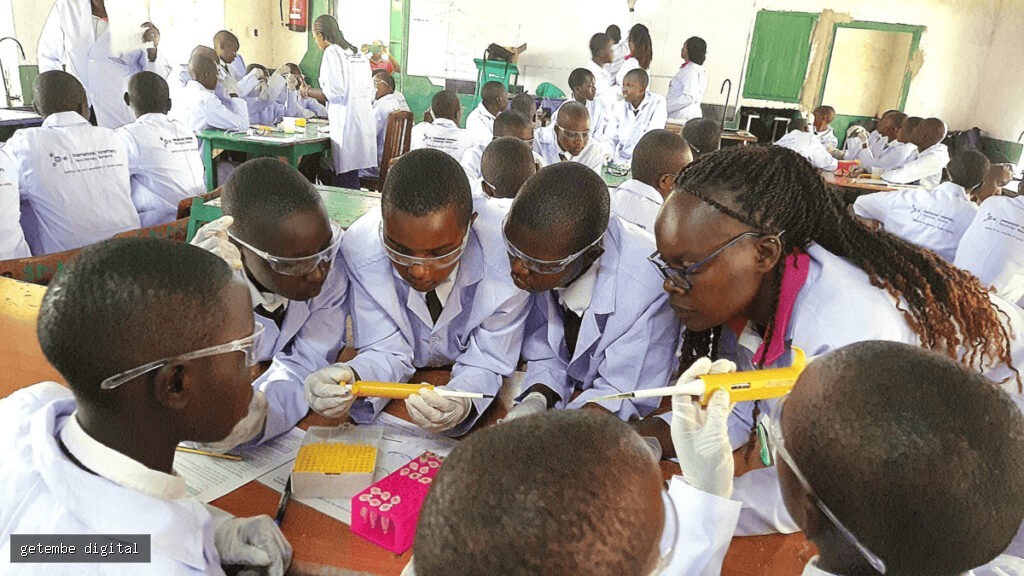
Driven by career aspirations and parental pressure, the overwhelming majority of incoming Grade 10 learners are opting for the STEM track. However, national audits reveal that only 33.9% of secondary schools have adequate physical science laboratories. Injecting a massive second wave of Grade 10 students into this pathway alongside senior Grade 11 learners will immediately overcrowd these spaces, pushing existing laboratory infrastructure past its breaking point.
The Disappearing Arts & Sports Tracks
Despite the government’s push for talent-based learning, fewer than 18% of schools possess adequate sports facilities or creative workshops. To manage this resource gap, the Ministry's placement system now restricts senior schools to offering a maximum of two subject combinations instead of three. Consequently, many institutions are quietly dropping the Arts and Sports Science pathway entirely to focus on tracks they can physically support.
Because only 17.1% of schools nationwide currently feature functional, fully equipped ICT centres, the Ministry of Education is racing against time to deploy 2,000 virtual laboratories alongside the 1,600 physical structures under construction. The success of the 2027 intake depends entirely on whether this digital infrastructure is delivered on time to offset the lack of physical workspaces for the incoming cohort.
The Human Resource & Timetabling Strain
Managing hundreds of students across customized combinations of 4 compulsory subjects and 3 electives presents a severe scheduling crisis, especially since only 6.3% of schools report being optimally staffed for CBC elective tracks. Teachers retooled by the Teachers Service Commission (TSC) will be forced to split their daily schedules between teaching advanced, project-heavy Grade 11 concepts and introducing foundational Grade 10 modules.
The automated placement system is widening the equity gap between different tiers of schools. Well-endowed National (C1) and Extra-County (C2) boarding schools are facing massive enrollment pressure, while the country’s 7,200+ Sub-County Day schools (C4) are absorbing the bulk of local day scholars. Because these C4 schools lack specialized equipment, their students are structurally locked out of choosing high-level STEM or Arts tracks.
The implementation of the Career Pathway Checker on the KEMIS online platform forces early curriculum alignment based on strict facility capacities. Because timetables and classroom allocations are locked in advance based on specific enrollment numbers, the 2027 academic year leaves almost zero room for flexibility, making mid-year track switching virtually impossible for struggling learners.
To prevent a complete systemic collapse during this transition, the Ministry of Education authorized the Kenya Institute of Curriculum Development (KICD) to clear the bottleneck for learning materials well ahead of time. By issuing early letters of award to publishers, the government targeted an October 2026 delivery window for Grade 11 textbooks. This early distribution strategy aims to give schools a fighting chance at managing the curriculum rollout before the double-cohort influx officially triggers in January 2027.
Because only 17.1% of schools nationwide currently feature functional, fully equipped ICT centres, the Ministry of Education is racing against time to deploy 2,000 virtual laboratories alongside the 1,600 physical structures under construction. The success of the 2027 intake depends entirely on whether this digital infrastructure is delivered on time to offset the lack of physical workspaces for the incoming cohort.
The Human Resource & Timetabling Strain
Managing hundreds of students across customized combinations of 4 compulsory subjects and 3 electives presents a severe scheduling crisis, especially since only 6.3% of schools report being optimally staffed for CBC elective tracks. Teachers retooled by the Teachers Service Commission (TSC) will be forced to split their daily schedules between teaching advanced, project-heavy Grade 11 concepts and introducing foundational Grade 10 modules.
The automated placement system is widening the equity gap between different tiers of schools. Well-endowed National (C1) and Extra-County (C2) boarding schools are facing massive enrollment pressure, while the country’s 7,200+ Sub-County Day schools (C4) are absorbing the bulk of local day scholars. Because these C4 schools lack specialized equipment, their students are structurally locked out of choosing high-level STEM or Arts tracks.
The implementation of the Career Pathway Checker on the KEMIS online platform forces early curriculum alignment based on strict facility capacities. Because timetables and classroom allocations are locked in advance based on specific enrollment numbers, the 2027 academic year leaves almost zero room for flexibility, making mid-year track switching virtually impossible for struggling learners.
To prevent a complete systemic collapse during this transition, the Ministry of Education authorized the Kenya Institute of Curriculum Development (KICD) to clear the bottleneck for learning materials well ahead of time. By issuing early letters of award to publishers, the government targeted an October 2026 delivery window for Grade 11 textbooks. This early distribution strategy aims to give schools a fighting chance at managing the curriculum rollout before the double-cohort influx officially triggers in January 2027.
ADVERTISEMENT
Watch Getembe TV Live
Broadcast Getembe TV Live Stream
Listen Getembe FM Live
Tune in to Getembe FM Live Broadcast
How do you feel about this article?
Let us know by choosing a reaction below.

Written by FRANKLINE NYANDORO
Reporter and staff writer at Getembe News.
Comments 0
Please log in to participate in the comments section.
No comments yet. Be the first to share your thoughts!
ADVERTISEMENT
Related Stories
Have a news tip?
Do you have an investigation, local story or news event you think we should cover? Contact our newsroom directly.
Submit Tip
Mobile App
Download Getembe Digital App Today
Download Getembe Digital App today for live news updates, breaking notifications, and seamless live streaming.