KSH2.8 TRILLION COLLECTED, BUT WHERE IS THE VALUE? KENYA’S TAXPAYER ACCOUNTABILITY GAP
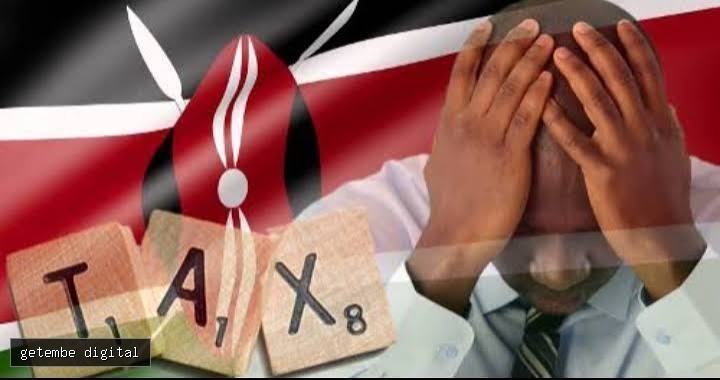
KRA is collecting record taxes, but stalled projects, ghost schools and fraud keep eroding public trust. Where is the value for Kenyan taxpayers?
Watch Getembe TV Live
Broadcast Getembe TV Live Stream
Listen Getembe FM Live
Tune in to Getembe FM Live Broadcast
Every month, salaried workers watch statutory deductions disappear from their payslips. Businesses contend with income tax, VAT, excise duty and other levies, while consumers absorb much of the cost through higher prices. Yet the everyday experience of public services often tells a different story: hospitals struggling with essential supplies, incomplete roads, overcrowded classrooms and development projects that remain unfinished long after public money has been allocated.
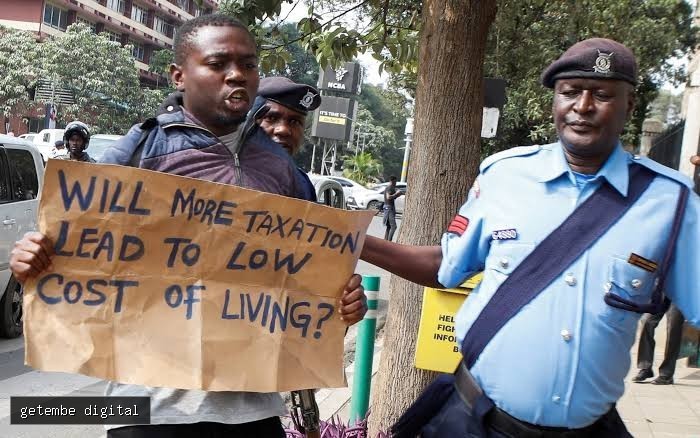
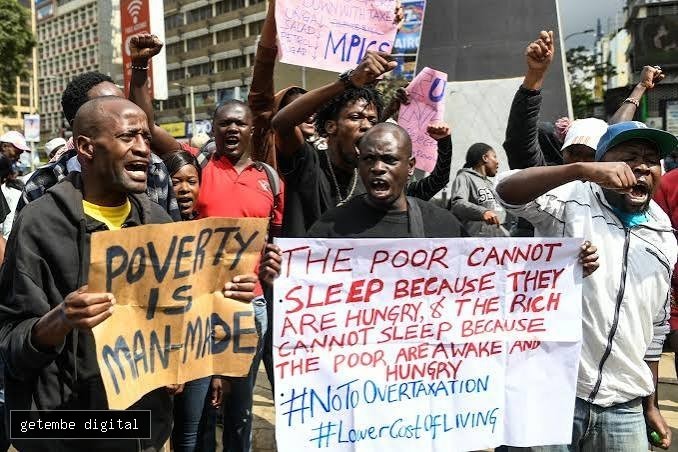
The frustration is not simply about taxation. It is about the growing disconnect between what citizens contribute and what they receive in return.
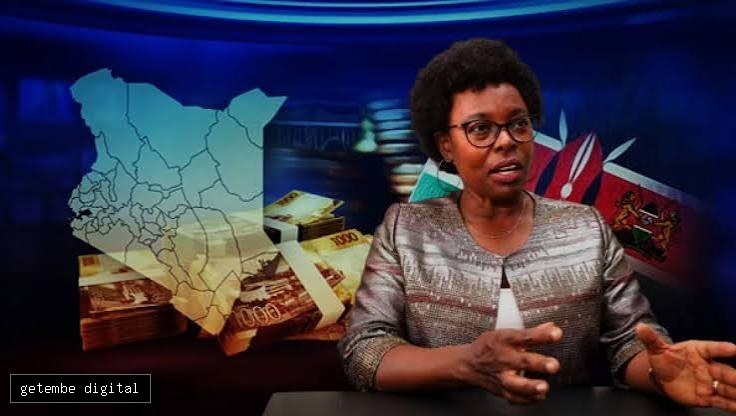
Kenya's revenue collection has continued to rise. The Kenya Revenue Authority (KRA) collected a record KSh2.844 trillion in taxes and agency revenues during the 2025/2026 financial year, an increase of approximately KSh273 billion from the previous financial year.
However, the figure requires an important distinction. KRA's exchequer revenue, which goes towards the national government's ordinary revenue, stood at KSh2.568 trillion, while the remaining amount included revenue collected on behalf of other government agencies.
The overall performance represented 10.6 per cent growth, demonstrating that the government continues to mobilise substantial resources from the economy.
Manufacturing contributed KSh462 billion, energy KSh445 billion, financial and insurance services KSh320 billion, information and communication technology KSh248 billion, and wholesale and retail trade KSh288 billion.
These figures reveal the extent to which formal businesses, employees and consumers contribute to financing government operations.
But the more important question is what happens after the money reaches government accounts.
Kenya's tax-to-GDP ratio remains relatively modest compared with some economies, but that does not necessarily mean the burden is evenly distributed.
According to the OECD's Revenue Statistics in Africa 2025 report, Kenya's tax-to-GDP ratio declined from 16.5 per cent in 2022 to 15.8 per cent in 2023.
The challenge is partly structural. A substantial informal economy operates outside the conventional tax system, leaving a significant share of revenue collection concentrated among formal businesses, salaried employees and registered enterprises.
The result is a system in which compliant taxpayers can feel increasingly exposed to additional taxation while questions persist about whether public money is being managed efficiently.
The problem becomes more serious when citizens encounter corruption in the very institutions expected to protect public resources.
Transparency International's Corruption Perceptions Index gives Kenya a score of 30 out of 100, placing it 130th among 182 countries in its latest reported assessment.
The Ethics and Anti-Corruption Commission's 2024 National Ethics and Corruption Survey, published in August 2025, provides another indication of the problem.
The survey, which involved 5,960 adults across all 47 counties, found that 30.5 per cent of respondents had encountered bribery situations while seeking public services. Of these, 18.9 per cent said they had explicitly been asked to pay a bribe.
More concerning, 97.2 per cent of bribery incidents went unreported, with fear of retaliation and a lack of confidence in reporting systems among the reasons.
This suggests that corruption is not merely a matter of public perception. It is an experience that continues to affect how some Kenyans access government services.
When citizens must pay taxes to finance public institutions and then encounter demands for additional unofficial payments to access services, the social contract becomes increasingly difficult to defend.
Perhaps nothing illustrates the disconnect between taxation and public benefit more clearly than ghost projects.
In July 2025, concerns emerged over a KSh1.3 billion school infrastructure funding allocation after MPs raised questions about fictitious institutions appearing on lists of schools earmarked for development.
Luanda MP Dick Maungu questioned the inclusion of Bomet High School and Kamuret Secondary School, which he said did not exist, despite each appearing on a list with an allocation of KSh50 million.
The allegations raised questions about how the institutions entered the funding list, who verified their existence and whether the proposed allocations had passed through the necessary oversight processes.
If public institutions can be included in infrastructure programmes without proper verification, the consequences extend beyond accounting irregularities. Money intended to improve classrooms, laboratories and learning environments can be diverted from genuine schools that desperately need those resources.
The problem is not confined to the education sector.
A report by Controller of Budget Margaret Nyakang'o revealed that 22 counties had reported 189 stalled development projects valued at KSh10.51 billion during the 2025/2026 financial year.
Of that amount, KSh4.21 billion had already been paid before the projects stalled.
Nairobi accounted for 57 of the projects, valued at KSh2.24 billion. Among them was a medical block at Mbagathi Hospital, valued at approximately KSh255.87 million, which was only 15 per cent complete.
The projects included roads, hospitals, water schemes, markets and other facilities intended to improve local service delivery.
The reasons for the delays included inadequate budgetary allocations, contractor abandonment, unresolved contract variations, missing project records and investigations.
Not every stalled project is evidence of corruption. Some result from genuine contractual disputes, funding constraints or administrative failures. However, when billions have already been spent without the intended facilities being completed, taxpayers deserve an explanation.
A hospital that remains unfinished cannot provide treatment. A road that exists only as an incomplete construction site cannot improve transport. A market that never becomes operational cannot support the traders it was designed to serve.
The money may have been recorded as expenditure, but the promised public benefit remains missing.
Public procurement is another area where the management of taxpayers' money has repeatedly come under scrutiny.
Government institutions purchase everything from medicines and medical equipment to road construction services, school materials and office supplies. These transactions account for substantial public expenditure, making procurement integrity essential to ensuring value for money.
However, recurring audit findings and investigations have exposed weaknesses in procurement planning, supplier verification, contract management and price evaluation.
The COVID-19 procurement controversy at the Kenya Medical Supplies Authority (KEMSA) remains one of the clearest examples.
A special audit of KEMSA's COVID-19 procurement identified irregularities involving billions of shillings in purchases of personal protective equipment and other medical supplies.
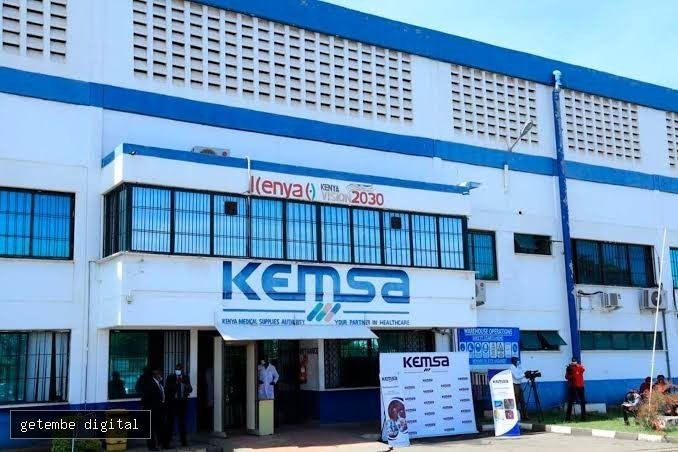
The Auditor-General's investigation raised concerns about procurement procedures, direct awards, inadequate needs assessments and prices that were substantially higher than prevailing market rates.
The audit estimated that KEMSA could incur a loss of approximately KSh2.34 billion if the procured goods were sold at prevailing market prices.
Some suppliers, including companies that had been established less than a year before receiving contracts, were awarded substantial procurement deals.
The audit also found that approximately 97 per cent of the supplies procured remained unused at the time of the review.
These findings raised fundamental questions about who benefited from emergency procurement and why public institutions were purchasing supplies that were not adequately assessed against actual needs.
The controversy demonstrated how procurement failures can affect public services twice: first through the money spent on questionable purchases and again when essential supplies fail to reach the people who need them.
The same questions arise in other large public expenditure programmes, including the Managed Equipment Services arrangement, under which counties were expected to benefit from modern hospital equipment through a national leasing programme.
The scheme has faced persistent questions about costs, contractual obligations, equipment distribution and value for money.
For taxpayers, the concern is straightforward: public money should purchase functioning services, not simply generate contracts and payments.
The problem is not limited to expenditure after money reaches government accounts. Revenue collection itself can also be exploited.
On October 16, 2026, KRA announced that it had uncovered a KSh4 billion VAT fraud scheme involving fictitious electronic invoices.
According to the authority, investigations identified 72 related entities that generated 62,869 invoices between 2020 and 2025, representing transactions valued at approximately KSh33.83 billion.
The invoices were allegedly used to support fraudulent input VAT claims amounting to approximately KSh3.996 billion.
KRA described the arrangement as a missing trader scheme, in which entities issue invoices without genuine underlying transactions, allowing other taxpayers to claim tax deductions they are not entitled to.
The authority said 42 individuals and companies were facing prosecution following investigations into the network.
The case exposes an uncomfortable contradiction.
While ordinary businesses and workers are expected to comply with tax obligations, sophisticated networks can allegedly exploit the same system to claim billions in tax benefits without genuine commercial transactions.
The investigations also reportedly flagged suspected internal collusion involving KRA staff profiles, raising questions about internal controls and the protection of taxpayer information.
The difference is that this case demonstrates both the existence of fraudulent networks and the importance of enforcement. KRA's investigation and proposed prosecutions show that revenue leakages can be detected and pursued, even though the allegations must still be tested through the legal process.
Corruption and procurement failures are not the only reasons taxpayers struggle to see the benefits of rising revenue.
Kenya's debt obligations consume a substantial proportion of government revenue, leaving less room for development spending and the expansion of public services.
According to Treasury figures examined by Africa Check, debt servicing absorbed approximately 71.2 per cent of government revenue in the 2024/2025 financial year.
This means that a substantial share of the resources mobilised by government goes towards meeting existing financial obligations rather than funding new development projects.
Debt servicing is not itself evidence of corruption. Governments must honour legitimate borrowing obligations, and some of the loans financed infrastructure and other public investments.
However, the scale of these obligations raises another accountability question: how effectively were borrowed resources invested, and are the projects they financed delivering the economic benefits originally promised?
When debt repayments take up such a large share of revenue, every additional shilling lost through procurement fraud, fictitious projects or poor financial management becomes even more costly.
The government is effectively operating with limited fiscal space while citizens continue demanding better hospitals, schools, roads and other essential services.
There is an important distinction between arguing that every tax shilling is stolen and recognising that recurring accountability failures undermine confidence in the entire system.
Taxes finance essential government functions, including public-sector salaries, security, healthcare, education, infrastructure and debt obligations. Numerous public projects are completed, and millions of Kenyans continue benefiting from government services.
But these achievements do not erase the need to account for money that is lost, mismanaged or spent without delivering the intended results.
The challenge is that citizens experience government through the services available to them, not simply through revenue collection announcements or budget speeches.
A parent who encounters an overcrowded classroom, a patient who cannot obtain essential medicine and a motorist forced to navigate an unfinished road are unlikely to be reassured by news that tax collections have reached record levels.
For them, the question is whether the money collected has improved their daily lives.
Restoring public confidence requires more than announcing investigations whenever another scandal emerges.
It requires transparent procurement processes, effective supplier verification, stronger internal controls, timely publication of audit findings and meaningful consequences for individuals found responsible for misusing public resources.
It also requires Parliament and county assemblies to exercise oversight beyond summoning officials after money has already been spent.
Most importantly, public institutions must demonstrate that audit recommendations lead to corrective action, that criminal investigations result in legally sound prosecutions where evidence supports them, and that recovered funds are accounted for.
Kenya does not have a revenue collection problem alone. It has a serious challenge in ensuring that public resources are converted into measurable public value.
The KSh2.844 trillion collected by KRA in the 2025/2026 financial year represents money mobilised from an economy in which households and businesses are already under pressure.
The question is whether that money will translate into better schools, functioning hospitals, completed roads and accessible public services, or whether taxpayers will continue reading about fictitious institutions, inflated contracts, stalled projects and fraudulent claims.
Ultimately, paying taxes should not feel like sponsoring the very failures that make public services unreliable.
Kenyans are not asking for the impossible. They are asking a simple question: if the government can account for how much money it collects, why is it so difficult to demonstrate what that money has achieved?
ADVERTISEMENT
Watch Getembe TV Live
Broadcast Getembe TV Live Stream
Listen Getembe FM Live
Tune in to Getembe FM Live Broadcast
How do you feel about this article?
Let us know by choosing a reaction below.

Written by FRANKLINE NYANDORO
Reporter and staff writer at Getembe News.
Comments 0
Please log in to participate in the comments section.
No comments yet. Be the first to share your thoughts!
ADVERTISEMENT
Related Stories

Have a news tip?
Do you have an investigation, local story or news event you think we should cover? Contact our newsroom directly.
Submit Tip
Mobile App
Download Getembe Digital App Today
Download Getembe Digital App today for live news updates, breaking notifications, and seamless live streaming.