












KENYA’S KSH 4.8 TRILLION BUDGET 2026/27: DEBT SERVICING DOMINATES AS MBADI FACES TOUGH FISCAL CHOICES
Treasury CS John Mbadi is set to present Kenya’s KSh 4.8 trillion FY 2026/27 Budget tomorrow amid mounting fiscal pressure. With debt servicing alone eating up KSh 1.5 trillion (31.2% of the budget) — including domestic interest exceeding the entire education allocation — the government is balancing ambitious spending on infrastructure, education, health, and housing against a KSh 1.11 trillion deficit, rising oil prices, and constrained fiscal space. A critical budget that will shape Kenya’s economic direction in the coming year.

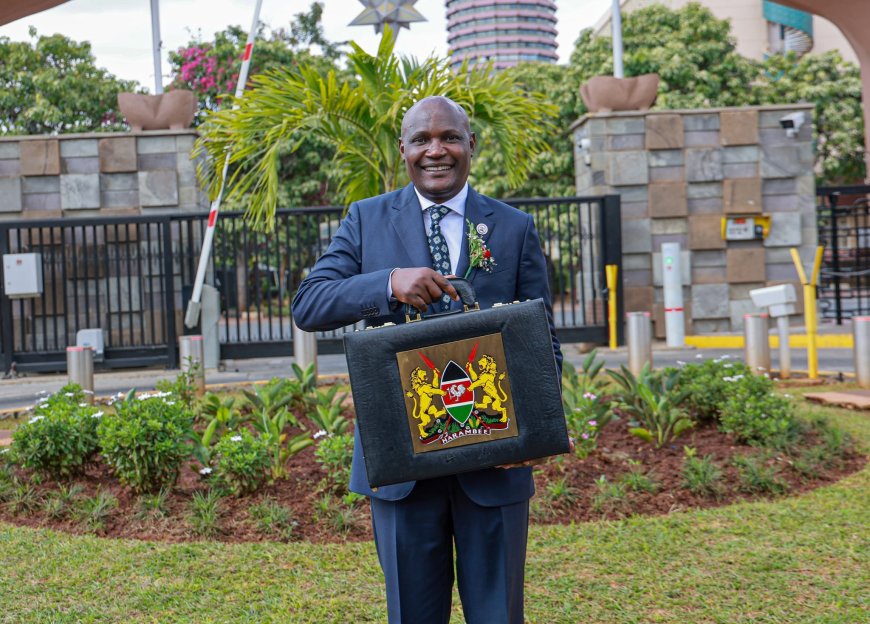
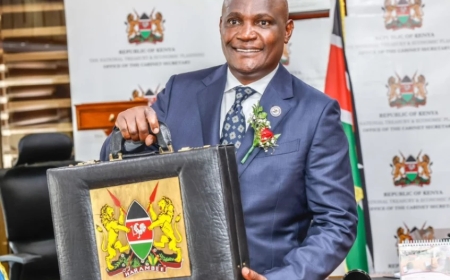
Treasury Cabinet Secretary John Mbadi will on Thursday present a KSh 4.8 trillion budget before the National Assembly, in what is expected to be one of Kenya’s most complex fiscal statements in recent years as the government navigates rising debt pressure, global shocks, and constrained fiscal space.
On April 30, 2026, the government, through the National Treasury, released the Budget Summary for the Fiscal Year 2026/27 together with supporting information and documents outlining a challenging economic outlook shaped by a KSh 1.11 trillion deficit, revised-down growth projections, surging oil prices, and a KSh 1.46 trillion interest and pension bill, while still maintaining ambitious plans for infrastructure, education, and healthcare expansion.
In the budget estimate, Kenya’s gross expenditure is projected at KSh 4,817.8 billion, which is KSh 69.3 billion above the February Budget Policy Statement (BPS) ceiling, adjusted upward due to salary shortfalls in Ministries, Departments and Agencies and realignment of development partner-funded projects to actual commitments.
The Consolidated Fund Services, covering interest and pensions, stands at KSh 1,501.3 billion, representing 31.2% of the entire budget. Domestic interest alone stands at KSh 986.7 billion, exceeding the full education budget of KSh 668.3 billion, highlighting the growing dominance of debt servicing in public expenditure.
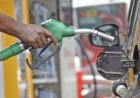
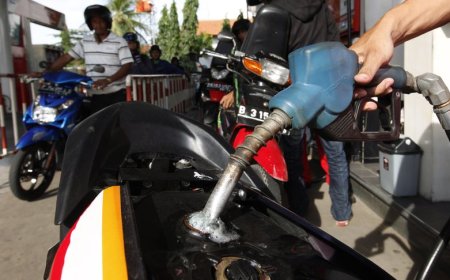
The Middle East conflict has emerged as a defining external shock, pushing crude oil prices to around USD 100 per barrel. This has triggered fuel price spikes, with petrol and diesel rising sharply within a short period, forcing government intervention including a temporary VAT cut on fuel from 16% to 8% for three months and deployment of the Petroleum Development Levy Fund to cushion consumers.
As a result of these pressures, inflation rose to 5.6%, up from 4.1% in April 2025, while GDP growth was revised downward from 5.3% to 5.0%, reflecting increased uncertainty in the global economic environment.
The development expenditure ratio in the budget stands at 29.0%, falling below the statutory 30% threshold under the Public Finance Management Act, a breach the Treasury attributes to rigid recurrent spending and rising debt obligations.
Public debt remains elevated, with the present value at 65.3% of GDP against a statutory ceiling of 55%, and the convergence path showing no return to compliance within the medium-term window.
Despite these fiscal pressures, sectoral allocations remain significant, with education receiving KSh 668.3 billion, national security KSh 566.9 billion, roads KSh 230.3 billion, housing and works KSh 135.8 billion, health KSh 170.7 billion, and agriculture KSh 63.0 billion.
Within education, teacher salaries dominate at KSh 406.6 billion, while Higher Education Loans Board receives KSh 56.7 billion, Free Day Secondary School KSh 54.6 billion, and Junior Secondary School capitation KSh 30.9 billion. The government also plans to convert over 20,000 intern teachers into more stable terms at a cost of KSh 4.9 billion from January 2027.
The defence sector is allocated KSh 250.0 billion, the National Police Service KSh 144.4 billion, National Intelligence Service KSh 58.6 billion, while police motor vehicle leasing consumes KSh 13.0 billion and police modernization KSh 7.0 billion. The Prisons and Corrections Department receives KSh 42.7 billion.
In the health sector, the Primary Health Care Fund is allocated KSh 19.1 billion, Kenyatta National Hospital KSh 18.8 billion, Kenya Medical Supplies Authority KSh 18.8 billion, Global Fund support KSh 20.9 billion, Universal Health Coverage health workers grant KSh 8.9 billion, and Community Health Promoters stipend KSh 3.2 billion.
Agriculture funding includes KSh 18.0 billion for the Fertilizer Subsidy Program, KSh 4.7 billion for the National Agricultural Value Chain Development Project, KSh 5.4 billion for the Food Systems Resilience Project, KSh 1.3 billion for the Kenya Livestock Commercialization Project, and KSh 3.3 billion for pastoral economies de-risking initiatives.
County governments receive KSh 495.7 billion, comprising KSh 420.0 billion equitable share, KSh 1.98 billion unconditional allocations, KSh 16.3 billion conditional national government grants, and KSh 57.4 billion development partner grants, with the equitable share representing 20.49% of audited revenue, above the constitutional 15% minimum requirement.
The Bottom-Up Economic Transformation Agenda (BETA) is allocated KSh 379.5 billion, with infrastructure receiving KSh 134.8 billion and social sectors KSh 122.5 billion. Roads infrastructure alone receives KSh 230.3 billion, including KSh 118.1 billion for maintenance, KSh 64.2 billion for rehabilitation, and KSh 48.1 billion for new construction and bridges.
Major projects include the SGR Phase 2B and 2C extension at KSh 20.8 billion, the Dongo-Kundu Special Economic Zone at KSh 4.2 billion, and the President’s housing programme at KSh 135.8 billion, including KSh 50.7 billion for Affordable Housing Units and KSh 20.9 billion for Social Housing Units.
While the budget reflects continued investment in development priorities, analysts note that rising debt servicing costs, now consuming over a third of total expenditure, remain the most significant constraint on fiscal flexibility, with domestic interest alone exceeding key social sector allocations.
The budget now moves to Parliament for debate and approval, setting the stage for a critical period of fiscal decision-making for the country.
What's Your Reaction?
 Like
0
Like
0
 Dislike
0
Dislike
0
 Love
0
Love
0
 Funny
0
Funny
0
 Angry
0
Angry
0
 Sad
0
Sad
0
 Wow
0
Wow
0